Medical Office Roofing
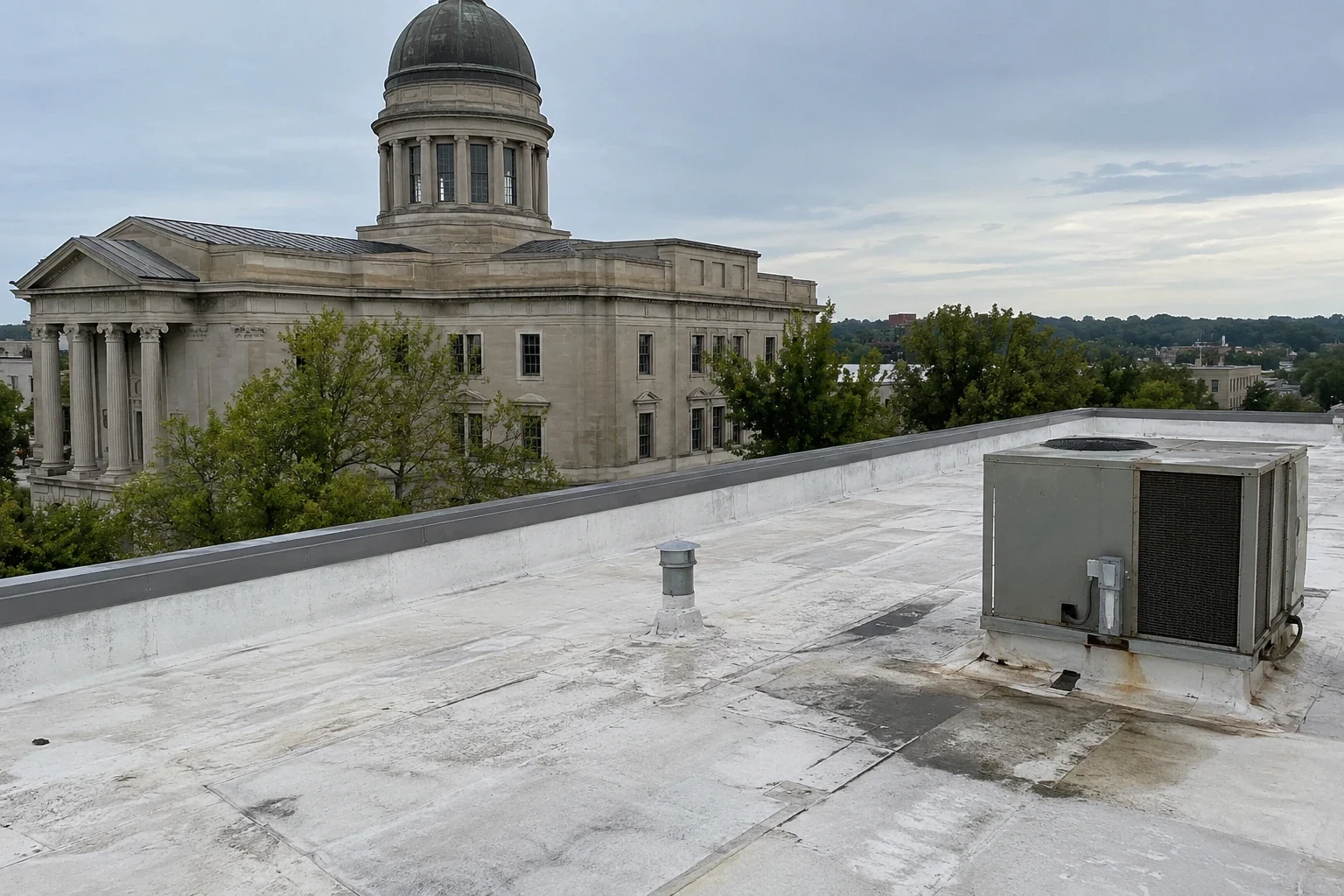
A clinic's first appointment can begin while a roof crew is still checking the access route, so medical office work needs coordination before tools reach the roof. We confirm the reported leak, inspect flashings, drains, and rooftop equipment, and identify the patient areas that need protection. In Broken Arrow, OK, Ascension St. John is the city's primary hospital and part of its major institutional roof portfolio. Medical office projects still require a schedule and access plan matched to the clinic. Every clinic has its own schedule, entrances, and equipment. Our medical office roof inspection documents the condition and sets a practical sequence for repair or renewal.
Preserve patient routes and appointments
Medical office buildings may contain exam rooms, imaging, laboratories, pharmacies, administrative suites, and shared waiting areas. We ask the facility manager which entrances must stay open, what hours are sensitive to noise, and how deliveries and lifts can reach the work zone. We plan interior protection beneath active roof areas and isolate the perimeter so patients do not pass under materials or tools. Where work affects an entrance, the clinic contact approves notice and a temporary route before mobilization. A phased clinic work plan divides the roof into zones and gives staff a clear handoff each day.
The Rose District is a mixed-use center served north and south by Kenosha and Washington streets. Where medical, office, retail, and residential uses share a corridor, roof work can affect different entrances and occupied areas. We confirm each clinic's layout and access limits before staging. We confirm how patients arrive, where accessible parking is located, and whether a lift or delivery will cross public paths. A Rose District roof visit can use the city context for routing while work controls remain specific to the building.
Trace the leak to the roof detail
Water near an exam room or utility space may travel from a seam, drain, curb, wall transition, or penetration before appearing inside. We compare the reported area with the roof above and photograph each condition that could explain entry. The inspection checks the installed membrane or metal system, prior patches, drainage, edge details, and equipment bases. We note whether the visible material appears sound and where moisture testing or an opening may be needed. A hospital roof assessment adds larger patient-care and emergency-routing controls; medical offices still require clear indoor protection and a safe path for patients and staff.
A spring storm can arrive between scheduled patients and shorten the time available for a dry repair. We inspect the clinic itself after a local warning rather than treating an area report as a roof diagnosis. We inspect the building after an event, document observed punctures or displaced details, and keep storm-related findings distinct from prior wear. If water is active, the first objective is to protect rooms and equipment below; permanent repair follows when the roof and materials are suitable. A rapid roof response can address immediate exposure at any hour, including weekends and holidays.
Coordinate rooftop systems with clinic staff
Rooftop air-handling equipment, exhaust, controls, and service paths can make some details difficult to reach. We confirm clearances with the facilities or mechanical contact, inspect the curb and flashing, and agree on any shutdown or service window before roofing begins. If a replacement unit is planned, curb dimensions, rigging route, and weather protection should be set before the existing detail is opened. A curb and support scope can coordinate the roofing interface while the mechanical contractor handles equipment design and connection.
Ascension St. John Broken Arrow is a major institutional facility in the city. For each medical-office project, we coordinate the clinic's actual operating calendar, patient routes, and access procedures. We coordinate each visit with the clinic's actual operating calendar and access procedures. If staff need a protected route to imaging or patient rooms, the work plan identifies the barrier and timing. A commercial office roof program can cover adjacent business suites, while a clinic plan gives patient access and equipment service priority.
Choose a weather window that fits care
On exposed roofs in late summer, we watch surface heat and safe access before positioning near mechanical units. A wet forecast can also interrupt coating or adhesive work, so the appointment window includes time for a weather check. We check forecast and on-site conditions, plan the work hours, and set a stop point before starting. If the surface cannot be repaired safely, we leave a temporary protection plan and notify the facility contact rather than risk an incomplete detail over occupied rooms.
Clinic schedules can change throughout the day, so we coordinate material delivery, lift placement, noise, odors, and any temporary access limits in advance. If a roof replacement or recover is considered, the project may be divided into areas so the clinic can keep key entrances and services available. A recover evaluation first checks layers, moisture, deck, drainage, and attachment. If those findings support replacement planning, we document how roof work can fit the clinic's operational calendar.
Separate temporary protection from permanent repair
During a leak call, temporary dry-in may protect the interior while the full roof condition is assessed. We record the temporary area, permanent repair boundary, and any adjacent issue that needs follow-up. A localized flashing or seam failure can often be addressed separately when surrounding material is sound. Repeated leaks, widespread moisture, or poor drainage may support a larger evaluation. A photo condition report gives facilities and ownership the same record of observations, repairs, and unresolved questions.
New Orleans Street, also known as East 101st Street, runs across Broken Arrow and meets the Creek Turnpike near Northeastern State University. That corridor can orient a regional delivery route, while the clinic determines its own loading and roof-access instructions. We confirm the address-specific entry, parking, and staging plan with management. For outpatient offices associated with Ascension St. John Broken Arrow, the site includes a connected medical office building at the campus; any visit still follows the facility's current access and safety procedures.
Give staff a clear repair record
Closeout photographs show repaired details, access routes affected, and any area that remains under observation. The report notes where water appeared, what protection was used, and which items were corrected. A planned maintenance visit can check drains, curbs, and repaired seams before another patient-area leak develops. Send the access procedure, room-use limits, roof drawing, and leak location. We will provide a repair record that facilities can use to coordinate the next work window with clinic staff.
Commercial Roofing Questions
Can roof repairs happen during clinic hours?
Often, if access, noise, barriers, and patient routes are planned with the facility manager. We agree on work zones and timing before mobilizing and provide staff a daily update on any restrictions.
How do you keep patients away from roof work?
We coordinate entrances, accessible paths, lift placement, and barriers with clinic staff. The work plan identifies the perimeter and any alternate route before materials or equipment arrive.
What happens if a leak threatens an exam or imaging room?
We begin by protecting the room and equipment, then inspect the roof detail overhead. The facility contact identifies any clinical schedule or access restriction, and temporary dry-in is recorded apart from the permanent repair.
Does hail in Broken Arrow mean a clinic needs replacement?
No. We inspect the roof itself for visible damage and compare findings with leak reports. A regional weather record informs readiness but does not determine the condition of an individual property.
What access details should the clinic provide?
Share appointment hours, roof entry rules, loading and parking constraints, equipment service schedules, and areas needing patient privacy. Those details help us plan a safe route and suitable work window.