TPO Roofing
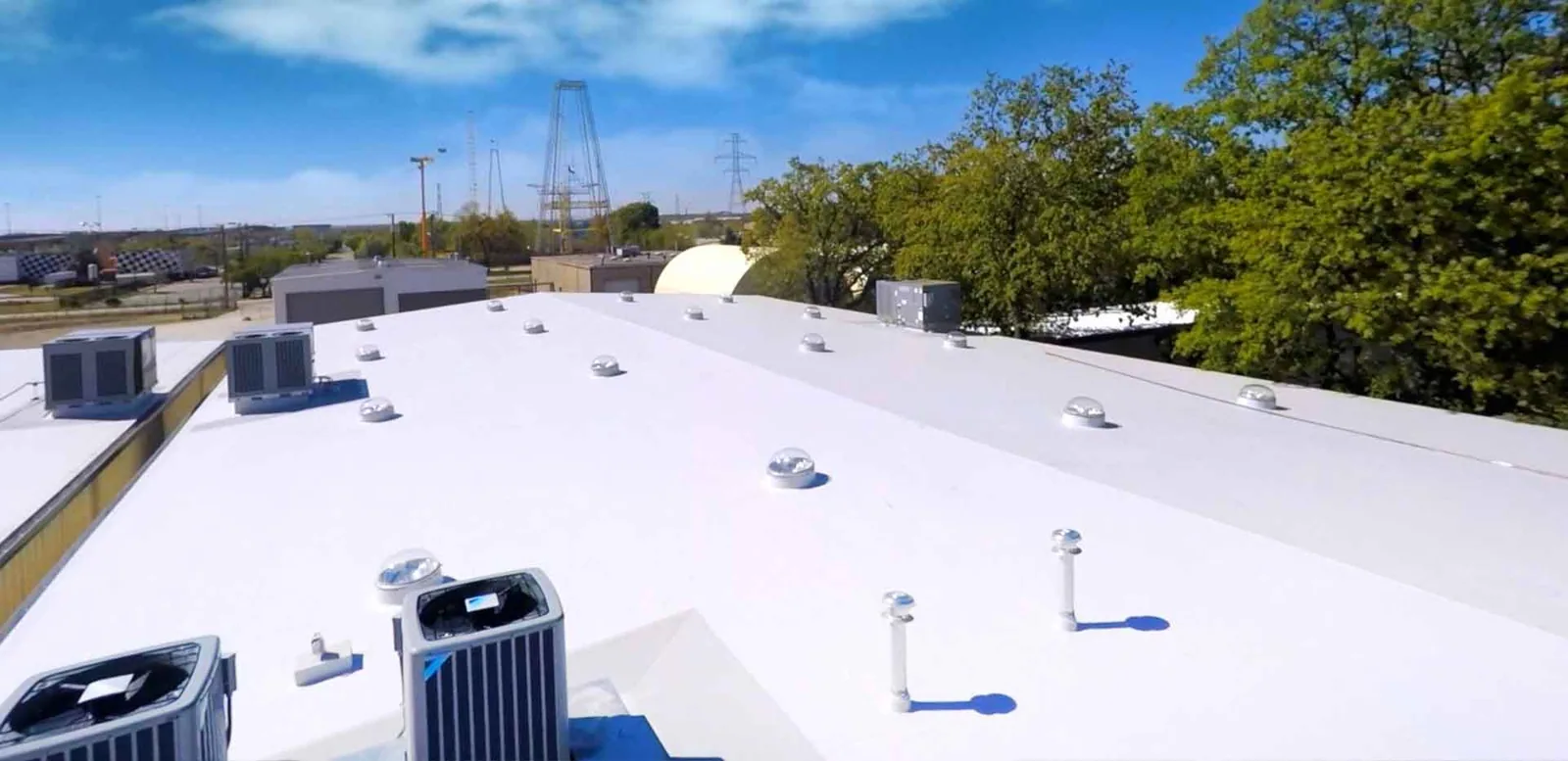
A recent hail report may change a TPO inspection sequence, but the first step is to check this roof's seams, corners, and reported interior areas. We document the membrane, compare reported interior areas with roof details, and protect belongings below if inspection confirms an exposed area. In Broken Arrow, OK, the Tulsa-area record shows hail reports throughout the year with a spring peak, and one property can be struck while a nearby property is missed. That is why the scope starts with this roof, not the storm map. On a manufacturing or healthcare building, the first visit also confirms safe roof access, occupied areas below, equipment clearances, and a staging route. A focused commercial roof inspection gives the owner a condition record before repair, recover, or replacement is chosen.
Read the field and the seams
TPO is a thermoplastic single-ply membrane whose seams are joined with heat. The quality of a repair depends on sound membrane, a clean preparation area, the right weld temperature, and a consistent pass across the joint. We inspect field seams, patches, penetrations, perimeter transitions, and places where foot traffic or equipment work may have disturbed the surface. A seam can look closed at one end and still have a small open area farther along, so the inspection follows the joint rather than stopping at the first visible defect. On a large roof, a marked photo plan helps separate isolated maintenance items from a longer seam pattern that changes the repair boundary.
A wet spring and early-summer storm cycle put TPO seams and exposed details through repeated weather changes. On the inspected roof, we look for punctures, shifted edge details, and visible impact evidence before describing storm-related work. A regional hail report does not establish what happened on a specific roof, so photos and physical observations carry the decision. We also check drainage and interior reports before declaring a membrane failure. If water appears away from the opening, its path can cross insulation or deck before reaching a ceiling. A written condition report keeps the observed defect distinct from assumptions about concealed material.
Make a weld the roof can keep
A lasting TPO patch begins with a repair area that can accept a weld. Loose material, dirt, moisture, old incompatible patches, or a surface that has lost soundness can prevent a reliable bond. We determine how far preparation should extend, make the compatible repair, and check the finished joint while recording its location. At a penetration, curb, drain, or perimeter, the detail may need a formed flashing or a larger transition rather than a flat patch. The repair method follows the assembly present on site. Where several separated defects appear, we map them individually so the owner can distinguish a short repair visit from a broader campaign.
Hail and wind may also expose edge metal, flashing, or attachment concerns beyond the membrane field. We note those conditions rather than hiding them inside a generic patch scope. For active water entry, temporary protection can be set first, while permanent welding waits until the surface and forecast permit the work. An EPDM repair detail uses compatible seam materials and preparation unlike TPO heat welding; a leak repair scope identifies the opening and interior protection required. The closeout should show both the repair and the nearby condition that remains outside the authorized boundary.
Choose repair, recover, or replacement
The next decision depends on membrane condition, attachment, moisture below the surface, drainage, and the number of details that need work. When defects are isolated and the surrounding TPO remains sound, a targeted repair may be the clearest path. If a roof has broad aging or recurring failures, we compare repair against a recover assessment, a PVC membrane option, or a replacement plan when system requirements support comparison. A recover cannot be selected by appearance alone; existing layers, wet material, deck condition, drainage, and code requirements must be evaluated first. Any recover plan still requires review of the roof assembly and applicable requirements for this property. The project team confirms permitting questions before the scope is finalized.
Heat is another planning variable. The Tulsa climate profile records frequent readings at or above 100 degrees during late July through early September. That period can affect safe roof access, surface temperature, material handling, and crew sequencing. We set work hours and the installation window around conditions rather than assuming a long, uninterrupted day on an exposed roof. If the building houses manufacturing or patient services, we coordinate lifts, routes, and noisy work with the site contact. For a facility near Creek 51 Business Park, industrial use and the junction of the Creek Turnpike with Highway 51 make access and staging worth confirming with the actual property team before mobilization.
Keep occupied operations in sequence
Roof work affects people and deliveries below it, so the work plan includes more than a membrane repair map. We confirm hatch or ladder access, lift placement, the staging area, roof traffic limits, and any tenant or security requirements. On an occupied building, we identify where protection is needed indoors, how debris will be controlled, and which hours avoid important activity. A manufacturer may need clear loading lanes, while a medical building may have entrances that cannot be blocked. The occupied-building sequence sets notices, daily handoffs, and any temporary closures before the first material reaches the roof.
SH-51 runs across Broken Arrow's north side, and the Creek Turnpike serves southern and eastern parts of the city with several local exits. Those corridors inform a route plan, but each site still has its own gate, delivery, and equipment constraints. We confirm the address-specific instructions, delivery timing, and where a lift can safely set up. Spring storms can shorten the available work window; summer heat can change the safest hours. If weather interrupts a permanent seam repair, we document the temporary measure, protect the interior, and identify the next suitable handoff instead of leaving the owner uncertain about what was completed.
Leave the next inspection useful
After installation or repair, closeout records the prepared area, completed welds, flashing transitions, and remaining observations. Photos should be clear enough to locate the work during a later maintenance visit. We identify any roof area that could not be completed because of moisture, unsafe conditions, or a site restriction, then note what must happen before the next visit. A preventive maintenance plan can revisit seams, drains, penetrations, and perimeter details before small changes become interior damage. The NSU campus connects to Broken Arrow's road network through New Orleans Street and nearby highway interchanges. For an occupied roof visit, we confirm the property's arrival route, roof access, and work zone with its site contact. Share the leak history, access rules, and operating schedule when requesting an inspection, and we can plan the first visit around the building's actual constraints.
Commercial Roofing Questions
What does a TPO seam inspection cover?
We follow the welds, patches, penetrations, drains, and perimeter transitions, then compare roof observations with interior reports. Photos identify each condition and whether it appears isolated or part of a repeated pattern.
Can a TPO roof be repaired during a rainy week?
Permanent heat welding needs suitable surface and weather conditions. We can first address active exposure with temporary protection, document the affected area, and schedule the permanent repair for a workable window.
How do you decide if a TPO roof can be recovered?
The existing assembly must be evaluated for moisture, layer count, deck condition, attachment, drainage, and applicable requirements. We record those findings before comparing a recover with repair or replacement.
Does hail in Broken Arrow mean my roof needs replacement?
Regional weather data can guide an inspection, while roof-level evidence establishes property damage. We inspect the actual membrane and details, photograph observed impact or other defects, and define the repair boundary from those findings.
What should we provide before the first visit?
Share roof-access instructions, occupancy hours, leak locations, any recent interior photos, and delivery restrictions. That lets us plan a safe inspection route and protect the areas below the work.