Manufacturing Plant Roofing
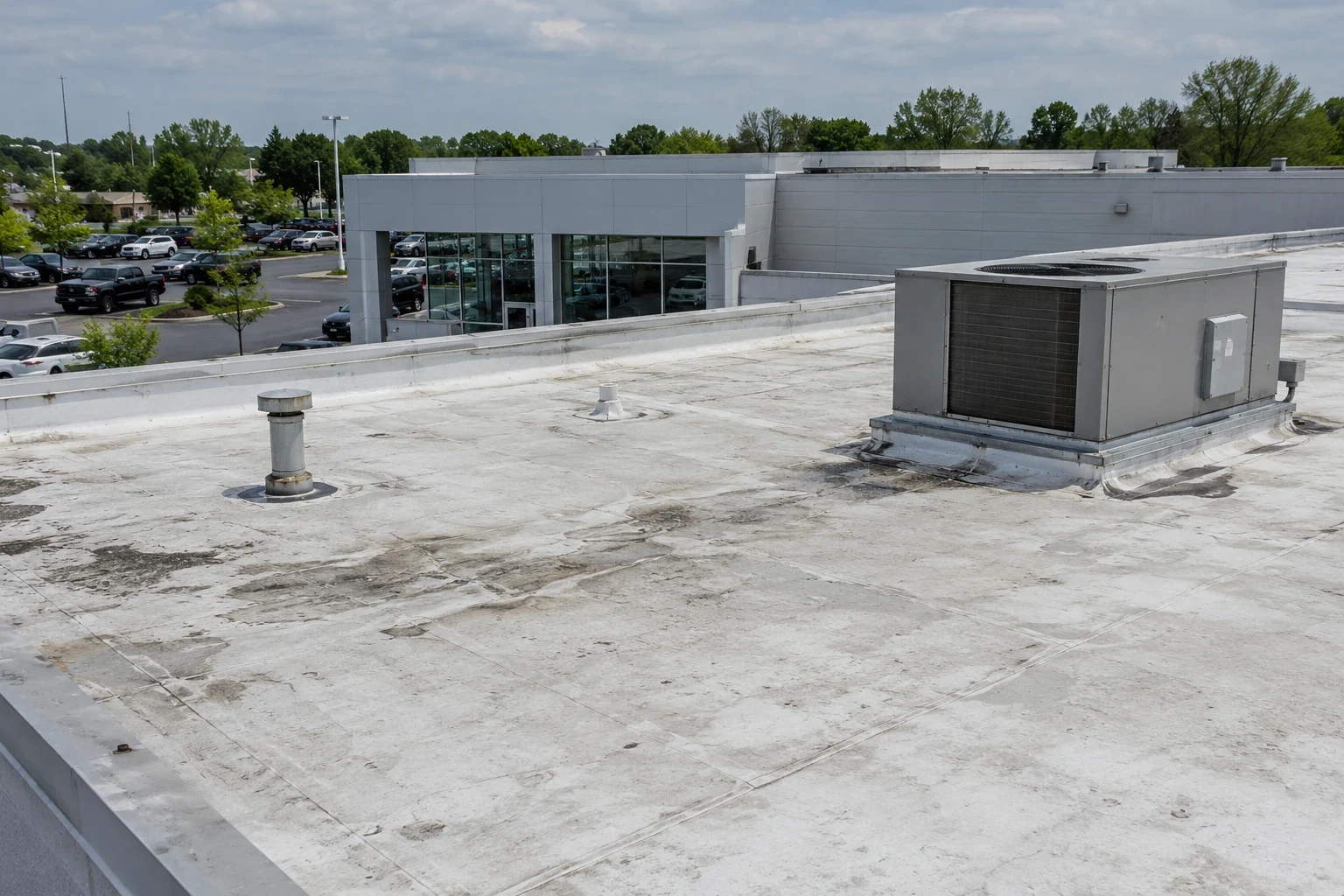
A production line may not be able to stop when a roof leak appears over equipment, so the first move is to protect the work area and confirm the source. We check the interior report, roof penetrations, drainage, and access rules with the facility contact before setting a repair boundary. In Broken Arrow, OK, manufacturing and testing are major parts of the local building stock, from Alfa Laval's exchanger operation to Zeeco's combustion test and manufacturing center. Each plant has its own processes and clearances, and those determine how crews reach the roof. A plant roof inspection ties the work sequence to the observed assembly and production limits.
Map process restrictions before access
Plant roofs may carry exhaust, intakes, piping, mechanical units, or access routes that support work inside the building. We document penetrations, flashing, curbs, seams, and drainage, then ask which processes can be interrupted and which must continue. Alfa Laval's Broken Arrow facility is identified as a heat-exchanger manufacturing plant with coating, blasting, welding, and plasma cutting. At a manufacturing property, the facility team identifies air intakes, heat sources, emissions, and restricted areas before roofing begins. We inspect the roof assembly, penetrations, and flashing before repair is planned. We plan barriers, lift placement, and access to keep production interfaces in the sequence.
Where a roof covers sensitive equipment, the repair plan includes interior protection and a stop point if weather or access conditions change. We mark the area beneath active work and agree on who receives the end-of-shift handoff. If odors, hot work, dust, or vibration could affect a process, that condition is identified before material is ordered. A manufacturer-focused service plan can align roof condition records with maintenance windows, while each plant's actual operating requirements remain specific to that site.
Inspect the assembly and its interfaces
Manufacturing facilities can include low-slope membrane areas, metal roofs, coatings, and additions built at different times. We identify each system before selecting materials. Inspection covers membrane seams, panel fasteners, edges, drains, skylights, expansion joints, and equipment curbs. We compare interior leak history to likely entry points and note where concealed moisture needs further testing. A photo map groups defects by production zone so plant staff can prioritize a critical leak separately from routine maintenance. The warehouse roof review may focus on storage and dock protection; manufacturing adds process equipment and ventilation constraints.
The Tulsa area's spring and early-summer storm cycle can bring hail, gusts, and repeated rain across manufacturing sites. After a storm notice, the plant-specific check covers perimeter details, penetrations, punctures, and any open seams seen at the property; a regional alert alone does not set the repair scope. Localized hail may affect one area while missing another, so the report ties observed conditions to the property instead of extending a regional event to the whole campus. If production equipment is exposed to water, we first shield the affected area and report what still needs a permanent correction.
Build the work window around heat and storms
The hottest part of the year places extra demands on exposed roof access and material handling. We use current surface and air conditions to set safe work periods instead of relying on a fixed daily schedule. We plan inspection hours, access routes, rest periods, and application steps around the conditions and product requirements. Spring rain creates a separate challenge for adhesion, coatings, and any work that needs a dry surface. The schedule includes a weather stop point and a method to leave the work area protected if a storm approaches.
Creek 51 Business Park is an 85-acre industrial-zoned site where Highway 51 meets the Creek Turnpike. That connection helps orient regional travel; plant managers still set the gate, escort, and unloading sequence. Tulsa metro service area and the Washington Street corridor are local industrial references; neither fact determines a roof type or past service condition. We confirm the building, process restrictions, delivery path, and security requirements with facility management before mobilization.
Separate urgent repair from capital work
A leak over a production line may need immediate protection while broader roof planning continues. We document temporary dry-in separately from completed repairs and identify what needs to be tested or opened before a permanent recommendation. If damage is localized and nearby material remains sound, repair may be a practical option. Repeated failures, widespread moisture, compromised deck, or deteriorated attachment can support comparison with a recover evaluation or replacement. We consider the existing layers, drainage, structural support, and compatibility before recommending an added assembly.
A plant roof plan can group work by process area and maintenance outage, preserving access to critical vents, equipment, and crane paths. The report records conditions that need engineering or permit review and distinguishes them from repair items the roofing scope can address. If a facility combines a plant with a distribution operation, loading demands may shape the sequence as well as production uptime. The goal is a repair map and decision record that lets operations, maintenance, and ownership coordinate the next step without confusing urgency with the full capital scope.
Protect production through each shift
We coordinate roof access, hot-work permits where required, process shutdowns, ventilation controls, lift clearances, and barriers around active routes. Each day's plan names the work area and the handoff contact. Before opening an assembly, we agree on interior protection and how the roof will be secured if the shift ends before permanent closeout. An occupied plant sequence may phase roof sections around manufacturing windows and isolate dust, odors, or noise from production when the system allows.
Broken Arrow's highway links include SH-51 and the Creek Turnpike, with local access points near Aspen, Elm Place, New Orleans Street, and other commercial areas. These provide route context; they do not determine a plant's delivery rules. We confirm the carrier route, turning area, equipment staging, and any employee or visitor access that must stay open. Emergency response is available around the clock, including holidays, when water threatens equipment or a process area. Permanent work proceeds when weather, process permissions, and roof conditions support the selected method.
Keep roof history with maintenance
Closeout photographs show the prepared area, repair detail, adjacent conditions, and any item excluded from the agreed scope. The record identifies the system, work completed, and recommended follow-up. A condition report can give maintenance and ownership a shared baseline, while a planned inspection checks drains, seams, penetrations, and repairs before the next storm season. FlightSafety identifies its Broken Arrow operation as a manufacturing center for flight-simulator engineering and training systems. As with other plants, we coordinate entry and work windows with the facility contact, then set scope from roof inspection. Share equipment plans, process constraints, outage windows, roof drawings, and leak records when arranging an inspection. We will return a specific roof scope and handoff for the people responsible for production and the building.
Commercial Roofing Questions
Can roof repairs happen while production continues?
Often they can be phased, provided the site confirms process restrictions, access, air-intake controls, and interior protection. We define each work zone and shift handoff before mobilization.
What plant information should be shared before inspection?
Provide roof drawings, equipment and ventilation locations, process shutdown rules, hot-work requirements, leak history, and maintenance windows. Those details shape safe access and the inspection route.
How do you protect machinery under a leak?
We cover exposed equipment and coordinate the response with production staff. The crew records the temporary measure, the roof detail requiring permanent correction, and any process limits that affect the return visit.
Does a local storm report mean a plant needs a new roof?
No. We inspect the actual building for punctures, loose details, open seams, and water entry. The report records observed damage and keeps it distinct from existing wear or unrelated conditions.
When should a plant compare recover with replacement?
Widespread moisture, repeat failures, substrate or deck damage, and attachment concerns may change the recommendation. We document those conditions and evaluate layers, support, and drainage before comparing options.