PVC Roofing
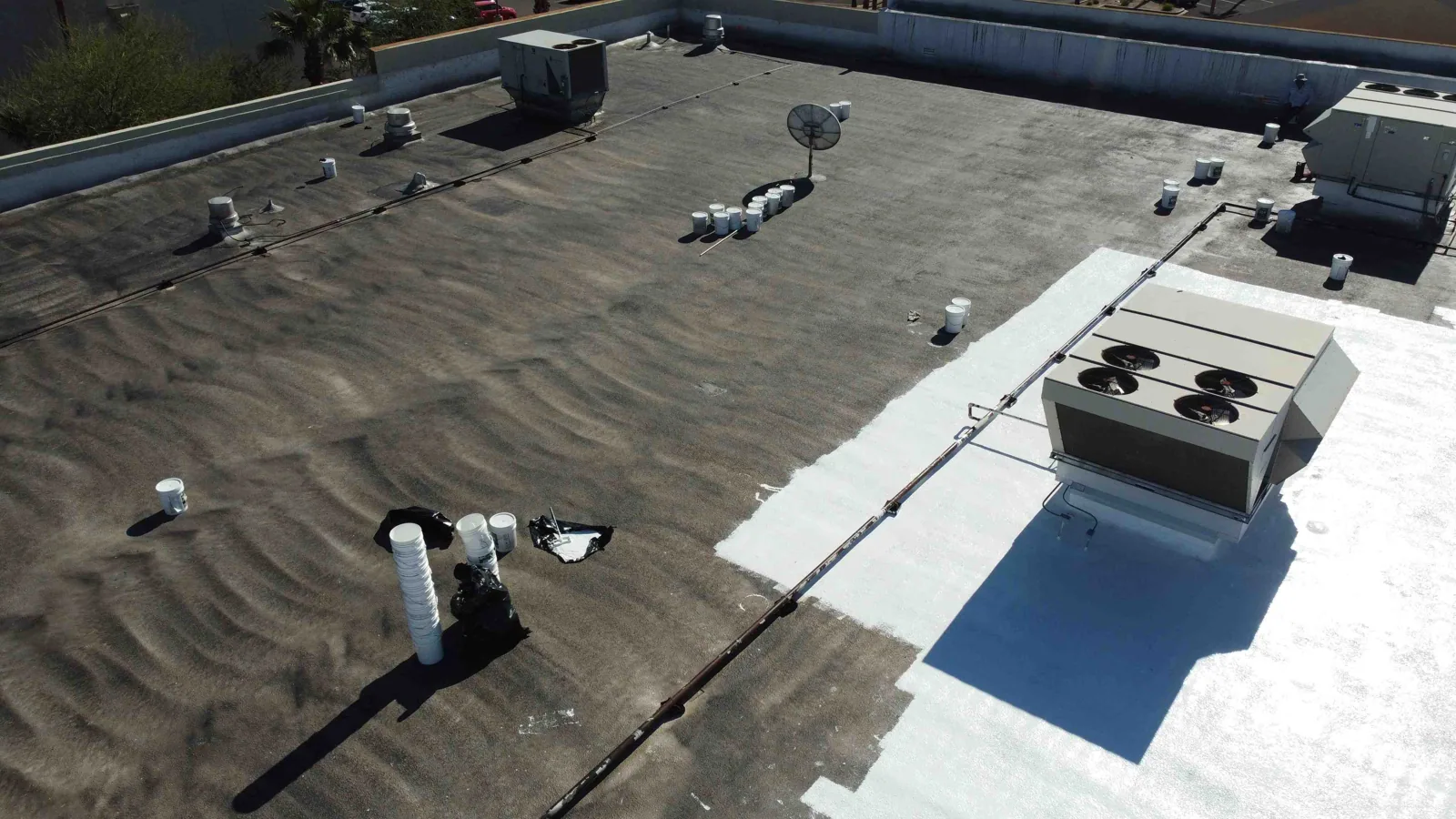
A hot afternoon can make a roof visit feel simple until the membrane, equipment, and work area are all exposed to full sun. We begin a PVC roof review by checking safe access, documenting the visible assembly, and locating any interior reports before setting a repair boundary. In Broken Arrow, OK, late July through early September brings frequent readings at or above 100 degrees, so inspection hours, material handling, and crew exposure belong in the schedule. PVC is a thermoplastic single-ply system with heat-welded seams; the actual condition of its field, flashings, and transitions determines the work. An initial commercial roof inspection gives the owner evidence for a focused repair or a larger plan.
Follow the weld through every detail
PVC sheets form a continuous roof through heat-welded laps, flashings, and detail pieces. We check that seams are intact across their length, that penetrations and curbs transition cleanly, and that terminations remain secure at walls and edges. A repair cannot simply cover an opening if the adjacent membrane is contaminated, brittle, wet, or poorly attached. Preparation, compatible material, and a test of the completed weld shape the scope.
PVC can be selected for environments where grease or certain chemical exposures are a concern, but that does not mean every formulation suits every exposure. We ask what processes occur below and above the roof, identify the membrane present, and check product requirements before specifying repair materials. A comparison with KEE/PVC-alloy roofing still begins with the exposure and assembly actually present. Alfa Laval's Broken Arrow operation manufactures air-cooled heat exchangers. At an industrial property, we confirm equipment clearances and roof access with the site contact before selecting a PVC repair detail.
Set work to the local weather window
Heat changes when a roof can be inspected comfortably and when workers can handle materials with control. We review forecast conditions, surface temperature, safe access, and the product's installation requirements before scheduling a weld. During a high-heat period, earlier work hours may protect both the crew and the consistency of the detail. Summer heat also accelerates surface drying and can make an exposed staging area uncomfortable, while a sudden storm can put an open repair at risk. The schedule includes a closeout check and time to protect the interior if conditions shift.
Spring creates a different constraint. Frequent spring showers and early-summer storms make the dry interval for PVC welding a scheduling constraint. After a nearby storm, we inspect the assigned PVC roof and document any observed impact before defining repair work. We document observed punctures, disturbed edges, open welds, or water entry and distinguish them from older wear. A focused wind review can record perimeter and flashing conditions where the site shows evidence of movement. That gives the owner a bounded next step instead of a weather-based assumption.
Repair the system that is present
A PVC repair, like TPO seam repair, succeeds when the new material can bond to a properly prepared existing surface. We clean and prepare the repair area as required, verify the material compatibility, weld the patch or flashing, and check the finished edge. Details around drains, pipes, equipment curbs, and parapets may need formed membrane or a larger transition than the field patch itself. If several defects cluster around one detail, we map the area so the owner can see whether a localized repair remains practical.
Where water is active, temporary protection may be the first work item. Permanent welding waits until moisture and weather allow a controlled installation. We compare the roof observation with the interior report because water may travel before appearing in a room. A leak repair scope records the immediate opening and the protection needed below it. The closeout photographs show what was repaired, what remains under observation, and which limits require another visit.
Compare the next capital decision
Repair, recover, and replacement each depend on evidence from the assembly. We consider seam condition, membrane flexibility, attachment, wet insulation, deck condition, drainage, and the history of recurring work. A sound area with an isolated defect may call for a targeted repair. Broader deterioration may justify evaluating a roof recover, while wet layers, damaged substrate, or incompatible existing materials can change the comparison. We record the conditions that support each route and any concealed area that remains uncertain instead of promising a solution based on appearance alone.
Code review belongs in that conversation when the work changes the roof assembly or scope. Before a larger reroof, the project team confirms permit requirements for the building and the proposed assembly with the authority having jurisdiction. Owners considering improved solar reflectance can also compare a cool-roof approach, but system choice must still account for drainage, existing insulation, and the manufacturer's installation requirements. The decision record should show the roof condition, alternatives, and permitting questions in one handoff.
Coordinate the roof with site operations
On an occupied property, the work plan must keep people and deliveries away from the active roof zone. We confirm roof access, lift placement, staging limits, indoor protection, noise-sensitive hours, and emergency routes with the site contact. Near the Rose District, Kenosha Street and Washington Street serve the district's north and south sides; these corridors help orient a visit, but loading and roof access are determined at each property. For facilities with customer, patient, or production traffic, our occupied-building plan sequences notice, setup, daily cleanup, and end-of-shift protection.
Wind and rain can shorten the work window even after a crew is staged. We set a stop point for weather, identify the temporary protection method, and agree on who receives the end-of-day handoff. If a section cannot be closed safely, the report explains what remains exposed and what must be completed next. A service visit may be arranged around operations, and emergency response is available around the clock, including weekends and holidays. Sharing access rules, process restrictions, and the leak history before scheduling lets us arrive with a realistic plan for the roof and the people below it.
Record the condition for follow-up
A useful closeout includes photographs of the prepared surface, finished weld, flashing transitions, and any adjacent items outside the repair boundary. It records where the work occurred and what should be checked on the next visit. This matters when heat, hail, or wind affects different parts of a large property at different times. The 150-acre Shops at Aspen Creek includes retail, dining, multifamily, and entertainment uses. For a roof visit there, we coordinate pedestrian routes, deliveries, and work hours with the property contact. We set the plan from the individual building. Schedule an inspection and share the operating calendar, roof access requirements, and recent leak locations so the first visit can produce a decision-ready record.
Commercial Roofing Questions
How is PVC seam work checked?
We inspect the weld along its run, examine the adjacent membrane, and look at transitions where water or movement concentrates. Photos and test observations identify the completed repair and any nearby condition that still needs attention.
Does PVC automatically suit a manufacturing roof?
No. The relevant exposure, installed formulation, roof assembly, and product requirements need review. We document the actual conditions provided by the facility and confirm compatibility before setting a repair method.
Can PVC be repaired during Broken Arrow summer heat?
The visit is planned around safe access, surface conditions, and installation requirements. If heat or a storm prevents a controlled weld, we protect the area as needed and return during a suitable window.
When should we compare a recover with replacement?
We first check moisture, deck condition, existing layers, attachment, drainage, and recurring failures. Those findings establish whether a recover is worth evaluating or whether broader removal belongs in the comparison.
What do you need to schedule an inspection?
Send the access instructions, occupancy hours, process restrictions, and interior leak locations. Any recent roof photos or maintenance records help us plan the first inspection route and keep the handoff clear.