Commercial Roof Recover
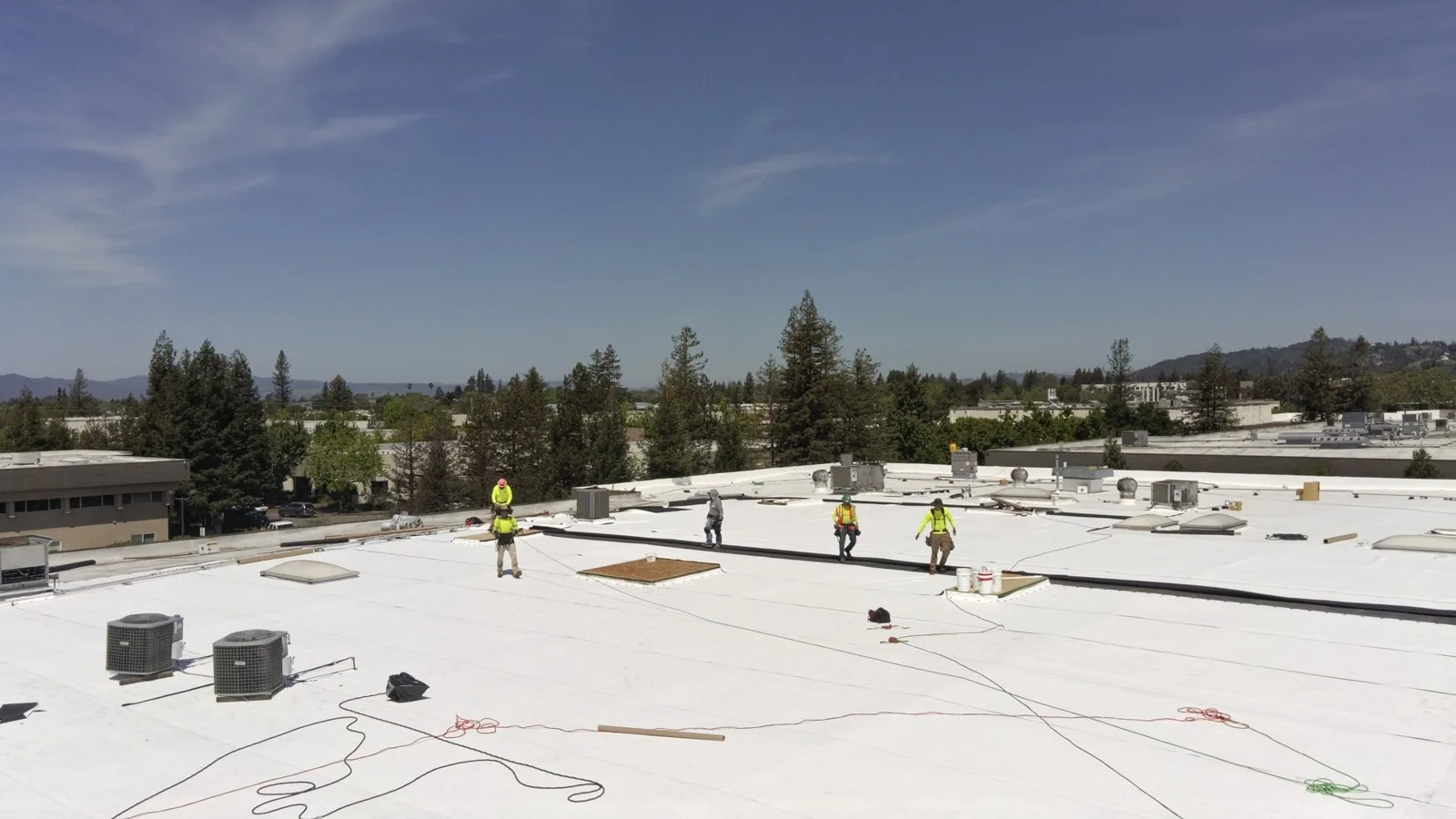
Spring storms can leave a roof dry one week and expose a weak seam the next, but a new layer should not hide a condition that still needs repair. In Broken Arrow, OK, rain and thunderstorms are most frequent in spring, while hail and damaging wind also peak in spring and early summer. Before considering a recover, we document the existing assembly, inspect the interior below suspect areas, and identify where moisture or movement may be present. A recover keeps the existing roof in place beneath a new system, so the decision starts with what is already there: number of layers, attachment, substrate, drainage, and compatibility. A field roof inspection establishes those facts, and selective moisture survey work can help target openings when the roof and conditions support that method. The result is a clear choice between overlay, repair, and removal. Mixed-use buildings in the Rose District and light-industrial sites at Creek 51 require different access plans, while the existing assembly determines whether an overlay is suitable.
Check what the existing roof can carry
An overlay is only suitable when the existing roof and deck can support the added assembly and provide a stable base. We inspect for wet insulation, loose or poorly bonded material, failed fasteners, deck deterioration, and repeated patch layers that obscure the original build-up. Core cuts or other targeted checks may be needed to confirm the assembly; infrared findings alone are not a final moisture map because surface conditions can affect readings. The inspection records test locations, observed layers, and areas needing additional verification. We also check the roof edge, drains, and curbs because a new layer changes finished height at each transition. The findings may support an overlay, a partial removal, or a complete tear-off. If removal is indicated, the replacement scope can define the exposed-deck inspection and protection sequence rather than carrying assumptions from an overlay estimate.
Keep water moving after added layers
Finished height is a drainage issue as much as an edge detail. Before adding insulation or membrane, we map drains, scuppers, overflow points, equipment curbs, door thresholds, and wall terminations. Added thickness can reduce the freeboard at edges, bury flashing, or leave a drain bowl below the surrounding surface if details are not reset. We look for persistent ponding and verify that the proposed taper and drain transitions have a workable path. A drain and scupper review can be part of the scope where water collection has been observed, while ponding-water repair addresses the conditions contributing to retained water. Along the Creek Turnpike, the facility's own entrance, loading rules, and roof access determine how inspection and material movement are planned. The owner should see the drainage corrections and height transitions in the proposal, not discover them after the membrane is installed. We also record where discharge reaches grade and whether service crews can reach the drain points after construction. A recover plan that makes a drain difficult to inspect creates a maintenance problem, even if the membrane itself is sound. These checks let the owner review water handling as part of the assembly rather than as a detail left for closeout.
Choose materials that work as one assembly
Adhesives, fasteners, cover boards, and membranes must suit the surface beneath them. We identify the existing roof type and condition before recommending a new system, then review attachment, perimeter conditions, penetrations, and manufacturer requirements for the selected assembly. A mechanically attached TPO system and an adhered EPDM system have different material and substrate considerations; neither should be selected from color or a single sample alone. Where coating is proposed instead of a recover, substrate adhesion and remaining surface life need their own review through roof coating restoration. In Broken Arrow's East Industrial Zone, designated for commercial and industrial activity, rooftop equipment and service paths remain site details to confirm before layout. Equipment supports, exhausts, and future service access stay visible in the plan so a new layer does not create avoidable maintenance conflicts.
Build access and protection into the work plan
A recover avoids broad tear-off, but it still requires a controlled work area, material staging, and weather protection. We map roof access, loading zones, lift locations, fall-protection boundaries, and the paths used by occupants. On a mixed-use property such as The Shops at Aspen Creek, deliveries, retail traffic, residential areas, and entertainment operations may call for separate timing and perimeter controls. The actual property contact confirms the operating constraints before mobilization. If the building remains occupied, occupied-building planning can set notice intervals, protect interior areas, and coordinate noisy or disruptive steps. During a recover, the crew still prepares and closes one section at a time, keeps insulation dry, and secures materials before a storm. A wind-driven rain forecast can change the next work area, so the daily handoff includes what is complete, what remains protected, and where the crew resumes.
Compare the recover with removal
The choice is clearer when both options use the same observed conditions and project constraints. We document overlay prerequisites, likely detail adjustments, and any unresolved condition that could change the scope. The comparison should also account for access, disposal, expected disruption, drainage work, and how concealed deck conditions will be handled. We state what the preliminary survey confirms and identify where test openings are needed to resolve hidden conditions. For severe-weather documentation, a claim documentation scope can preserve dated photos and observed damage without treating a regional report as proof of roof damage. The Broken Arrow market includes mixed-use commercial properties such as The Shops at Aspen Creek, where access planning is part of the work sequence; each roof still receives its own inspection. The handoff gives ownership a supported next decision: proceed with a recover, revise the area, or expose the assembly through removal.
Recover work is considered only after the existing assembly is understood. We verify layer count where it can be confirmed, inspect attachment and deck condition, and check whether the roof can carry the proposed system within project requirements. Saturated insulation, trapped moisture, weak attachment, or concealed deterioration can rule out an overlay or require selective removal. We also compare finished height with drains, scuppers, parapets, and door thresholds so added thickness does not block drainage or bury a necessary termination. The scope identifies what will remain in place and what must be removed, with test openings used where records and visual access cannot answer the question. During work, we keep each exposed area within a manageable weather window and record any change found beneath the surface. This gives the owner an evidence-based comparison between repair, recover, and replacement rather than treating an overlay as a shortcut around uncertain conditions.
Commercial Roofing Questions
How can you tell whether an overlay is eligible?
We inspect the existing layers, attachment, deck indicators, drainage, and moisture conditions, then use targeted openings where the assembly needs confirmation. The findings are compared with the selected system requirements and applicable code limits before an overlay is proposed.
Will a recover fix existing leaks?
Only when the source and affected assembly are identified and included in the scope. We trace active water paths, repair the underlying conditions that can be reached, and document any uncertainty before new material covers the area.
Does the added roof height create problems at drains or edges?
It can change drain elevation, flashing height, equipment-curb transitions, and edge geometry. We survey these details before selection and include required reset or extension work in the proposed assembly.
When is tear-off the more appropriate path?
Removal is considered when moisture, unstable attachment, deck damage, excessive existing layers, or incompatible materials make the retained roof an unsound base. The inspection notes which condition supports that recommendation.
Can an overlay be installed during Broken Arrow storm season?
The schedule follows roof conditions and the forecast. We keep materials dry, limit open work areas, and close each section before leaving; rain, hail risk, or unsafe wind can shift the sequence.