Distribution Center Roofing
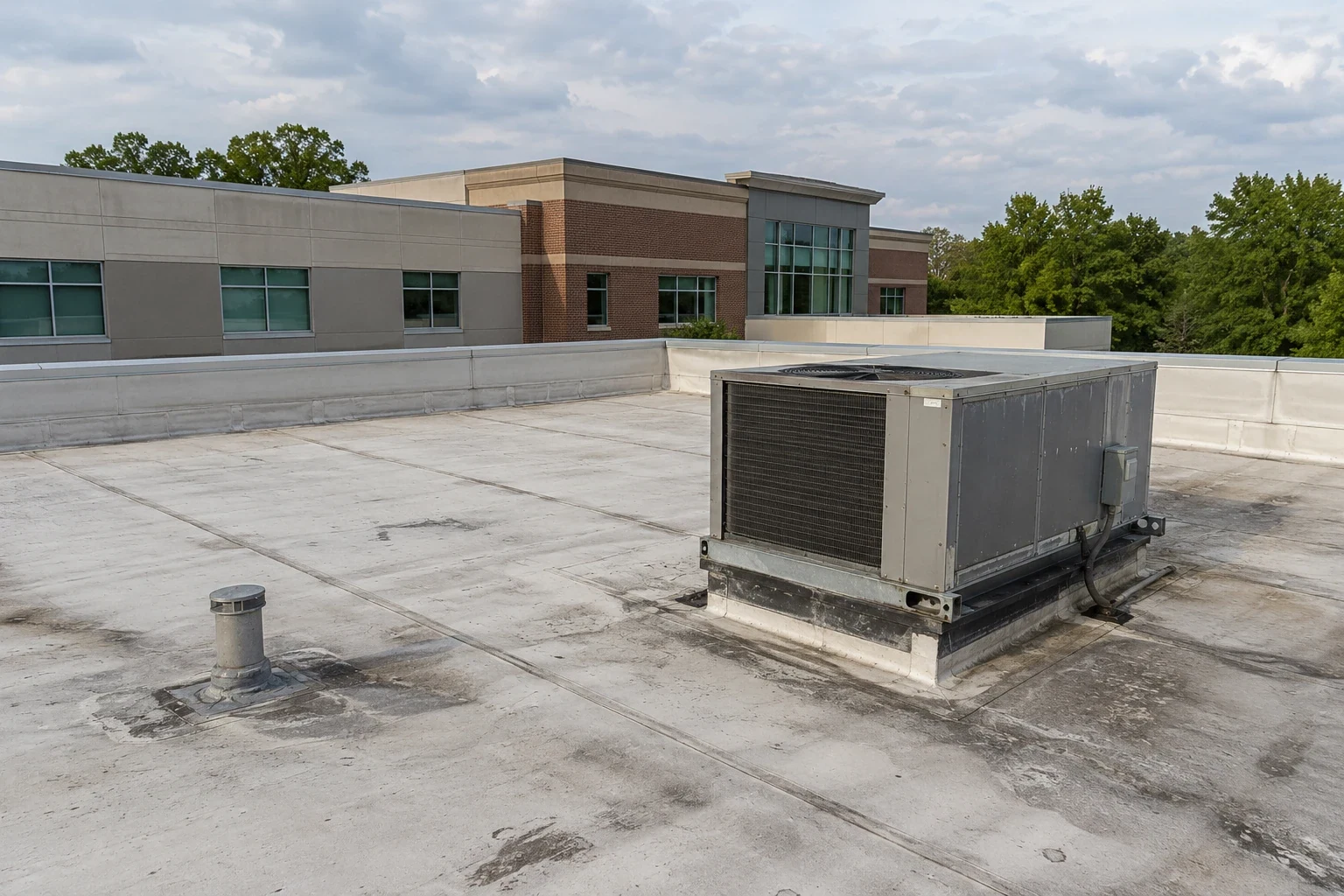
A trailer queue can fill a distribution center's yard before the first roof crew is ready to unload, so the work sequence starts with site access. We confirm delivery windows, roof entry, lift placement, and the areas below that need protection, then inspect reported leaks and drainage. In Broken Arrow, OK, Creek 51 Business Park occupies an industrial-zoned tract at the Creek Turnpike and Highway 51 junction, while storms can disrupt work during active shipping periods. A roof scope therefore has to connect building condition with dock operations. Our distribution center inspection documents the assembly and identifies whether repair, phased reroofing, or broader replacement planning fits.
Keep the roof plan tied to throughput
Distribution buildings may have extended shifts, fast-moving inventory, cross-dock areas, refrigeration zones, and multiple loading faces. We ask which routes cannot close, where trailers turn, and how roof access can avoid peak receiving hours. The roof inspection maps drains, seams, penetrations, edge details, and leak reports against the operating plan. If active water threatens cartons, conveyors, or electrical equipment, interior protection and temporary dry-in may take priority while a permanent repair is scheduled. For a warehouse roof, storage and dock protection may dominate; distribution centers add a tighter handoff between dispatch, receiving, and roofing work.
Broken Arrow's Creek Turnpike has exits at Aspen, Elm Place, New Orleans Street, and SH-51. Those connections can inform delivery routing, but a site's gate, turning radius, vehicle clearance, and dock schedule determine the actual plan. We confirm truck movement with the facility contact before mobilizing panels or equipment. At Creek 51 Business Park, the industrial setting is relevant context for property logistics, yet roof type and condition still have to be inspected at the individual building.
Protect stock through storm windows
Spring is the Tulsa area's wettest season and brings frequent showers and thunderstorms. The Tulsa area sees most hail and high-wind reports in spring and early summer, though hail has been reported in other seasons as well. After a local warning or report, we inspect the property for punctures, loose edges, seam changes, and flashing damage. We inspect the facility after a regional event, trace any water entry, and protect inventory or active sortation areas beneath a confirmed opening. A storm damage review keeps temporary protection separate from permanent repairs.
Tulsa's late-summer heat frequently reaches 100 degrees or higher. Heat can change safe access times, material handling, and the practical work window across a broad roof. We plan early starts or phased sections when conditions require them and keep dispatch informed about any area isolated below. The building's mechanical equipment, roof penetrations, and traffic lanes also influence where a crew can stage. A phased work plan can identify which zones remain available as each roof area is repaired or replaced.
Evaluate long roof runs and drainage
Broad roof areas can make small drainage or seam issues repeat across several bays. We inspect the roof system by zone and mark drains, scuppers, penetrations, mechanical curbs, and edge transitions. A ponding area may reflect a blocked outlet or roof shape; a seam opening requires a system-specific repair. We identify whether the roof is TPO, PVC, EPDM, built-up, coating, or metal before choosing materials. For a manufacturing plant roof, process access and equipment clearances may dominate; a distribution facility adds constant movement of inbound and outbound loads.
When leaks recur, a photo map helps operations staff relate an interior report to a roof zone and track repair history across shifts. We distinguish immediate defects from areas that need moisture testing or an opening. If the current system remains sound around a limited failure, a targeted repair may be adequate. Widespread moisture, failed attachment, or aging transitions may lead to a recover evaluation or a replacement comparison. Existing layers, deck condition, drainage, and loading all affect whether an overlay is appropriate.
Sequence work without losing the handoff
A good production plan names the work zone, how the roof will be secured at each shift end, and who receives the update. We coordinate roof access, staging, safety barriers, interior protection, and the route for debris or materials. If a repair involves hot work, odors, or a temporary closure, the operations team receives notice in advance. Material delivery and lift windows are set outside critical dock periods where possible. For a larger project, the roof may be separated into zones so the building retains usable receiving and dispatch areas while work progresses.
SH-51 crosses northern Broken Arrow, and the Creek Turnpike connects commercial areas in the south and east. Those roads help orient crews and deliveries, but property rules control access. We verify gate procedures, trailer circulation, and any limits on equipment staging. When rain threatens stock outside the normal shift, we can stabilize the roof and send operations a clear status before permanent work is scheduled. Permanent work follows the safe weather window and recorded scope. The daily handoff states the area completed, the areas still protected, and any change that affects the next shift.
Give operations a durable roof record
Closeout includes photographs of repairs, seams, penetrations, drainage points, and any condition left outside the approved boundary. The record notes the roof zone, work performed, materials used, and follow-up items. A roof condition report can support annual planning across multiple facilities, while a maintenance visit checks drains and transitions before the next wet season. For an operation near the New Orleans Street corridor, the Creek Turnpike interchange by NSU is a useful local reference, but truck routes and roof entry remain property-specific. Share dispatch peaks, inventory sensitivities, access rules, and prior repairs when scheduling. We will return a roof plan with clear areas for immediate response and longer-term capital work.
Distribution work has to protect docks, trailers, loading lanes, and interior inventory while the roof remains accessible. We coordinate a receiving window and identify where lifts, materials, and debris containers can sit without crossing active truck paths. If a roof opening is above stored goods, the protection plan identifies the affected bay and who can clear or cover inventory. Large roof areas are divided into manageable sections, with a dry-in endpoint at every shift. We inspect drains and overflow paths because a temporary closure must not send water toward dock doors. Equipment curbs and roof traffic routes are recorded so later service work does not disturb new seams. The site contact receives a daily status naming areas complete, locations under temporary protection, and any change needed before the next shift. This keeps logistics in the work sequence and ties each repair boundary to the actual building and operations below.
Commercial Roofing Questions
Can roof work be staged around inbound trailer peaks?
Yes. We confirm dispatch patterns, delivery windows, lift placement, and the areas that need to stay open, then sequence work by roof zone. The facility contact receives a daily handoff on access and protection.
How do you protect inventory if a storm opens the roof?
We locate the active opening, protect stock and equipment below, and use temporary dry-in when conditions require it. The permanent repair scope follows the inspected roof and remains separate from emergency protection.
What makes a distribution-center roof inspection different?
The roof review still covers seams, drains, flashings, and penetrations, but the schedule must also account for continuous receiving, outbound routes, conveyors, and inventory-sensitive zones.
Can you replace a roof without closing the entire center?
The project may be phased if the building layout, weather, and roof condition allow safe separation. We agree on work zones, interior protection, and shift handoffs with operations before the first section begins.
What records should we share before the visit?
Send the roof plan, leak log, previous repairs, dock schedule, restricted areas, and rules for lifts or odors. Those details help us plan access and protect the active operation.