Warehouse Roofing
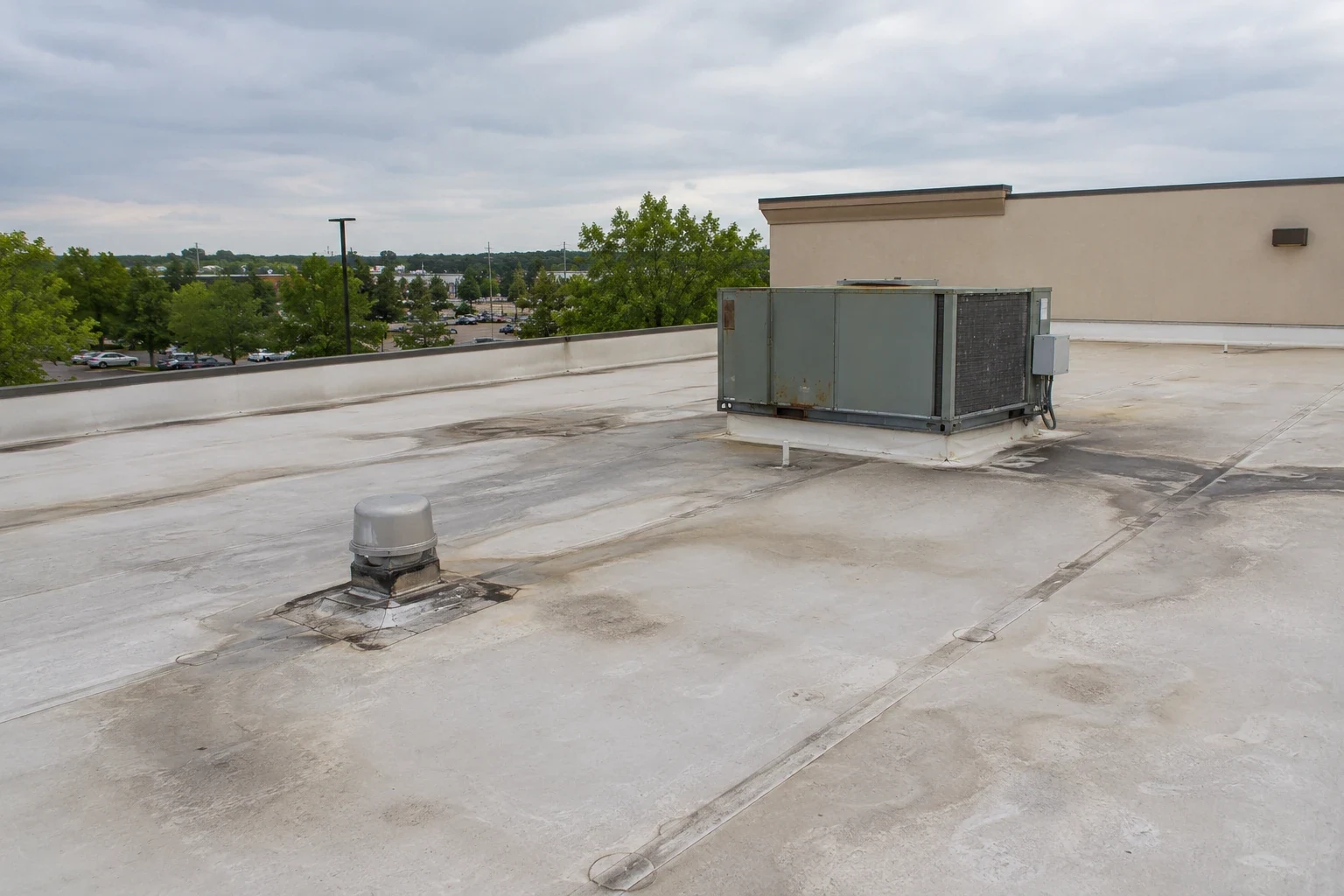
A storm can reach a warehouse roof while loading doors are still open and trailers are still moving, so the first response has to protect the interior without blocking operations. We check reported leaks, inspect the roof surface and drainage, and agree on safe access and a staging route before work begins. In Broken Arrow, OK, industrial areas such as Creek 51 Business Park sit at key road connections, while spring brings frequent thunderstorms and damaging wind. That makes roof condition and site logistics part of the same decision. A warehouse roof inspection records what is present, then distinguishes an isolated repair from a larger replacement or recover need.
Inspect the roof above the operation
Warehouse roofs commonly contain broad low-slope areas, drains, rooftop units, skylights, and penetrations that can be difficult to inspect during active shipping hours. We map seams, flashings, edge details, equipment bases, and water paths, then check interior reports against those observations. Water may travel before it appears near a pallet rack or office, so the stain alone does not define the roof opening. We photograph the conditions, identify immediate protection needs, and note any section that cannot be reached safely during the first visit. That gives the operations contact a useful repair boundary and avoids mixing verified items with untested areas.
Creek 51 is an 85-acre industrial and light-industrial park at the Creek Turnpike and Highway 51 junction, a useful access reference for warehouse dispatch. Such a location can make delivery planning practical, but every warehouse has its own gate, dock, and trailer circulation rules. We confirm the truck route, lift location, clearances, and work zone with the facility contact before scheduling. A distribution-center roof plan may involve faster parcel or cross-dock cycles; warehouse work is sequenced to the building's actual inventory and shipping calendar.
Set the inspection around local exposure
Tulsa's storm calendar brings concentrated spring rain, with hail and gusts also reported outside that season. Because storm impacts are localized, we inspect this warehouse after a reported event and document membrane punctures, seam condition, edge metal, roof openings, and interior reports actually observed. If rain is active, we protect exposed inventory below and use temporary measures where needed until the surface and forecast support permanent work.
On broad warehouse roofs, the late-summer heat can limit how long work remains safe in exposed areas. We plan access, material handling, and the route across the roof from the day's actual conditions, with a defined staging area and work sequence. Where a low-slope warehouse has an existing TPO membrane, seam repair requires compatible preparation and controlled heat welding. The hail inspection record should keep visible impact separate from ordinary wear or older repairs.
Match the repair to the roof assembly
A warehouse can have different roof systems over the dock, office, storage, or later additions. We identify membrane, metal, coating, or built-up construction before choosing repair materials. A patch that suits one surface may not bond to another, and a coating cannot correct wet insulation or a failed deck. If leaks recur along one bay, we inspect the connected seams, drains, and penetrations rather than replacing an arbitrary square. A photo condition report can map each item by roof area, urgency, and whether further testing is needed before a permanent scope is set.
When most of the assembly remains sound, targeted repairs may be appropriate. Widespread wet material, poor attachment, repeated leaks, or deteriorated edges can justify comparing repair with a recover assessment or replacement. We review existing layers, substrate, drainage, and the loading impact of any added system before an overlay is considered. For a building with exposed-fastener metal sections, the inspection also covers screws, washers, laps, and framing support. The decision record explains which findings are confirmed and which require opening or engineering review.
Keep docks and inventory protected
Roof work can affect dock doors, forklift lanes, inventory, and employee routes below. We coordinate delivery timing, lift placement, roof access, interior protection, and where materials may be staged. The work zone is kept clear of active loading, and the facility contact receives a daily handoff identifying completed areas and any temporary protection left in place. If a repair needs odors, hot work, or a temporary closure, those conditions are scheduled with operations before crews mobilize. A phased warehouse schedule helps keep shipping activity moving while the roof area is isolated.
New Orleans Street (E. 101st) crosses Broken Arrow and connects near the Creek Turnpike and NSU campus; SH-51 crosses the city's northern side. Those corridors orient vehicle routes, but actual truck access depends on the property. We confirm turning space, overhead conflicts, gate codes, and dock times. If water reaches inventory after regular hours, we can arrange immediate protection and send the facility a status before permanent repairs are set. Permanent work follows the weather window and the documented repair scope, with protection below maintained until the opening is closed.
Leave the next shift a usable record
At closeout, we record repairs, photos, materials used, conditions outside the authorized boundary, and any follow-up inspection needed. A roof map helps warehouse staff connect an interior report to a roof location during the next event. Manufacturing plant roof planning can revisit drains, seams, skylights, and penetrations before a small defect disrupts storage or shipping. Zeeco's Global Technology Center combines manufacturing with combustion testing, part of the industrial activity that makes access and equipment coordination familiar considerations in the market. Send roof plans, leak locations, dock hours, and access instructions when requesting an inspection. We will return a documented scope that gives the facility team a clear next decision.
Warehouse work needs a plan for dock doors, stored inventory, forklift paths, and rooftop equipment access. We identify the shift pattern and the interior area below each planned roof section, then set a protected route for moving tools and materials. A leak above racking may require a temporary move or cover before the roof can be opened. We inspect drainage and perimeter details near loading areas because water entering at an edge can affect goods far from the roof opening. If a site has several attached buildings, the report identifies which roof and dock zone were inspected. The daily handoff states whether a bay is released, still protected, or awaiting owner direction. A receiving schedule may change during the work, so the site contact confirms truck movements before lifts or debris containers are placed. This connects roof scope with warehouse operations while keeping repairs bounded to the evidence found.
Commercial Roofing Questions
Can warehouse roof repairs happen while shipping continues?
Often, with a defined work zone, delivery route, interior protection, and schedule agreed with operations. We identify which dock or roof areas must remain clear before setting the repair sequence.
How do you locate a leak over a large storage area?
We compare interior reports with seams, penetrations, drains, and roof transitions, then mark the inspected locations. Water can travel beneath the roof surface, so findings may call for targeted testing before the boundary is final.
Should hail reports trigger a roof inspection?
They can prompt a timely check, especially after local reports, but they do not prove damage at a particular warehouse. We document visible conditions and keep storm evidence distinct from existing wear.
When does a warehouse need replacement instead of repair?
Repeated leaks, widespread moisture, deteriorated attachment, or deck concerns can move the comparison toward replacement. We record those findings and evaluate recover options only after checking layers and substrate.
What site information helps you plan a warehouse visit?
Share loading hours, truck routes, roof access rules, inventory-sensitive zones, leak history, and any restrictions on odors or hot work. Those details let us protect stock and avoid blocking the operation.