Commercial Roof Leak Repair
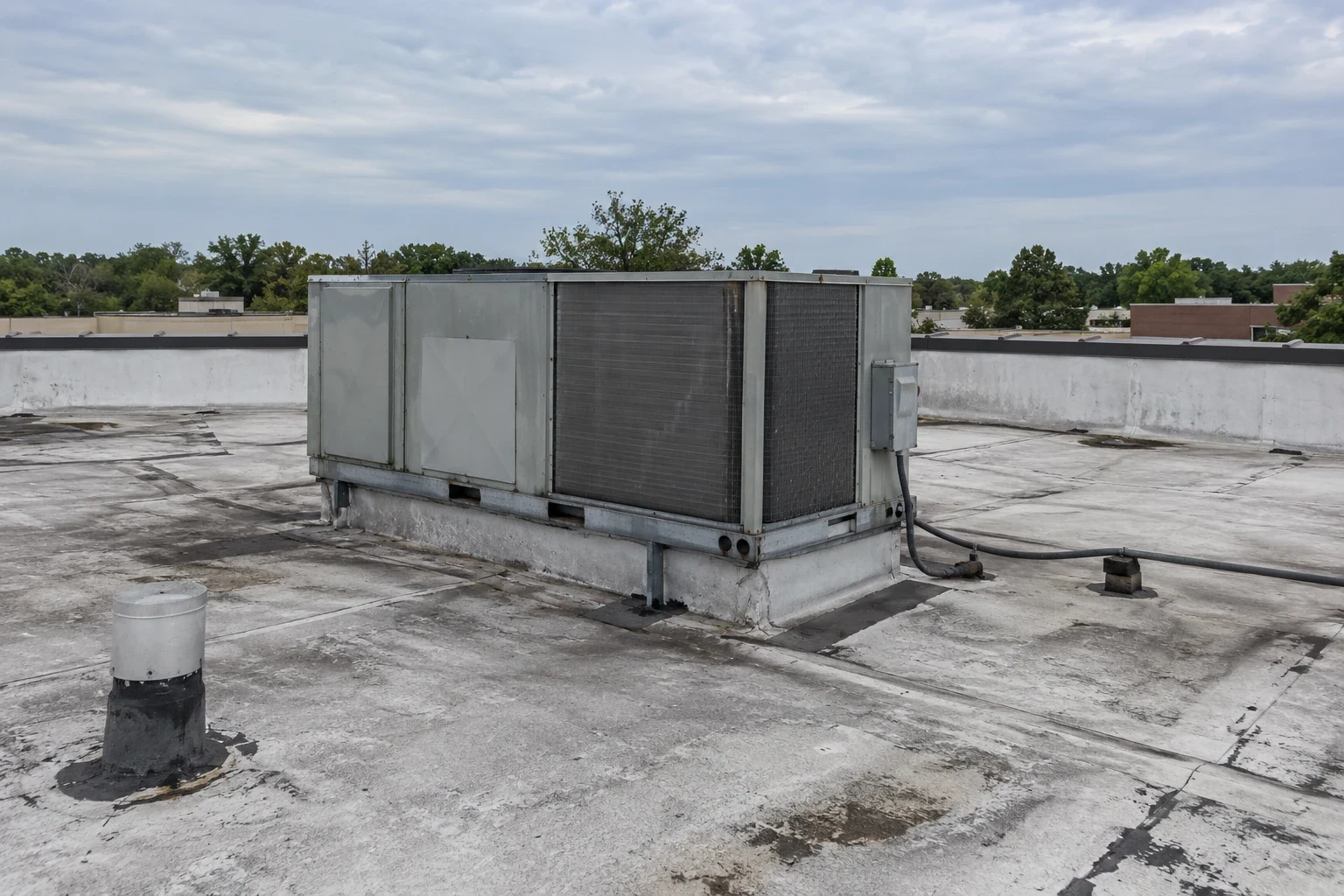
Wind-driven rain can turn a small flashing gap into water across a ceiling before the next shift begins. First, protect the interior, record when and where water appeared, and check the roof area above the affected space as soon as access is safe. In the Tulsa area, spring brings the most rain, and hail and damaging winds are especially common from spring into early summer. We inspect the reported building and document the roof conditions found. We trace the leak from interior evidence to roof details, documenting what is wet and what is only suspected. The inspection checks seams, penetrations, curbs, drains, wall transitions, and prior repairs. New Orleans Street connects to a Creek Turnpike interchange near the NSU campus, making it a useful route reference; the site contact confirms the roof entrance and operating hours. A focused commercial inspection starts the diagnosis with a usable condition record.
Protect the space below first
Before permanent work begins, we identify the affected rooms, equipment, inventory, and electrical or process areas that may need immediate protection. The interior map helps connect a ceiling stain or active drip to likely roof areas, but water can travel along deck flutes, insulation joints, beams, or other paths before it appears. We note the timing of the leak, weather at onset, whether the water is continuous or intermittent, and any prior repair at that location. Those details narrow the roof-side search while leaving the leak source tied to evidence from the inspection. Where water is active, temporary collection or covering is kept clear of egress and operations, and the building contact receives a specific status update. A temporary emergency response can stabilize an opening when permanent repair conditions are not yet available. Creek 51 Business Park is zoned for industrial use and marketed as light industrial. At a leak call there, we confirm production-area protection and loading-lane restrictions with the site contact. The next step is to test the most plausible roof details without creating unnecessary openings.
Follow the path to a roof detail
On the roof, we look for discontinuities that match the interior timing and location: open seams, lifted flashing, punctures, loose fasteners, failed sealant, drain backup, or water entering at an equipment curb. We examine adjacent membrane and flashing because a repair placed on a weak or wet surface may not hold. If visual evidence is inconclusive, targeted water testing or an approved opening may help isolate the path, with the method selected to avoid causing unrelated water entry. Each test area is recorded and restored before moving on. Northeastern State University's Broken Arrow campus is near New Orleans Street near the Creek Turnpike interchange and includes multiple buildings and offices. We identify the affected building and roof entry before tracing a campus leak. Findings can be organized in a photo condition report before the permanent repair scope is approved.
Use a repair method that fits the assembly
Leak repair depends on the installed roofing system and the material surrounding the failure. A membrane seam may need welding, compatible membrane patches, or adhesive work; metal leaks may involve fasteners, laps, closure strips, or flashing movement. We identify the system before selecting products, prepare the surface, and confirm that nearby material is sound enough to receive the repair. Drains and scuppers are checked for debris, obstruction, and surrounding membrane defects because water held at a low point can expose more than one weakness. A drain and scupper evaluation can clarify whether water movement is part of the leak. Where the system is TPO, work follows the membrane-specific preparation and welding requirements for a TPO roof detail; a different assembly needs its own compatible method. We document work performed and do not cover an unresolved wet or unstable substrate without a defined plan.
Define what is fixed and what remains
A confirmed leak repair has a location, cause when observable, method, and clear limit. We photograph the defect before work, record any removal or substrate exposure, and check the finished transition after repair. If moisture or deterioration extends beyond the accessible area, we state what remains uncertain and what inspection would resolve it. A local patch may stop water at one penetration while leaving a separate seam failure elsewhere, so multiple reported interior points are tracked independently until evidence connects them. When repeated leaks, broad wet insulation, or failing attachment suggest a larger scope, the owner can compare defined repair work with a recover assessment or roof replacement plan. Broken Arrow has recorded tornado damage at or near the city, and Tulsa-area hail reports peak in spring. The repair recommendation follows the conditions photographed and tested at this building.
Check the repair through the next weather cycle
After repair, the record gives the building team a fixed point for rechecking the area. We note the date, material, location, interior status, roof-side photographs, and whether follow-up inspection is recommended after rain. If a leak returns, that record helps compare the new timing and location with the original condition instead of repeating the same initial search. At an occupied property, we also hand off any access restriction, temporary protection, or interior area that needs monitoring. Routine roof maintenance can revisit repaired flashings, drains, and seams on a planned schedule. For a property in the Rose District, nearby tenants and storefront operations may make interior protection and work timing especially important, but the actual occupancy plan comes from the owner. An urgent call can be placed at any hour of any day, including weekends and holidays; permanent repair is sequenced when the roof is ready.
Leak repair starts by mapping the room report against roof geometry and likely water paths. We record when the leak appeared, weather near that time, and whether equipment or ceiling work changed recently. On the roof, we inspect seams, penetrations, walls, drains, and prior patches around the likely area. If the source remains uncertain, the scope identifies a targeted opening or moisture survey that could resolve it. Temporary protection addresses active water entry while permanent repair waits for a dry, prepared surface. We tell the owner what was confirmed, what is still a possibility, and what access is needed next. A repair should not expand to the entire field just because water traveled before becoming visible indoors. Closeout compares the roof detail with the original report and identifies any monitored area for the next rain. This leaves the building team with a specific repair boundary and a useful follow-up plan.
Commercial Roofing Questions
What can make a roof leak appear indoors away from its entry point?
Water can travel along roof layers, deck flutes, framing, or service pathways before it reaches a ceiling. We compare the interior pattern with roof seams, penetrations, drains, and past repairs to trace the source instead of repairing directly above the stain.
Can you find a leak when the roof looks dry?
Yes. Intermittent entry can leave no visible water at the time of inspection. We use the reported timing, wind direction where known, interior marks, and roof details to select targeted checks; testing is documented and any opening is restored.
What should staff do while water is entering?
Protect people and equipment, keep walkways clear, and notify the building contact. Move vulnerable contents if it is safe to do so, then share the affected room, start time, and any ceiling or equipment concerns so the response can be directed.
Will the first repair resolve every leak in the building?
The first scope addresses conditions supported by the inspection. Separate leak points remain separate until evidence connects them. We record each reported area and recommend additional checks when access or concealed conditions leave the source uncertain.
When is a leak a sign of broader roof failure?
Repeated entry at multiple details, widespread wet material, deteriorated attachment, or deck concerns can indicate a larger issue. We document those findings and compare localized repair with recover or replacement options.