Claremore
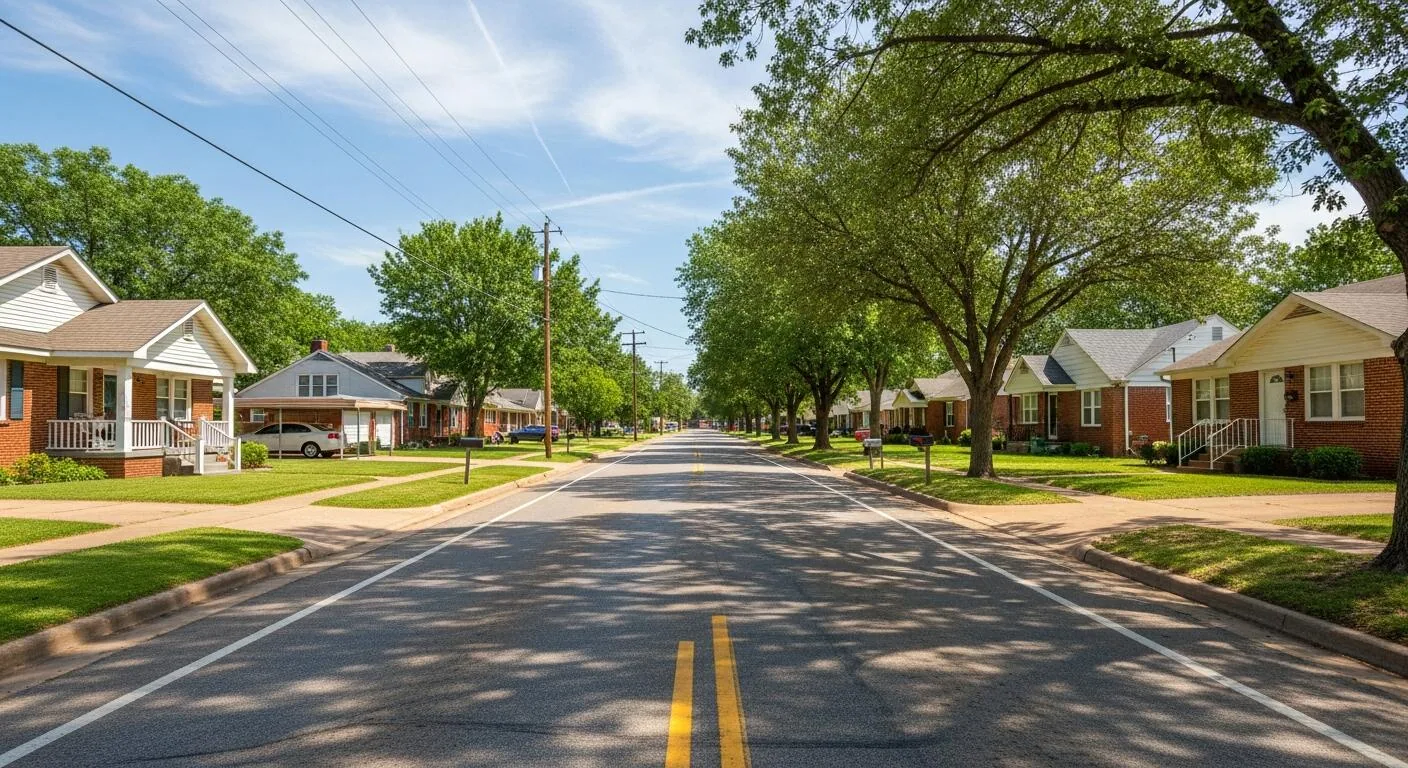
Tulsa-area spring rain can shorten a Claremore roof's open-work window, so the section boundary and dry-in point come before material removal. Oklahoma Highways 20, 66, and 88 run through the city, alongside manufacturing and small-business activity. Those properties call for different access plans: a downtown shop, industrial building, and highway-facing operation do not share the same loading or occupancy needs. We confirm the actual building, roof assembly, reported leak area, and safe entry before scoping work. A roof inspection with mapped photographs gives the owner a starting record for repair, restoration, or replacement.
Claremore Industrial Park and a heavy industrial and manufacturing district serve regional uses and provide for truck access to arterials and highways. That is useful context for planning equipment arrival, but it does not establish the construction or roof type at an individual property. We coordinate with the site contact to identify delivery routes, process areas, overhead clearance, roof hatches, and places where a lift may operate. The field team then marks a bounded section, protects the interior below, and records the point where work will stop if weather or access changes.
Fit access and material movement to the property
Three state highways pass through Claremore, and each property's actual approach still matters. We confirm which entrance handles crew check-in, where a material truck can turn, and whether the work area shares space with customer parking or regular freight. If traffic or production requires a controlled setup, the site contact identifies a staging area clear of emergency routes and active equipment. The roof plan reflects the ground plan: a drain repair above one loading bay does not require shutting down the full operation if a safe boundary can be maintained.
Claremore has global manufacturers and small businesses, with an industrial park and highway network that serves a mix of property operations. On the roof, we verify each assembly and transition rather than infer it from the surrounding land use. We check the hatch, ladder or lift access, equipment clearances, and tie-off points before moving material. For a facility that remains active, our phased occupied-building plan marks daily zones, delivery windows, and the person who receives the shift handoff. Properties along a different route, including Tulsa commercial districts, receive their own access plan and work boundary.
Choose a stop point before the weather shifts
Spring is Tulsa area's wettest season and frequent thunderstorms can arrive while a roof is open. We set a section size that the crew can dry in, identify the materials at the stop point, and agree how the property contact will receive an update. Wet substrate can change the suitability of adhesives and seam work. If lightning or wind makes access unsafe, the crew secures the roof only when conditions allow. The closeout says what is fully repaired, what is temporarily covered, and what needs another visit after the surface dries.
Hail reports occur through the year in the Tulsa region, with a spring concentration and uneven storm footprints. An area report does not establish impact on a Claremore building. The crew checks exposed metal, membrane, seams, rooftop curbs, and interior evidence, then records observed conditions. Tulsa also sees recurring days at or above 100 degrees late in July and early September. High surface temperatures affect walking, material placement, and work duration. The supervisor can adjust the access window and section size while keeping the planned protection intact. A storm condition review records each finding independently from the temporary cover.
Follow the water path instead of the stain
A ceiling mark points to an interior effect, not necessarily the roof opening. We record the room, equipment, or finished surface affected, then inspect above it and along adjoining roof details. Seams, parapets, counterflashing, curbs, penetrations, and drainage outlets each receive an individual check. Water may move within insulation before appearing indoors, so the report distinguishes the visible defect from any area that needs moisture testing. Photos include the nearby roof field, which makes a repair boundary easier to locate during the next visit.
Highway-oriented properties may have rooftop equipment, canopies, sign structures, or service routes, but the inspection only includes items present on the building. We check whether drains are open and whether the surface directs water toward them, then note ponding, debris, or a damaged outlet. Metal edges receive separate review for loose cleats, open seams, corrosion, and movement. The drain and scupper inspection can be paired with an edge-metal review so runoff and perimeter details are considered together. The owner receives a photo condition report that separates confirmed observations from questions requiring access or testing.
Compare the smallest durable repair with renewal
A patch, seam repair, or flashing replacement can be appropriate when the failure is localized and the adjoining materials remain suitable for a tie-in. Broader deterioration, recurring leaks, wet insulation, weak attachment, or deck concerns can change the decision. We show which conditions support each option and identify the next test if concealed layers could affect the scope. A repair does not become a replacement recommendation simply because the property sits near industrial development; the roof itself sets the work limit. The owner can compare a bounded permanent repair with renewal planning in the same record.
Price and timing depend on roof area, assembly, removal depth, access equipment, disposal, insulation, deck repair, perimeter metal, and the protection needed below. Existing layers must be checked before a recover is considered. A coating assessment starts with surface condition, attachment, drainage, and moisture, since a new finish cannot correct those failures by itself. If a building's schedule allows only narrow work windows, the estimate should separate mobilization and protection needs from the permanent material scope. We document those drivers so the property team can compare cost, downtime, and expected maintenance obligations without hiding unknowns in a single line item.
Close each visit with a field-ready record
The final report identifies the roof zones inspected, materials installed, temporary measures still in place, and conditions that were not visible. A photograph shows the feature and enough surrounding detail to locate it later. We list any needed access, test opening, or return after rain, then name the decision that visit should settle. Ground protection and staging equipment are cleared or left only as agreed. For a multi-building owner, separate maps prevent the condition at one structure from being carried into another property's maintenance file.
Before a Claremore visit, share the address, roof entry instructions, property hours, current interior reports, and any highway-side loading restrictions. We will confirm the sequence with the person responsible for access. A manufacturer, tenant, or industrial-use label does not answer whether the membrane is sound; inspection does. The same field process can cover a shop, warehouse, or manufacturing building while recording each system and work area on its own. A second facility can also be scheduled through the broader Broken Arrow service area, with a separate roof record. The next step may be a repair, a wider survey, or a budgeted renewal, but the owner receives the observations and access needs that support the decision.
Commercial Roofing Questions
Can you schedule around truck traffic in Claremore?
Yes. We confirm receiving periods, truck paths, lift placement, and roof access with the site contact, then set a work zone that stays clear of active routes.
Does a building in Claremore Industrial Park need the same roof scope as another property?
No. The industrial setting helps plan access, but the roof assembly, condition, drainage, and operating restrictions are checked building by building.
What happens if a storm arrives after removal begins?
We stop at the agreed section boundary, secure the exposed area when safe, and report what is complete, temporary, and still open for follow-up.
How do you choose repair or replacement?
We document the failure area, adjoining membrane, moisture, attachment, and deck conditions. Those observations show whether a localized fix or broader renewal deserves comparison.