Real Estate Investors
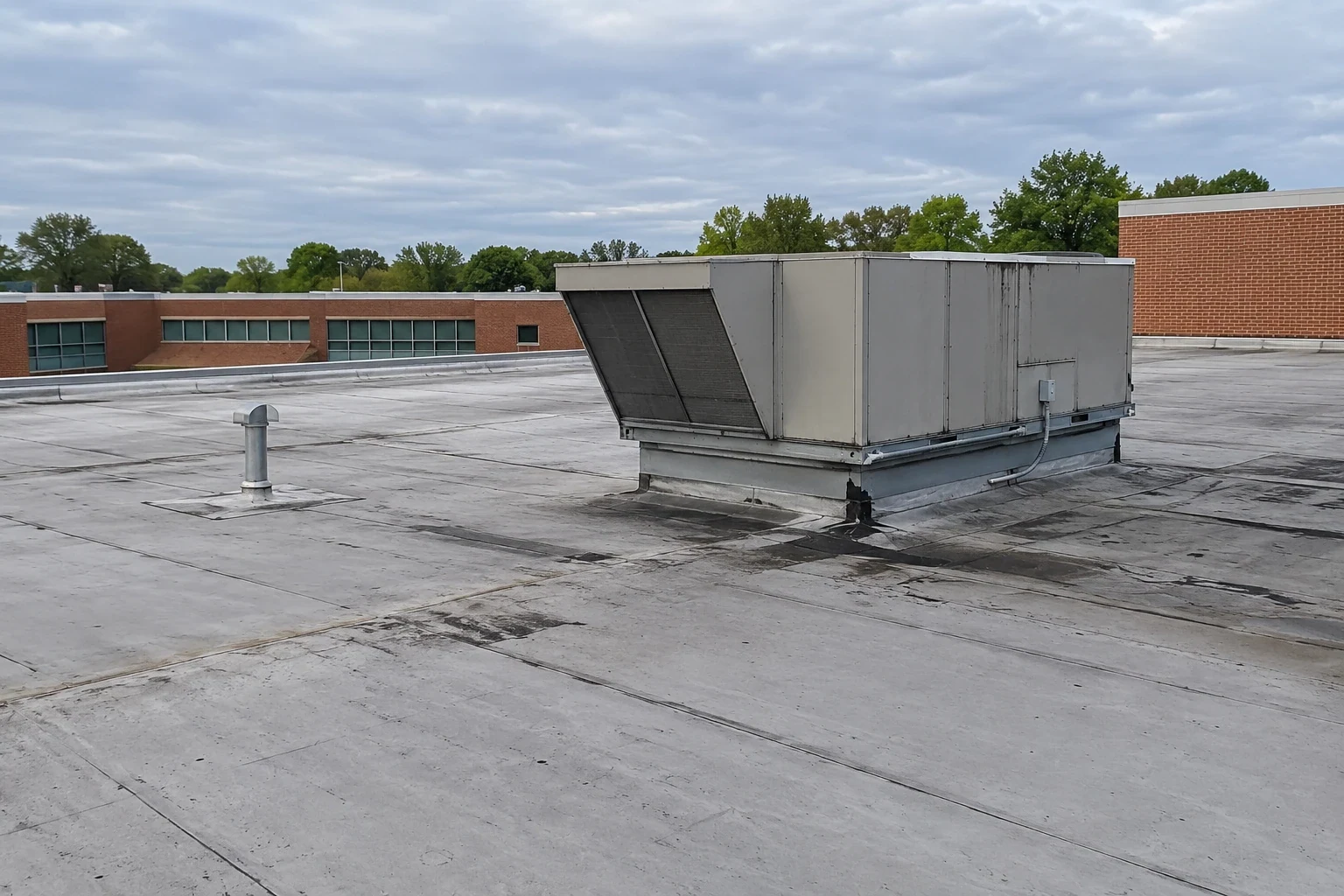
A roof condition can change the assumptions behind a lease, acquisition, or capital plan, so the first task is to separate observed defects from items that still need testing. We inspect the actual assembly, document drainage, edges, seams, penetrations, and interior reports, then give ownership a repair boundary and next decision. National Weather Service hail records for the Tulsa area show reports throughout the year, with a spring peak and localized impacts; we inspect the specific asset before setting storm scope. Our due-diligence roof survey records what is visible and identifies questions that require additional access before a buyer prices a larger scope.
Tie roof findings to the asset decision
A useful survey gives the investor a map, photographs, and a condition summary that can be compared with lease responsibilities and planned ownership. We identify immediate water-entry concerns, repairable details, possible moisture, and broader renewal signals separately. If a membrane cannot be identified or hidden layers are unknown, the record says so. That prevents an assumption about assembly or remaining life from slipping into underwriting as a confirmed condition. A property manager's operating record can then carry the inspection findings into tenant coordination and routine maintenance after closing.
Broken Arrow contains more than one asset pattern. Kenosha Street serves the Rose District's north edge, while Washington Street runs along its south side; the city plan classifies the downtown as mixed use. Creek 51 Business Park occupies the southwest corner where SH-51 meets the Creek Turnpike, with an industrial designation and utility connections listed for tenants. Those settings call for confirming staging, tenant access, deliveries, occupancy, drawings, and the visible assembly at each building before recommending work. If several sites are under review, a portfolio comparison keeps individual findings separate while showing which conditions need early attention.
Check the assembly before pricing renewal
Replacement is not a line item to assign from age alone. We inspect seams, flashings, transitions, penetrations, curbs, drains, edge details, and prior repairs, then look for signs of moisture or attachment failure. The roof system and number of existing layers affect whether a recover is possible. Deck condition, drainage, insulation, and code requirements also matter. A hands-on roof inspection can separate an isolated leak repair from a scope that needs testing, design input, or a replacement comparison.
If a low-slope roof is dry and its substrate and drainage can support another assembly, recover may be considered after those conditions are verified. Coating may extend service in suitable conditions, but it cannot dry wet insulation or correct a failing deck. We describe the limits of each option and the evidence that supports it. Where assessment points toward replacement, the investor receives the roof area, access assumptions, tie-in needs, and sequencing constraints instead of a broad allowance with no defined boundary. An overlay evaluation addresses system compatibility and layer questions before capital is committed.
Read storm exposure at the property
Weather affects carrying cost through access, closure timing, and the sequence for occupied space, but only a site inspection can establish roof condition. The Tulsa climate profile puts the spring rainfall high point alongside frequent thunderstorms; hail and damaging gust reports cluster in spring and early summer. Another cost constraint arrives later: periods of 100-degree heat are frequent from late July into early September. We record which detail was exposed, what needs immediate protection, and whether the next capital decision depends on further testing.
Hail reporting can be highly localized, so a regional event does not assign impact to an asset. We photograph the roof and separate storm observations from ordinary wear and previous maintenance. If water entered, we note the occupied area and protection needed before setting a lasting correction. An insurance and restoration record can keep event documentation distinct from planned capital work. For an urgent opening, our after-hours dispatch can stabilize the area while ownership decides the permanent scope.
Build a scope the owner can schedule
Roof work competes with tenant access, mechanical service, loading routes, and planned property improvements. We confirm when roof access is permitted, where material can be staged, what interior areas need protection, and which entrances remain open. Repairs can be divided by roof zone so an occupied building retains a clear boundary around active work. A replacement needs more coordination: material delivery, removal, tie-ins, drainage, and a stop point that leaves the structure protected if weather changes. A phased reroof plan puts those steps into an operating schedule the ownership team can review.
Cost and timing depend on what removal reveals, the amount of wet material, deck repairs, edge and flashing detail, equipment relocation, access limitations, and weather. We identify assumptions rather than burying them in a single number. If testing is needed before price or scope is settled, the report states that requirement. A documented roof capital plan can rank immediate protection, near-term repair, and longer-term renewal so a buyer and property team are comparing the same condition record.
Keep transaction and operations records aligned
At completion, ownership receives before-and-after photos, repair locations, materials used, and a list of conditions outside the authorized work. The closeout notes whether a temporary measure remains and what follow-up would resolve an open question. That record can move from acquisition review to property operations without turning a preliminary observation into a claim about every roof on the asset. The Creek 51 area provides a local industrial reference, while a specific property's gate, hatch, and tenant route still determine how work proceeds.
Portfolio owners need comparable data, but a useful comparison begins with a separate inspection record for each property. We label each roof by address and section, record visible condition, access limits, leak history supplied by management, and testing that could change the scope. A portfolio summary can rank urgency and capital timing, while photos remain tied to the building where they were taken. We identify immediate protection, repair candidates, and renewal questions separately so one asset's condition does not distort another's budget. If a transaction is underway, we list records not yet received and conditions inaccessible during the visit. Cost ranges should not be treated as firm until those questions are resolved and a work scope is authorized. At closeout, ownership receives the repair boundary and follow-up date for each site. That supports acquisition and asset planning with consistent records while keeping site-specific roof facts and decisions intact.
Send available roof plans, prior reports, leak history, lease or tenant constraints, closing dates, and access contacts when requesting an evaluation. We can document the current condition, outline repair and renewal paths where supported, and note which assumptions still need testing. If a local storm report has prompted the review, include the reported date and interior observations; the inspection record will identify what is present at the asset. Ownership gets a clear scope and a practical next decision rather than an unsupported service-life promise.
Commercial Roofing Questions
Can a roof survey support acquisition due diligence?
Yes. We document visible conditions, repair priorities, access limits, and questions that need testing. The report can inform a transaction review, but concealed conditions remain open until the appropriate investigation is completed.
How do you compare repair, recover, and replacement?
We first identify the assembly and inspect moisture, substrate, drainage, attachment, and details. The findings show which options are technically supportable and what additional testing is needed before scope and timing can be set.
Does a hail report mean the property needs a claim?
A regional report only identifies a reason to inspect. We record conditions at the specific roof and separate observed impact from wear or earlier repairs before documenting any storm-related scope.
What drives the schedule for a commercial reroof?
Access, occupancy, removal and tie-in sequence, material delivery, concealed deck or moisture conditions, and weather all matter. We set work zones and stop points so the building remains protected if the schedule changes.
What should an investor provide for a portfolio review?
Share addresses, roof plans, inspection history, leak reports, lease responsibilities, transaction dates, and property contacts. We can then coordinate visits and return separate findings for each asset.