Occupied-Building Commercial Reroofing
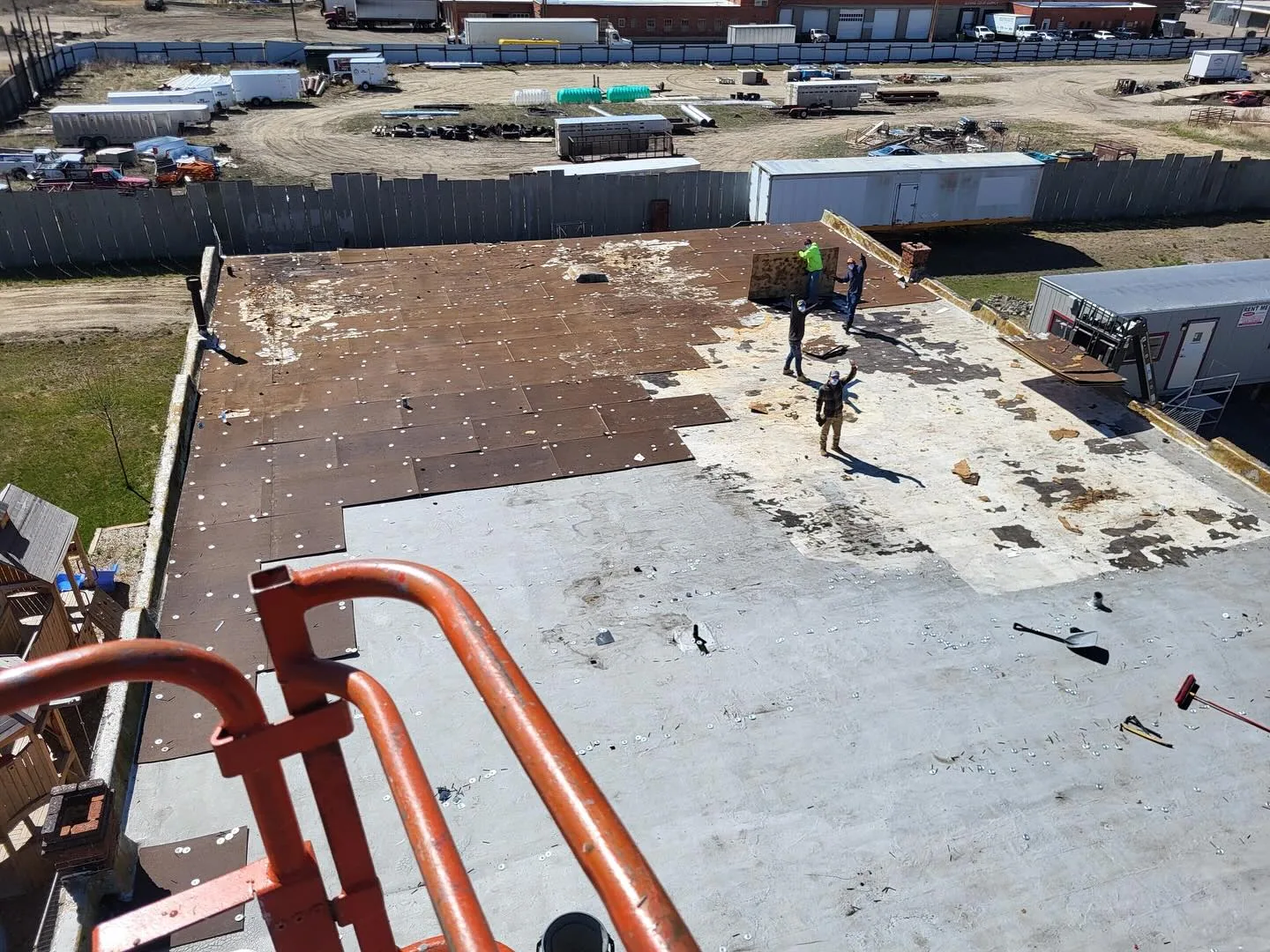
A delivery lane that must stay open can set the reroof sequence before the first membrane is removed. In Broken Arrow, OK, we begin by mapping occupied areas, roof access, loading routes, equipment clearances, and the rooms below each proposed work zone. Spring brings frequent showers and thunderstorms, so every shift needs a defined section that can be protected before weather changes. We inspect the roof, mark the removal boundary, and agree how the building contact will receive updates about noise, closures, and access. The initial roof inspection also records interior concerns and any condition that should be repaired before broad work begins. For a site near Creek 51 Business Park, manufacturing access and operating schedules need confirmation from the facility; for a medical building, the coordination plan is different. The crew, owner, and occupants need a clear handoff for each active area.
Divide the roof into controlled work areas
We lay out sections so removal, inspection, installation, and temporary closure can be completed in an agreed sequence. The boundary accounts for drains, penetrations, rooftop equipment, interior-sensitive rooms, and routes needed by building staff. Each day's plan names what opens, what is finished, and what remains protected overnight. If concealed deck or insulation conditions alter the scope, the affected zone is held for direction while other areas remain secure. The owner can compare the work map with tenant schedules and identify times when a lift, crane, or material delivery would conflict with daily operations. A phased replacement plan sets this sequence before mobilization; targeted repair work can be completed first where it prevents a separate opening from disrupting the broader project.
Protect the people and contents below
Roof work can affect occupied space through noise, vibration, dust, odors, falling debris, or water entry if an opening is not closed properly. We identify rooms with equipment, inventory, patient care, food handling, or other controls set by the building, then coordinate barriers and notice with the site contact. The record includes ceiling or interior areas that need protection before the crew removes roofing overhead. If an active leak is present, temporary dry-in is separate from the permanent reroof scope, and the building team knows who can authorize a change. At Ascension St. John Broken Arrow, the documented six-story, 62-bed hospital campus provides 24/7 emergency care and includes a connected medical office building; scheduling there calls for facility-directed coordination around ongoing care. A hospital roof work plan can keep medical operations in view without assuming that every roof area has the same restriction.
Coordinate entry, staging, and deliveries
Roof access begins with the site's actual entrance, security rules, ladder or hatch, loading zone, and lift path. We confirm where materials can be placed, how waste leaves the property, and which routes must stay clear for staff or public access. Creek 51 sits at the Creek Turnpike and SH-51 junction and is zoned for industrial use; at a manufacturing property in that area, the facility contact confirms the routes and restrictions that apply to the building. A separate insulation and cover-board scope may require additional staging and dry storage, so it is coordinated with the tear-off sequence. We secure the perimeter and keep tools, fasteners, and removed material controlled around pedestrian routes. The daily handoff reports any change to access, delivery timing, or work boundaries before the next crew enters.
Close each section before the forecast turns
Tulsa-area spring rain and thunderstorms can change a shift after the roof is open, and late-summer heat can limit safe access and material handling. We set an open-area limit, confirm the temporary tie-in, and protect insulation and deck before leaving for the day. If lightning, rain, wind, or surface conditions become unsafe, the crew stops roof activity and secures the work zone. An active opening receives temporary protection and an update to the facility contact; permanent repair resumes only when the substrate and installation conditions are suitable. Urgent response remains available around the clock, on weekends and holidays, when immediate exposure requires assessment. A later emergency visit can stabilize a separate opening while the planned reroof sequence is rescheduled. The daily weather handoff states which sections can continue and what must remain closed.
Keep the owner and occupants informed
A workable notice states where crews will be, what will be noisy, which access route changes, and when the area returns to normal use. We agree on a contact for decisions about hidden conditions, interior protection, and schedule changes, then send a shift handoff with completed sections and next steps. For an occupied facility near The Shops at Aspen Creek, retail, multifamily, dining, and entertainment uses make public routing and loading coordination important; the individual owner confirms exact activity and barriers. The same process supports offices, schools, and manufacturing operations without assuming their hours or access requirements. A healthcare facilities plan or other site-specific coordination record can route updates to the right operating staff. If a tenant reports water or vibration, we record the location and check it against the active work zone before modifying the sequence.
Return each area with a clear record
Closeout records work completed by section, photos of transitions, temporary protection removed, and conditions that remain outside the authorized scope. The building contact receives any maintenance restriction and the route for future roof service. A drainage check can confirm outlets and flow paths after the final layers are in place, while a future maintenance plan schedules later checks at repaired seams and penetrations. At Ascension St. John Broken Arrow, the connected hospital and medical office buildings are distinct operating spaces, reinforcing why each occupied project needs its own access and handoff map. The final record identifies which zones were completed, what was tested, and who owns the next decision. Occupants receive a known endpoint for restrictions instead of an open-ended closure notice.
An occupied reroof begins with a map of people, routes, and rooms below each active section. We confirm entrances, deliveries, public corridors, sensitive equipment, and the contact who can release an area each day. The crew sets barriers before materials arrive and moves the work boundary only after the prior zone is dry and safe. Noise, odor, dust, and temporary ceiling protection are planned with the building representative, not left to a last-minute notice. If work affects a tenant or department, the handoff names what is closed, what remains accessible, and when the next check-in occurs. We also coordinate mechanical and electrical trades so their work does not reopen completed roofing. Closeout records each phase, repairs, change decisions, and areas excluded from the contract. That lets operations continue with a clear status while the owner can track construction progress by roof section.
Commercial Roofing Questions
Can staff and tenants remain in the building during a reroof?
They can when the site plan supports safe access, interior protection, and work boundaries. We coordinate occupied areas, operating hours, noise, deliveries, and temporary closures with the building contact before each phase.
How do you protect a room directly below tear-off?
We identify the room before removal, note sensitive contents or operations, and agree on interior protection. Each open section is limited and closed at the shift boundary, with temporary measures documented if conditions change.
What happens when hidden damage is found?
We document the location and exposed condition, protect the affected area, and send the owner a defined change for direction. Work in unaffected zones can continue if the roof remains secure and the sequence allows it.
How much notice do tenants receive?
The owner and facility contact set the notice method and timing. We provide the work zones, access changes, expected noise or disruption, and any daily schedule update needed for the affected occupants.
What if rain interrupts tear-off?
The crew limits the exposed area and prepares a temporary closure for each shift. If weather arrives sooner, we protect the interior and roof opening, notify the site contact, and resume when conditions permit permanent work.