School Districts
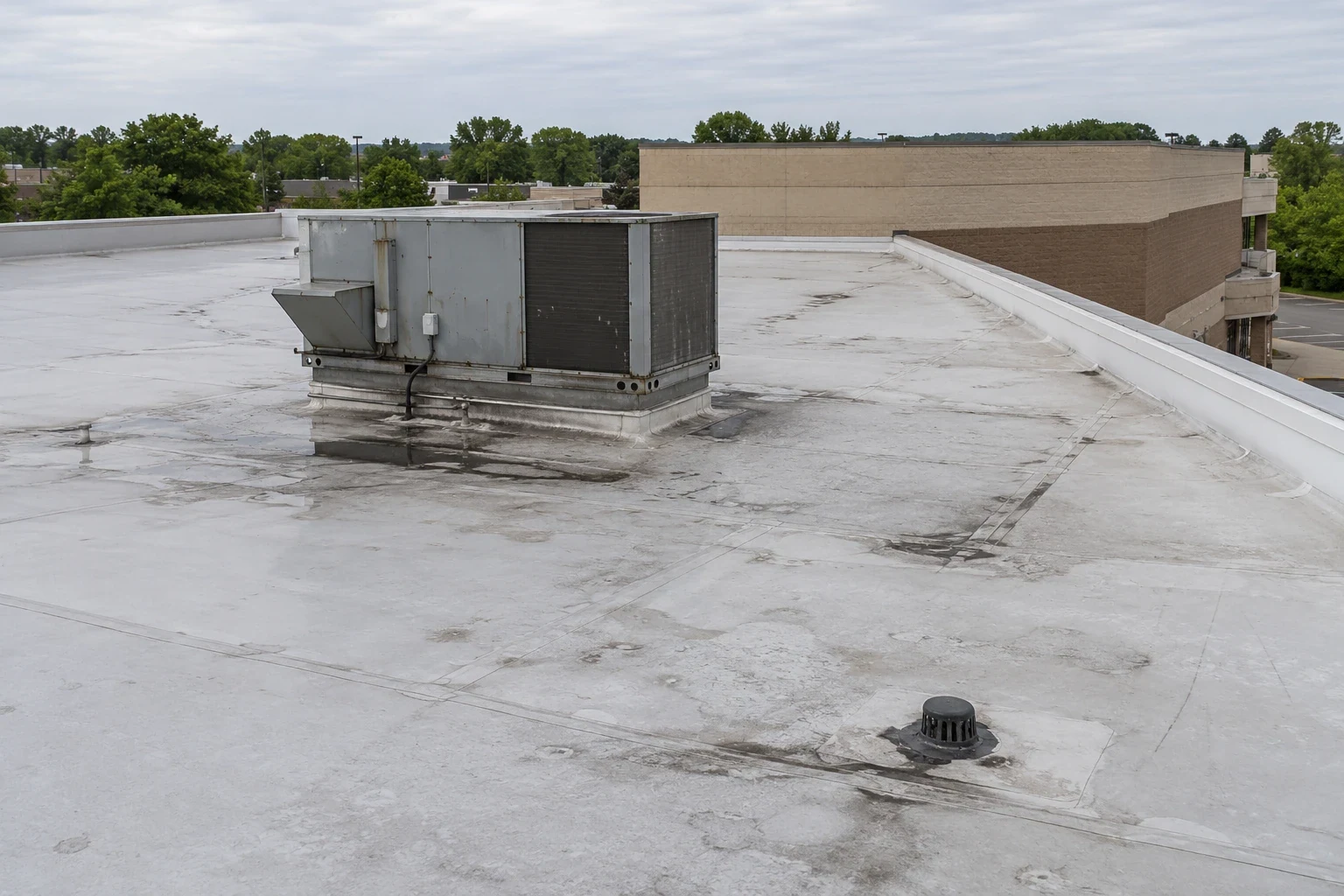
A spring storm can arrive while students are on campus, so a roof response must account for occupied classrooms and safe routes before crews mobilize. We check the reported area, arrange interior protection, and coordinate roof access with the district facilities contact. In Broken Arrow, OK, we coordinate roof planning with Broken Arrow Public Schools facilities staff. Equipment can approach from the Creek Turnpike and SH-51 junction by Creek 51 Business Park; school facilities staff confirm the campus gate and bus schedule before mobilization. Each building gets its own inspection record, repair boundary, and schedule. A campus work sequence can be set around class hours, activity calendars, and the areas that need to remain open. We schedule around arrival, dismissal, athletics, and deliveries, keeping each school roof's access and occupancy record with that building.
Keep each campus assessment separate
A district roof list can organize visits, while each school needs its own access review, roof inspection, and repair boundary. We document the visible system, check seams and flashings, map drains and penetrations, and note access limits. Findings are grouped by immediate protection, repair, testing, or future planning, then scheduled by building. A multi-property maintenance record offers a way to carry site contacts and follow-up dates across a portfolio while preserving building-level findings.
The district's central Education Service Center supports portfolio coordination. Northeastern State University Broken Arrow Campus at New Orleans Street is near the 101st Street and Creek Turnpike interchange, a useful delivery-route reference. We confirm which school entrance to use, where lifts or materials can be staged, and whether buses, families, or deliveries have priority at certain hours. Schools and colleges differ in their calendars, so the inspection plan follows the district's actual timetable.
Use breaks in the storm cycle carefully
School calendars and Tulsa's weather do not always give facilities a clean summer work window. Spring is the period with the most rain and repeated thunderstorms; hail and damaging winds are reported more often in spring and early summer. Late summer also brings repeated readings of 100 degrees or above, so we plan safe roof access and surface work around the heat. We identify roof areas that can be completed before students return and set daily closures around surface condition. The facilities lead receives a campus-specific restart plan if a storm interrupts the work.
A hail report over the metro may describe a narrow swath, not all district buildings. We inspect each campus requested, record the visible roof condition, and keep prior wear distinct from storm findings. An active leak can be stabilized through overnight, weekend, and holiday dispatch so classroom activity is not the first response window. Permanent repairs follow after access, material, and weather conditions are reviewed. The event-specific repair record identifies what was observed and what remains open for testing or district approval.
Protect students, staff, and building access
School roof work has a safety perimeter below as well as an access plan above. We coordinate gates, ladders, hatches, lift positions, delivery windows, and any area that must remain clear for students or emergency access. The district contact identifies hours when classes, athletics, meals, or family traffic use nearby routes. Barriers, material staging, noise limits, and interior protection are matched to that day's work area. If a roof section cannot be isolated safely while the building is occupied, we discuss another window before setting the sequence.
School roofs may carry ventilation equipment, curbs, skylights, drains, and multiple additions. We inspect the flashing and roof field together, then coordinate any planned mechanical work or temporary shutdown with the responsible staff. A curb and equipment review identifies roof interfaces before a unit is changed. For a campus project with several trades, a construction coordination handoff can state the work limits, access route, and party responsible for each tie-in.
Compare a targeted repair with capital work
A puncture or failed flashing may be repairable without taking on a full roof project. Recurring leaks, widespread wet insulation, deteriorated attachment, drainage problems, or deck concerns can lead to testing and renewal planning. We identify the installed system before choosing materials and consider existing layers, substrate, drainage, and edges before evaluating recover. Coating may be suitable for a sound assembly with compatible details, but does not correct concealed moisture or a failed deck. A defined repair stays distinct from a replacement review, with observed conditions supporting each choice.
Project timing depends on student calendars, roof access, material delivery, noise, removal, tie-ins, weather, and the interior protection needed below the work. We can phase by building or roof area, set a daily closeout point, and leave facilities staff with a status for the next shift. Cost drivers are stated as scope assumptions, including any deck work or moisture removal that cannot be confirmed before opening the assembly. A district can use a capital planning record to sort urgent work from projects that can be scheduled during a planned break.
Return a record facilities can use
Closeout includes photos, work locations, materials used, and conditions beyond the authorized repair boundary. The report notes any temporary protection that remains and what additional test would resolve an open question. Facilities can attach the record to the building's maintenance history and use it for the next inspection. The district's Education Service Center can use a common roof record format while preserving each school's access and repair details. A photo condition report provides that shared format for the decision-makers responsible for the work.
District planning works best when each school has a separate identifier, access contact, and roof history. We organize observations by building and wing, then prepare a portfolio summary that highlights urgent leaks, safety concerns, moisture testing, and longer-term replacement needs. Portfolio priorities come from individual building reports, and each repair stays assigned to the school where we observed it. We confirm the academic calendar and site rules before visits, including bus movement, arrival and dismissal, athletics, and summer programs. Reports list areas reached and any structure needing another access window. Facilities staff can then group similar scopes for budgeting while retaining building-level photos and repair limits. When one roof has an active opening, emergency protection is handled separately from the capital plan. That keeps day-to-day response clear while giving the district a practical sequence for inspections, repairs, and renewal over more than one funding cycle.
Send the district's school calendar, roof plans, campus contact list, access and safety rules, reported leak locations, and any planned HVAC work when requesting service. We will confirm the roof route, protect occupied areas, and identify the work sequence for each site. The work schedule protects active routes, identifies each school's release time, and gives facilities staff a clear handoff.
Commercial Roofing Questions
Can roof work fit between school terms?
We can plan inspections, repairs, or phased renewal around scheduled breaks when access, weather, materials, and scope permit. The work plan identifies what must be completed before students return and any condition that still needs follow-up.
How do you handle an active leak during the school day?
We coordinate interior protection and access with facilities staff, then inspect the reported roof area. Temporary stabilization is recorded separately from permanent work, with student and staff routes kept in view.
Does a storm report require every school roof to be replaced?
No. A report can prompt inspections, but impacts vary by location. We document each roof's visible condition and recommend repairs or further testing only where findings support them.
What makes a school roof suitable for a recover?
The existing layers, substrate, attachment, drainage, and moisture condition must be checked first. If the assembly does not support an overlay, we explain which repair, removal, or replacement path fits the observed condition.
What should the district send before a campus visit?
Provide the calendar, building access instructions, roof plans, campus contact, leak reports, restricted areas, and planned equipment work. We use those details to set the route and avoid conflicting with school activity.