Logistics and 3PL Facilities
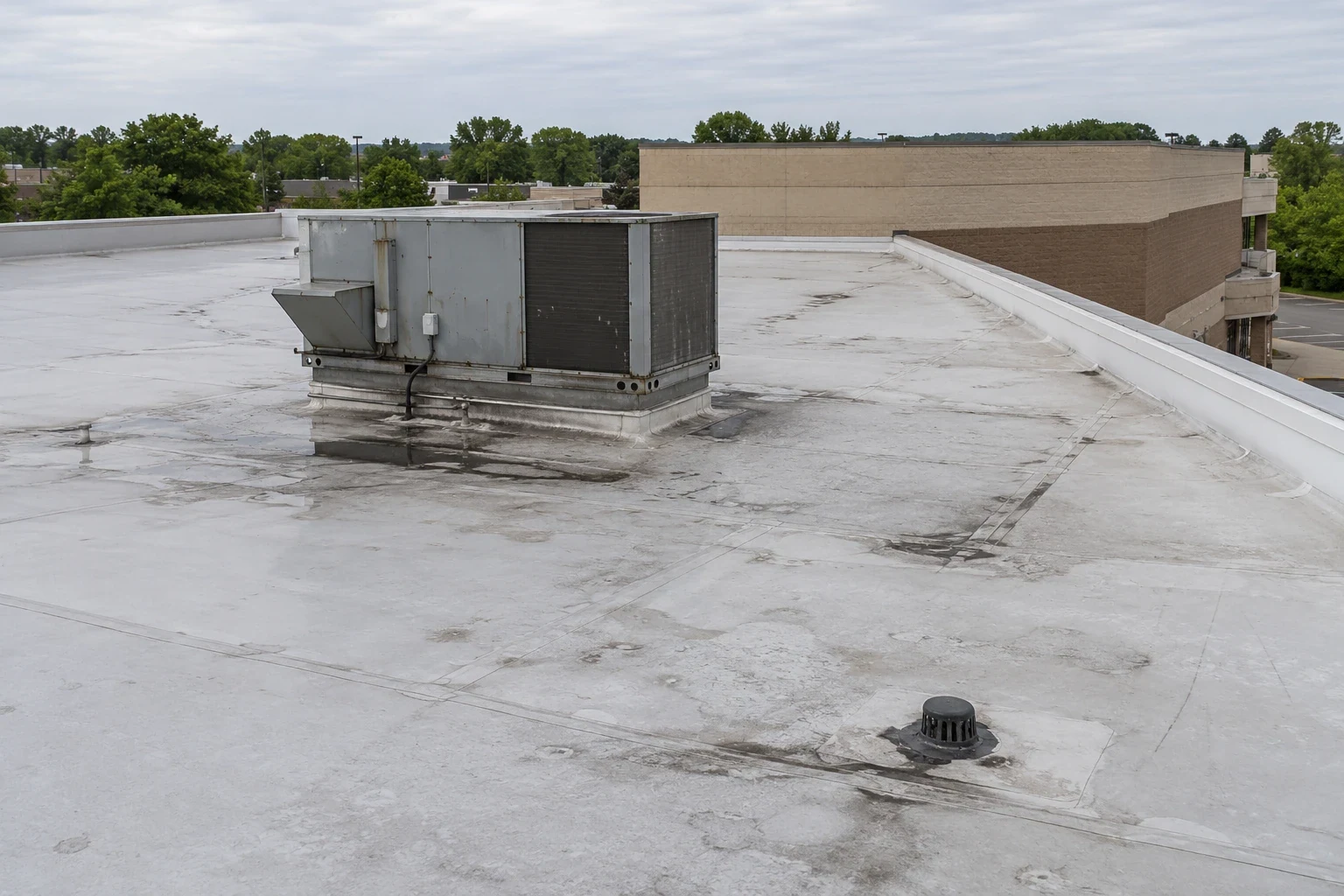
Loading activity does not pause because a roof seam has opened, so a logistics repair needs a route for people, material, and trailers before the roof is touched. We check the interior report, arrange temporary protection where needed, and set the work boundary with the site contact. In the wider Tulsa metro, Tulsa Port of Catoosa combines an industrial park with barge and rail-transload access; Broken Arrow's Creek 51 is another industrial reference near the turnpike network. These settings help frame regional logistics without defining a particular building. A phased distribution roof plan keeps dock access, inventory, and roof scope in the same sequence.
Keep dock and trailer circulation clear
Before inspection or repair, we confirm gate rules, dock schedules, trailer paths, lift placement, and where material can be staged without narrowing a turning route. The operations contact identifies inventory-sensitive areas, active loading doors, and internal paths below the roof. We secure the perimeter around the work zone and coordinate changes before they affect the shift. The closeout records which roof areas were inspected and which remained blocked by equipment or access conditions, so the next shift can see what still needs access.
Creek 51 Business Park covers 85 acres at the southwest corner of SH-51 and the Creek Turnpike, with utility service available for industrial tenants. That regional connection can help with dispatch planning, but it says nothing about a particular property's gate, dock geometry, or turning clearance. The Tulsa Port of Catoosa is a 2,000-acre industrial park, barge port, and rail-transload location; it illustrates the variety of logistics connections in the metro. A manufacturing roof sequence may likewise need equipment and production access coordinated, but our plan begins with the logistics building's actual route.
Trace water without guessing from the aisle
A stain over a rack or conveyor can appear away from the roof opening. We compare reported locations with seams, penetrations, drains, wall transitions, equipment curbs, and prior repairs, then photograph what the inspection confirms. When the likely path remains unclear, we identify the test or access needed to narrow it. The work boundary includes confirmed repair items and separates them from areas that still need review. A mapped roof condition report gives maintenance and operations a shared location reference.
A distribution hall may be split into roof zones over loading, storage, offices, or later additions. We map those boundaries, note the surface and attachment clues available, and mark any assembly that cannot be identified without opening it. Repair preparation follows the installed system; material that bonds to one membrane may fail on another, and a coating will not dry an insulated assembly. Drain bowls, fastener rows, edge metal, and curbs are checked against the reported water path. When moisture may be concealed, an infrared moisture survey or targeted test is considered for the question it can answer, not treated as a blanket diagnosis.
Protect inventory through a changing forecast
Distribution operators need the roof secured before the weather window closes, especially over stored goods and powered equipment. Spring is Tulsa's wettest season, and thunderstorms arrive often; the most frequent hail and damaging-wind reports occur in spring and early summer. Very hot roof days also recur from late July into early September. We identify the areas that can be covered before rain, which aisles or inventory require interior protection, and the shift contact for a stop-work call. If the planned fix needs dry materials, the schedule includes an alternate closure point.
A hail report can cover one part of the metro and miss another, so we inspect the requested distribution property instead of extending findings from a nearby address. We photograph punctures, seam movement, displaced edge details, and active water where present. Our night and holiday dispatch can stabilize an urgent opening while dock activity continues under a separated work zone. The operations lead receives a clear boundary for temporary measures and a time to revisit for the permanent fix. A rapid response visit can protect stock below while the roof awaits suitable working conditions.
Match the repair window to the operating plan
Some repairs can be performed in a defined roof zone while loading continues elsewhere. Larger replacement may require material lifts, removal, staged tie-ins, and temporary shutdown of a lane or dock. We map zones with the facility contact and identify when crew movement or debris handling may affect operations. A localized repair stays separate from a replacement assessment, and both state the access and interior-protection assumptions. If concealed deck issues appear, work pauses at the agreed boundary until the next decision is made.
Cost and duration are affected by system type, roof height, staging distance, dock traffic, wet material, deck condition, edge metal, equipment clearances, and weather interruptions. We build the duration from the access route, shift schedule, roof system, removal sequence, and weather window. If the building has multiple shifts, the work sequence can identify the route that remains open, the hours when noisy activity is possible, and the daily closeout checkpoint. For carriers or third-party operators sharing a facility, a trade coordination handoff can document which team owns each opening, penetration, or equipment interface.
Make the next shift's roof status clear
At closeout, we provide photos and locations for completed repairs, describe materials used, and identify any temporary measure or unresolved condition. A map helps the next shift connect a leak report with the roof area already inspected. Tulsa Port of Inola also has rail and barge access, so portfolio managers coordinating both ports need separate dock and roof-entry instructions for each address. We record the confirmed rules with the building's roof map for follow-up.
Logistics roofs must be planned around dock availability, trailer circulation, sorting periods, and stored goods. We identify the work zone and receiving schedule with the operations contact before setting a lift, dumpster, or delivery route. A leak over a conveyor or pallet area requires a protection plan that accounts for inventory and equipment below. We inspect the corresponding roof section, including drains, curbs, seams, and penetrations, then define a repair boundary that can be completed and secured during the available shift. If access is interrupted by inbound volume, the daily report states the safe stopping point and temporary condition. For a portfolio, site-specific dispatch instructions are kept with each roof record so a crew does not assume the same gate or staging area at every warehouse. Closeout includes locations restored to service and items needing another operations window. This keeps throughput visible in the roofing sequence while ensuring each facility's defect is verified on site.
Share dock schedules, trailer circulation plans, roof drawings, leak locations, inventory concerns, and restrictions on lifts or staging when requesting service. We will document what can be reached, protect the interior, and return a repair scope that the operations lead can coordinate with the next shift. The record distinguishes temporary response from permanent correction and states whether more testing or a capital decision is needed.
Commercial Roofing Questions
Can repairs proceed while trailers are loading?
We can isolate roof work from active loading when access, lift placement, barriers, and schedule support it. The site contact identifies lanes or docks that must stay open, and we set a daily handoff for any change.
How do you protect stored goods during a leak?
We coordinate interior protection with operations, identify affected inventory zones, and stabilize an active opening where conditions allow. Permanent work follows after the roof assembly and repair area are inspected.
Will a regional storm report confirm roof damage?
No. Hail and wind can vary over a short distance. We inspect the specific facility and document visible conditions instead of assigning damage from a metro report.
What determines whether a roof can be repaired overnight?
Access, crew route, weather, material compatibility, drying requirements, and time needed to close each detail all matter. We identify a safe stopping point before work begins and keep the roof protected if the window closes.
What should a 3PL share before a roof visit?
Provide dock hours, gate and trailer routes, inventory-sensitive areas, roof access instructions, leak reports, and contacts authorized to approve temporary measures. That information sets a workable staging plan.