Sand Springs
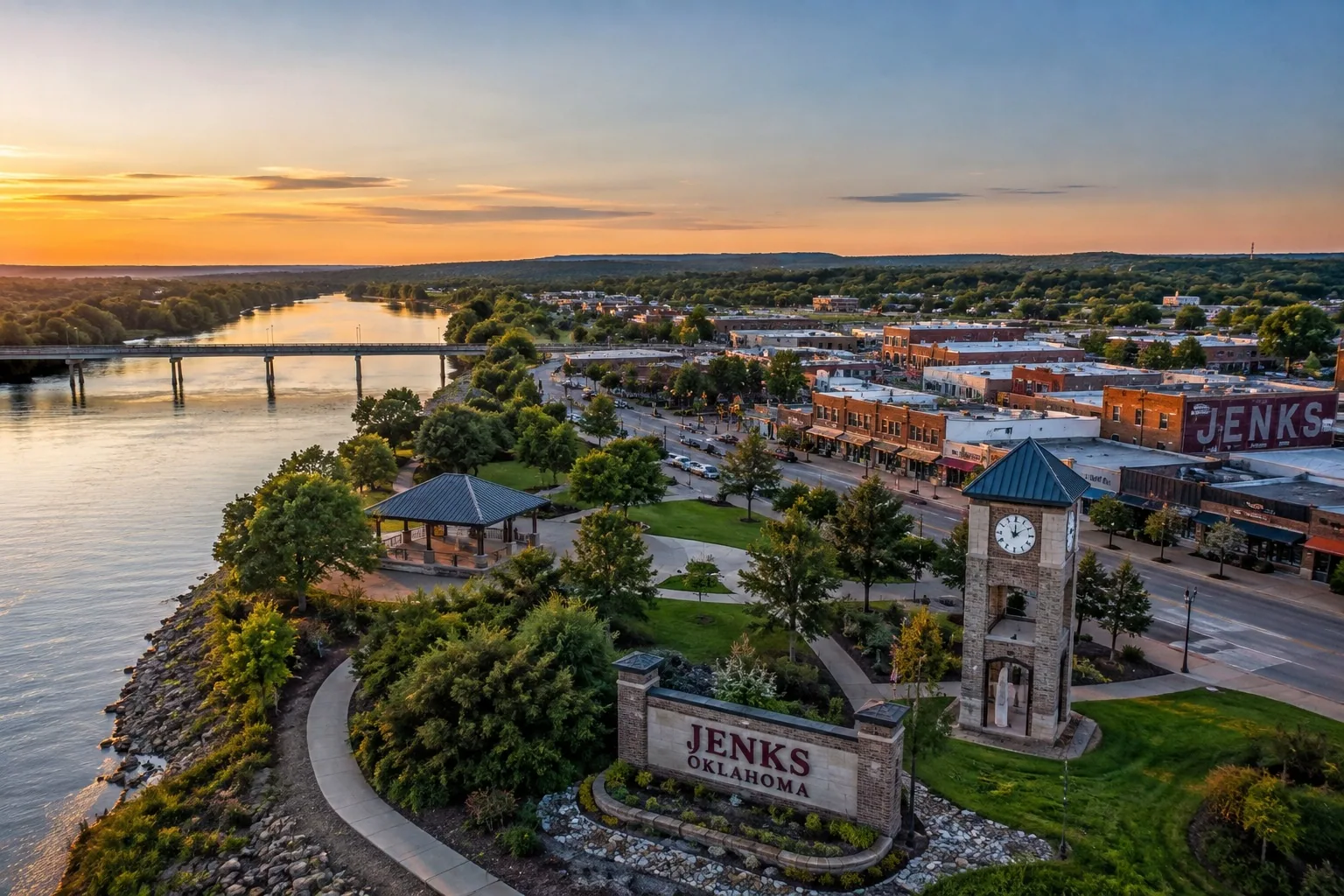
Spring showers can close a roof opening before the crew finishes a detail, so the first visit needs a safe stopping point as well as a repair plan. In Sand Springs, OK, commercial properties range from older downtown buildings to retail, grocery, healthcare, and service uses at River West along Highway 97. We confirm the specific building, roof records, access route, and reported leak, then trace the membrane, edge, curb, drain, and overflow connected to it. We separate visible damage from conditions needing testing. That gives the owner a repair boundary before pricing broader work.
Start with the water path
A ceiling stain can appear away from a seam, curb, or drain where water entered. We compare the interior report with roof slope, membrane transitions, penetrations, and outlets, then photograph the connected details by roof section. At the drain bowl, we look for debris, a high-set strainer, a restricted leader, or water sitting below the overflow. At a parapet, coping joints and termination laps may move independently of the field sheet. A commercial roof inspection records what was visible, what remained blocked, and whether moisture testing or a test opening would change the repair limit.
Sand Springs combines commercial uses along Highway 97 with older downtown buildings that may be considered for retail or office reinvestment. That range makes an address-specific roof record more useful than a general property label. River West includes grocery, healthcare, lodging, automotive, banking, fitness, and other retail uses, but those business types do not identify the roof assembly above them. We confirm the actual membrane and existing layers, then note loading, roof access, active equipment, and occupants below. A drain and overflow review follows water from the field to the outlet instead of treating a wet ceiling as a complete diagnosis.
Set a weather window
In the Tulsa region, spring brings the most frequent showers and thunderstorms, so an open roof needs a shorter, clearly protected work window. Before opening a roof, we define the section that can be prepared and closed during the shift, the temporary dry-in point, and the condition that stops work when rain approaches. If the surface is damp or the substrate is exposed, permanent membrane work may need to wait for suitable preparation. The closeout distinguishes temporary protection from completed repair so the property manager knows what remains before the next crew returns. For active water entry, storm-response work can begin with containment and a documented inspection boundary.
Hail reports in the Tulsa area peak in spring, but impacts can be localized. We inspect the Sand Springs roof itself for punctures, split flashings, displaced metal, loose surfacing, and changes around rooftop equipment. A regional report helps set timing, while the estimate follows visible and tested damage at the property. We photograph both the affected detail and its nearby roof context, then record whether the interior report matches the observed area. If a leak is active outside regular business hours, our emergency response can protect the opening; permanent work follows when the assembly can be prepared and closed reliably.
Choose work that fits the assembly
A localized repair fits when the surrounding membrane remains sound, the substrate supports the tie-in, and the failed detail has a clear boundary. We check seams, curb flashing, edge metal, drains, insulation, and any prior patch before specifying material. If moisture extends beyond the visible opening, a test area can show whether the repair should include insulation or deck work. A repair scope lists the confirmed area, compatible materials, protection below, and any condition that could widen the work after opening.
Recover work depends on layer count, attachment, wet material, structural capacity, drain height, and perimeter transitions. Replacement can expose concealed construction, but adds tear-off, disposal, staging, and a larger dry-in sequence. Coating belongs only on a suitable, prepared surface after adhesion and moisture conditions are reviewed. For an older downtown roof or a newer commercial property near River West, the same decision process applies, but the result depends on the installed assembly and field evidence. A replacement plan separates removal, rebuilding, and daily closure from a focused repair option. The owner can compare both against the same photographs and roof map.
Keep access and occupants in the plan
Before staging rolls, lifts, or debris containers, we confirm the roof hatch or ladder, approved service entrance, loading route, working hours, and space that must remain open. River West has a broad mix of active commercial uses, while an older downtown property can have a different entrance and delivery path. The local setting helps orient the visit, but the property contact sets the actual access requirements. We map pedestrian protection and any air-intake or equipment limits, then divide larger work into sections with a secure edge at the end of each shift.
For an occupied office, clinic, retail suite, or restaurant, the crew identifies where work occurs overhead and what needs protection inside. The daily handoff lists which roof section is open, watertight, or awaiting another trade. A lift location, material route, or change in tenant hours can alter the sequence, so we confirm those details before the next work area is opened. An occupied-building sequence can set those limits while keeping entrances and service access usable. A manager coordinating Tulsa and Broken Arrow properties should keep each building's access and roof record separate.
Keep the next inspection useful
After a repair, keep the roof plan, membrane information, outlet map, dated photographs, and open items with the building record. A future visit can compare the same seam, curb, or drain and show whether it has moved, collected debris, or remained stable. The report should name the roof section, inspection method, repair performed, and any area not reached. Where the finding depends on concealed layers, we record the test location and what result would change the recommendation. A photo condition report gives the next maintenance lead a practical starting point instead of a broad note that the roof was checked.
Sand Springs supports redevelopment of older downtown commercial buildings for retail and office use through its White Box program. When a building changes hands or its interior use is updated, roof history, curb additions, and old repairs should be checked against current plans. That context does not say what any individual roof contains; our field walk confirms the membrane and details at that property. We can add recurring drain or edge work to the seasonal checklist and identify a return window before the wet season. This keeps routine clearing, authorized repair, and larger capital work in separate, understandable records.
Prepare the first visit
Send the Sand Springs address, roof plan or system records, the interior location or exterior condition, prior repair photographs, access contact, and preferred work window. Include loading restrictions, active equipment, roof-entry instructions, and any areas below that need protection. We inspect the connected details, document what is visible, and state whether the next step is a repair, test opening, or broader assembly review. If conditions require a temporary closure, the handoff names its location and what permanent work remains. The next step follows the documented evidence.
Commercial Roofing Questions
What roof areas should be checked when a ceiling stain appears?
We compare the interior mark with the roof slope, seams, curbs, walls, and drains above it, then test further if concealed moisture could change the repair boundary.
How does spring weather affect a Sand Springs repair?
Frequent showers and thunderstorms make the daily dry-in limit important. We set a section the crew can protect before rain and record any permanent work that needs a drier window.
Does River West tell you what roof system a property has?
No. River West gives useful commercial context, but we identify the installed membrane from records and field inspection before choosing compatible materials.
When does a repair become a replacement project?
Repeated failures, wet layers, weak attachment, or damage across connected roof areas may support replacement. We document those findings and compare them with a focused repair before the owner chooses a scope.
What should the site contact send before scheduling?
Share the address, roof plan, reported condition, access route, loading limits, and work window. Recent equipment changes and interior reports help us select the first roof section to inspect.