Commercial Ponding Water Roof Repair
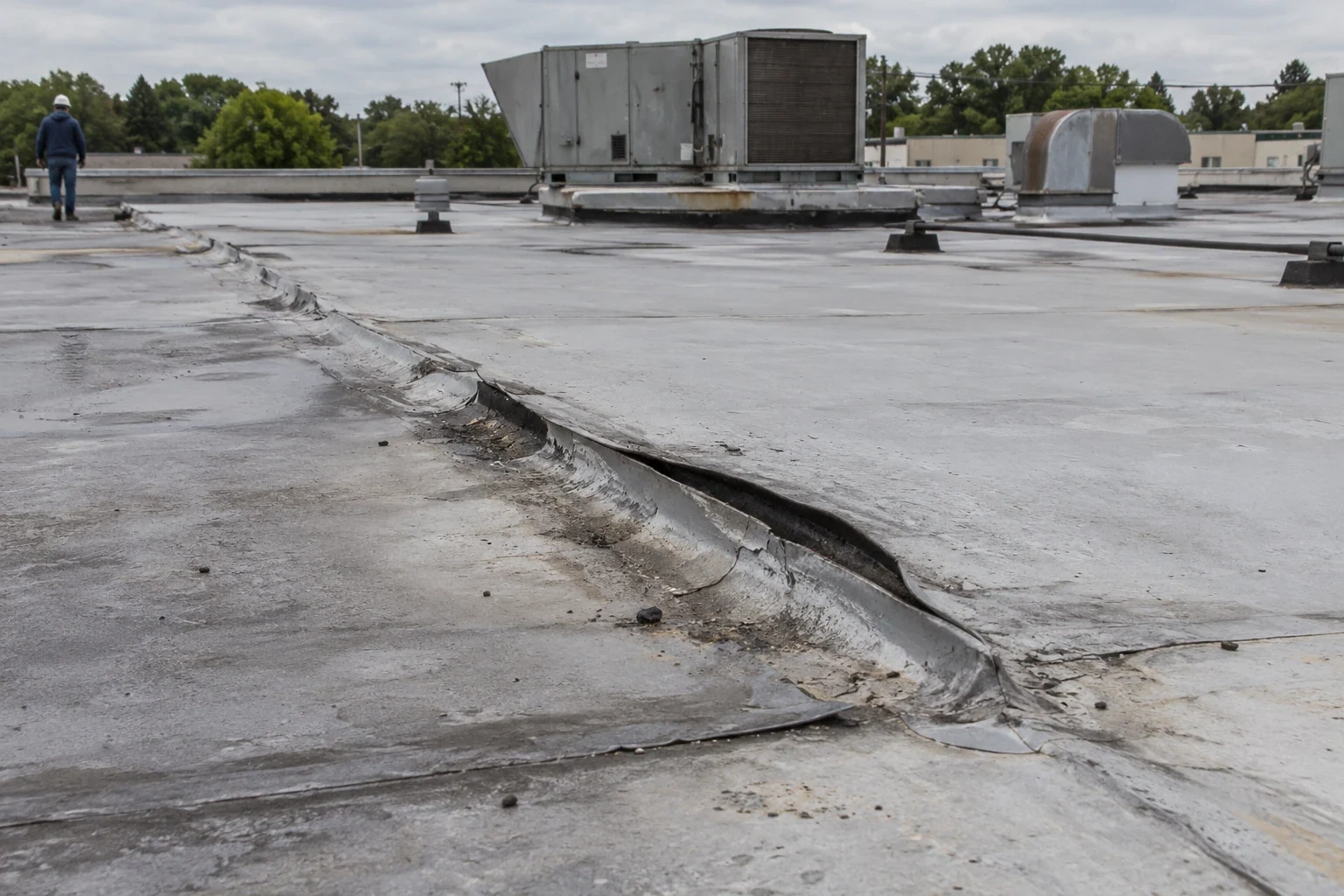
A shallow pool that remains after surrounding areas dry deserves a closer look at drainage and roof shape. We map where water stands, check drain and scupper paths, and compare the wet area with seams, penetrations, and interior reports. Tulsa spring is the area’s wettest season and brings frequent showers and thunderstorms. Those conditions make drainage observations and safe roof access part of the inspection sequence, but they do not diagnose a particular roof. A hands-on roof inspection records the ponding area and identifies what must be checked before repair is set. The Rose District plan includes varied low-rise commercial and mixed-use roof forms, while Creek 51 is a light-industrial business park. Those settings make the affected use and drainage path part of the ponding review.
Map the low area and its outlet
We locate each pond, note its approximate boundary, and inspect the route water should take toward drains, scuppers, gutters, and overflow details. Debris, a blocked bowl, compressed insulation, deflection, or a drain set above the surrounding surface can contribute to standing water, but visual evidence must support the conclusion. We check the drain opening and accessible piping path, then compare water marks with roof slopes and prior patches. A drainage assessment identifies whether cleaning, a localized correction, or added investigation belongs in the scope.
The Shops at Aspen Creek is a mixed-use destination by the Creek Turnpike and 161st East Avenue. For a nearby roof visit, we confirm the building contact, service entrance, tenant access, lift position, and operating hours with the property manager before inspecting. A site visit near Aspen Creek follows that property's access routes and the roof map, not an assumed layout.
Check what the water is doing to the assembly
Standing water can leave staining, sediment lines, biological growth, softened insulation, or seam stress, but none of those observations alone establishes how much material is wet. We compare the surface with interior leaks and examine membrane seams, flashing transitions, drains, and nearby penetrations. Where the roof layers conceal moisture, an infrared scan or targeted opening may be appropriate. We document what the inspection can confirm and what remains hidden until testing. A moisture survey helps define the extent before the owner weighs a limited repair against larger work.
Drainage changes can affect adjacent details. A low area that repeatedly holds water may keep a seam or patched penetration wet longer, while a failed drain seal can create a direct leak path. We inspect these points together instead of sealing one visible joint and closing the report. If the water boundary is broad or the surface has split, a seam condition review or membrane repair inspection can address the specific detail. Any structural concern is recorded for appropriate engineering review before we recommend altering roof slope.
Plan access around rain and heat
After spring rain, we check whether water remains at low points, then trace the surface to drains and overflow outlets. We record the water line and measure whether an outlet sits above the roof plane. If ponding persists, the next step is to distinguish a restricted drain from a low area before defining a repair. We plan exposed inspection and repair work around the actual surface, access conditions, and forecast. If water is moving into the building, we protect the interior first and note whether a permanent detail must wait for a dry interval. The property contact receives the stop point and next visit condition.
A pond after rainfall is evidence of a drainage condition to measure, not proof that the roof has failed. We photograph the area after the weather clears when practical and compare the depth, boundaries, and drain operation at the inspected section. If a storm report prompted the call, the report does not substitute for that observation. For an active leak, emergency response can stabilize the interior exposure at any hour, including a weekend or holiday. Permanent corrective work follows after the water path, material, and drainage condition are understood.
Correct the cause before coating or overlay
Repair options depend on whether the problem is a restricted outlet, a local depression, widespread wet insulation, a damaged deck, or a combination. We identify the roof system and inspect layers, substrate, attachment, and drainage before recommending a coating or recover. A coating can protect a suitable surface, but it will not correct a low point or move water to an outlet. A flashing repair is appropriate only when that detail is the confirmed source; broader corrections need a separate scope. We document the limits of each path before work is authorized.
Cost and timing change with the amount of trapped moisture, drain alterations, access, interior protection, deck work, and how much roof must be opened and restored. A small repair can be completed sooner when the substrate is dry and the material is compatible; concealed damage may require a revised scope. If water remains across a broad area, a recover assessment or replacement comparison may be needed after confirming the assembly. The owner receives findings by roof zone so one pond does not turn into an unsupported roof-wide conclusion.
Track the water level after correction
At closeout, we photograph the corrected outlet or roof area, identify work completed, and state whether any pond remains outside the authorized repair. If a test opening exposed wet materials, the record notes what was removed and restored. We also list any drainage change that requires future observation. A before-and-after record gives maintenance staff a reference after the next rain, while a return visit can determine whether the flow path improved under comparable conditions.
Ponding is measured and mapped before the repair method is selected. We note the depth and location where safe, the time since rainfall, and whether drains, scuppers, crickets, or overflow routes appear blocked or undersized. A roof that holds water may have a drainage obstruction, deflection, slope issue, or several contributing conditions. We inspect membrane seams and nearby details for evidence of water entry, then separate the drainage correction from any membrane repair. If deck deflection or structural capacity is in question, that review belongs with the responsible engineer. A coating or patch does not correct a low point by itself. The closeout names the outlet or roof area addressed and any condition requiring measurement or additional design. This lets the owner act on observed water paths while avoiding a broad solution that covers symptoms without resolving the drainage route.
Send roof plans, leak locations, access rules, drain history, photographs of standing water, and the time since the last rainfall when requesting an inspection. We will map the roof area, check the outlet and assembly, and return a repair boundary with any testing needed before larger work. The Creek 51 industrial area can be located from its turnpike interchange, but the facility contact must confirm gate instructions, tenant hours, and delivery access before staging. A photo condition report keeps those findings available for the next maintenance decision.
Commercial Roofing Questions
How long can water remain before it signals a problem?
We measure the observed area and check drainage, roof shape, seams, and interior reports. The inspection identifies whether the water clears, what detail is affected, and if testing is needed to assess concealed moisture.
Can a blocked drain be the only repair needed?
It can be, when inspection confirms the outlet is restricted and the surrounding assembly remains sound. We also examine drain seals, slope, membrane, and nearby details before closing the repair boundary.
Will a roof coating correct a ponding area?
A coating protects a compatible surface but does not reshape a depression or restore a failed drain. We diagnose the drainage condition first and recommend coating only if the assembly supports it.
Does standing water mean the roof needs replacement?
Not by itself. We review the extent, wet materials, substrate, attachment, and repeated leak history before comparing a local correction with recover or replacement.
What should I photograph before the inspection?
Capture the standing area, nearby drain or scupper, interior leak location, and time since rain stopped. Share roof plans and access instructions so we can compare the reported area with the drainage path.