Commercial Roof Membrane Puncture Repair
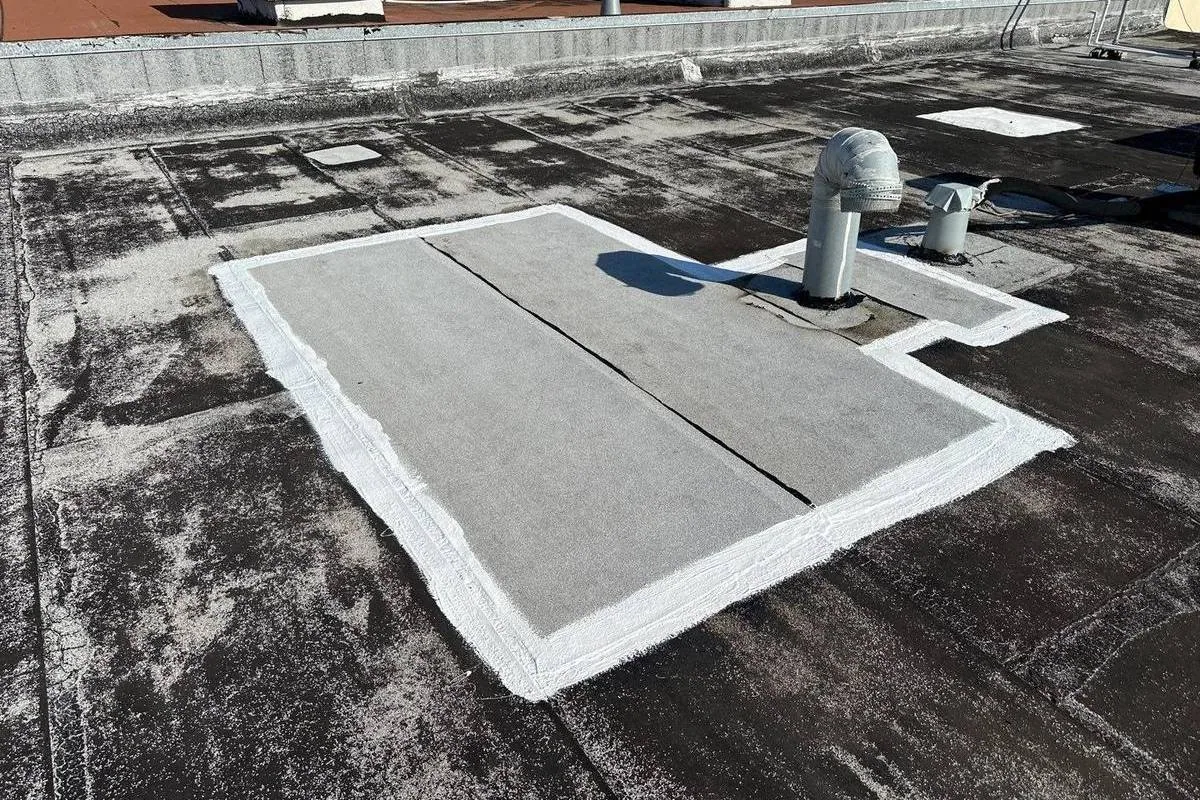
A small cut in a membrane can admit water long before the opening is easy to see from the roof hatch. We protect the area below, mark the suspected point, and check nearby walk routes, equipment, seams, and penetrations. In Broken Arrow, OK, Alfa Laval operates a heat-exchanger manufacturing facility, while Zeeco's Global Technology Center includes manufacturing and industrial-scale combustion testing. On a plant roof, equipment routes and production windows help set safe access and material staging. A membrane inspection documents the cut and its surrounding field before repair materials are chosen.
Trace the opening and its exposure
We inspect the suspected puncture, check for nearby cuts or scuffs, and look at pathways where maintenance staff or service contractors may cross the membrane. A dropped tool, sharp object, fastener, or unprotected equipment move can leave a localized opening, but the site condition must support the cause. We note whether the membrane is split, abraded, displaced, or covered by an older patch. Interior reports are compared with roof slopes and the likely water path. A photo roof record identifies inspected and uninspected areas so the repair does not imply that every nearby section is clear.
At industrial properties, the facilities contact identifies process zones and equipment routes before materials move onto the roof. Those operating controls guide staging but do not identify the roof assembly or condition. At a plant or commercial building, we confirm the installed system, rooftop equipment, service route, and work-hour limits with its facilities contact. We set a staging area and interior protection zone before tools or materials go up. A Tulsa commercial property follows its own access instructions.
Check the surrounding membrane for stress
A puncture can sit beside a seam that has pulled, a curb that moves, or a patch that no longer bonds. We examine those nearby details and identify the installed membrane before choosing a repair. The cut is cleaned and measured, then the repair surface is prepared for compatible material. If the membrane is wet below the opening, a surface patch alone will not address the concealed condition. We record what can be confirmed during the visit and where a test opening would be needed. A seam check can be added when the puncture lies near an open lap, with separate repair limits.
Water can travel under a roof before it appears at a ceiling, so we compare the interior complaint with penetrations, drains, wall transitions, and the marked membrane location. If multiple areas are reported, each gets its own photo and location rather than one broad description. Where roof access is controlled by production or scheduled equipment service, we coordinate a return visit for any opening that cannot be completed safely. That keeps the repair surface clean and the tie-in protected. The owner receives a specific list of confirmed punctures and further checks still needed.
Keep the membrane protected between visits
Tulsa-area spring brings frequent showers and thunderstorms, and late-summer heat often reaches 100 degrees or more. Rain can contaminate an exposed repair surface; high heat affects safe movement and material handling. We schedule cleaning, preparation, and closure for the conditions actually present. If a puncture cannot be permanently repaired during the first visit, the site contact receives a status on the temporary cover and a return condition. A roof area should not be left open while waiting for a more convenient production window.
When active water is entering the building, our service can respond overnight, on weekends, and on holidays to stabilize the opening. We identify the room or equipment below, protect it, and note the temporary material used. The permanent patch follows after membrane type, surface condition, and any moisture below are checked. If more than one area needs work, we sequence each repair so the interior remains protected at the end of a shift. A heat-exposure review may also be useful when surface aging appears beyond the puncture itself.
Use a compatible patch and clean tie-in
Repair products differ across thermoplastic, rubber, modified bitumen, and coated roofs. We confirm the system, prepare sound material around the cut, and install a patch with a secure perimeter and appropriate tie-in. A patch placed over dirt, moisture, loose material, or an incompatible coating may not bond as intended. We also check whether the cut reaches insulation or deck so the repair scope accounts for the assembly, not only its top surface. A membrane repair scope identifies materials, boundary, and any testing or removal included.
If punctures repeat across a roof zone, we look for a traffic route, exposed fastener, equipment movement, or broader membrane deterioration. Repairs can be grouped only after each area is mapped. Cost and timing depend on the number of confirmed openings, roof access, moisture removal, substrate repair, and the time needed to prepare dry surfaces. If splitting seams or heat-related wear accompany the cuts, those conditions receive separate scopes. A hail-condition inspection can help distinguish impact from foot traffic or maintenance damage when the evidence supports that comparison.
Mark the repair for future access
At closeout, we photograph each patch, note the roof area and materials used, and identify nearby conditions outside the authorized repair. The record includes any temporary cover removed and follow-up testing still needed. If a service route caused repeated contact, the site team can use the map when planning future access, while avoiding assumptions about who or what made a cut without evidence. A later inspection can compare the patched area with the original photographs and determine if movement continues.
Send the building address, roof-system information if known, leak location, service-access schedule, and any photos taken inside. We will inspect the membrane, protect the interior, and return a repair boundary with the right material and tie-in. For dispatch to Creek 51-area work, the turnpike interchange with SH-51 provides a regional cue. The crew confirms each property's gate, equipment clearance, and staging contact before setting a service route. A Creek 51-area inspection follows those confirmed directions.
A puncture repair should be documented in a way that helps the next person find the exact area. We photograph the opening before preparation, record nearby seams or traffic paths, and note whether the membrane is dry and suitable for the specified repair material. The patch perimeter must extend onto sound, prepared surface; loose or contaminated material can undermine the bond or weld. If the puncture is near a curb, edge, or previous patch, we inspect that interface and record whether it belongs in the same work scope. Interior protection stays in place until the repaired area has been checked and the owner understands any limitation. Closeout photos show the finished detail and the surrounding roof zone, giving maintenance staff a reference if the report returns after another storm.
Commercial Roofing Questions
Can you patch a membrane after a maintenance contractor cuts it?
Yes, once the installed roof system and surrounding surface are identified. We document the opening, prepare sound material, and note any wet insulation or deck condition that requires more than a surface patch.
How do you find a puncture that is not visible from the hatch?
We compare the interior report with seams, penetrations, drains, service routes, and surface marks. If a suspected opening remains uncertain, we state the additional access or test needed to locate it.
Will one puncture require replacement of the whole membrane?
A single cut does not establish that broader work is needed. We inspect its surroundings and the condition of the assembly, then separate a localized repair from any repeated or widespread findings.
What if rain starts while a puncture is open?
We protect the interior and secure the affected area with temporary measures when appropriate. The handoff records what remains temporary and when a permanent tie-in can be completed safely.
What site details help plan the repair visit?
Share roof access rules, equipment schedules, service routes, leak timing, interior photos, and membrane information if available. Those details help us stage tools and protect the room or equipment below.