Fitness Center Roofing
A morning class can fill the parking lot before a roof leak is reported over the court or locker rooms. We first protect the active interior, identify the roof area above it, and coordinate a work window with facility management. In Broken Arrow, OK, Northeastern State University's campus sits near the New Orleans Street and Creek Turnpike interchange and includes multiple buildings and offices. Its New Orleans Street location and turnpike connections provide a local reference for planning crew arrival and equipment deliveries. Our fitness facility inspection records the assembly, drainage, equipment clearances, and affected spaces before staging is approved.
Protect classes and member circulation
Fitness properties can include weight rooms, courts, studios, locker rooms, offices, and service areas with different activity peaks. We identify the room below the reported leak, check whether classes or equipment use must move, and mark the route between roof access and the work area. A safe plan may close one zone while members use another, but doors and emergency paths remain part of the layout. We confirm hours, noise limits, and cleaning requirements with the manager before any material is brought inside.
Northeastern State University Broken Arrow Campus has multiple campus-specific buildings and offices, and its directions describe access from the Creek Turnpike and Broken Arrow Expressway (SH-51). For a fitness center, management identifies the member entrance, service route, and work zone before roof access is scheduled. If a facility shares a larger complex or parking area, management identifies what can be closed temporarily. We provide the active work zone and member notice details so instructors and front-desk staff can redirect people without guessing which entrance is affected.
Trace moisture before choosing a fix
Condensation, roof leakage, and moisture from changing rooms can appear as similar ceiling marks, but they require different responses. We inspect roof seams, flashing, drains, skylights, and HVAC curbs, then compare exterior conditions with the report inside. If a pool, shower area, or steam room is present, ventilation and vapor control may also need review; we do not assume those amenities exist. The inspection separates observed roof entry from interior humidity questions and identifies when testing can narrow the cause. A moisture survey can help locate concealed wet material when conditions make that method suitable.
Tulsa-area spring storms bring frequent showers, while hail and damaging wind events are most common in spring and early summer. Hail reports can be localized, so a nearby event does not prove that the fitness roof needs broad replacement. We inspect the specific surface and document impacts, edge details, and penetrations. If water reaches electrical equipment or a court floor, we protect the area below and respond to the active opening first. Emergency service remains available at night, weekends, and holidays; permanent work waits for a safe roof and suitable weather.
Check long spans and rooftop equipment
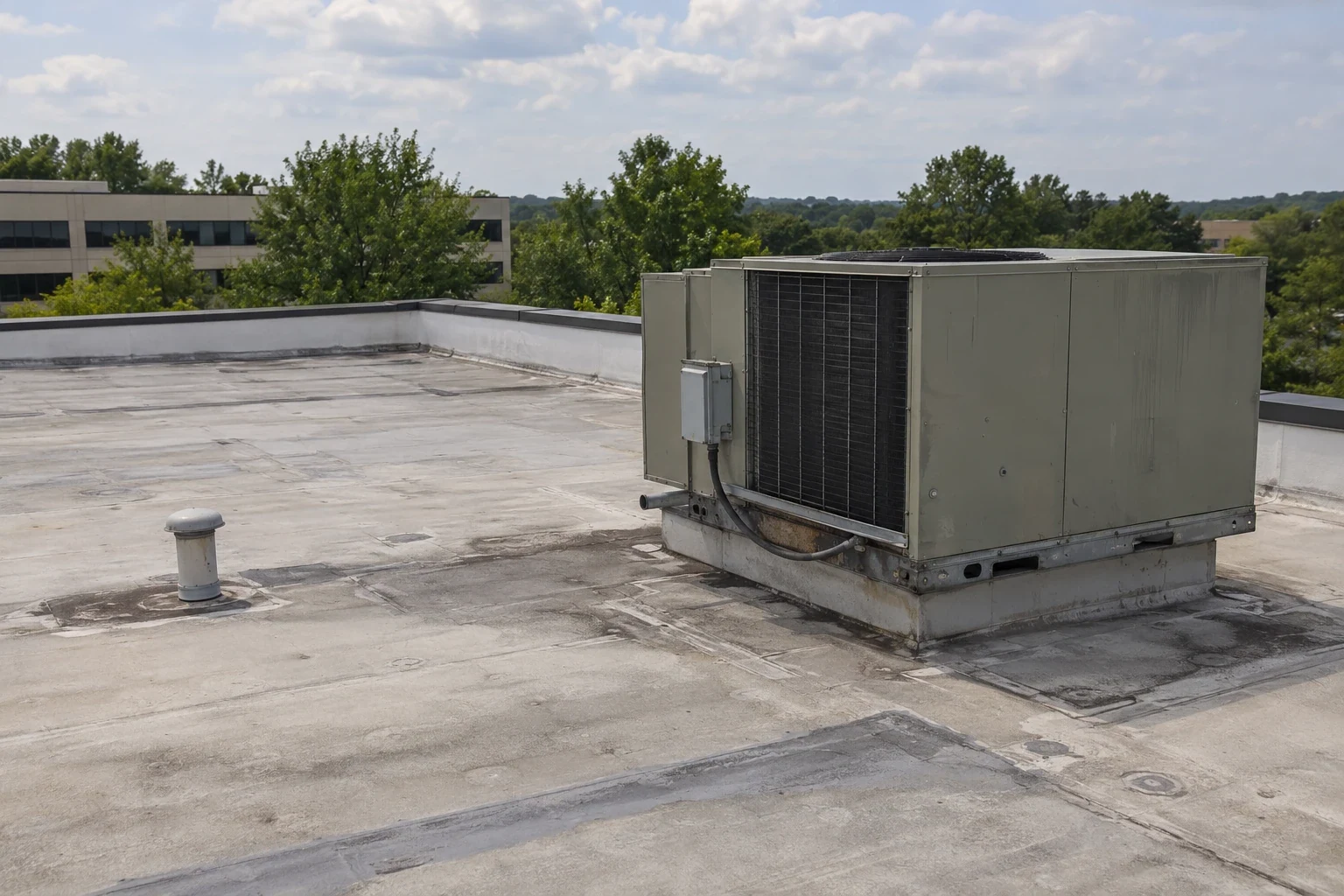
A large open exercise room or court may have long roof spans, lights, ductwork, speakers, and suspension points. We inspect the roof assembly and supporting transitions without assuming that a visible interior fixture caused the leak. Rooftop HVAC, exhaust, and plumbing penetrations can interrupt the membrane, while drains and overflows determine where runoff travels. We document each observed detail and any deflection or deck question that needs evaluation by the appropriate design professional. A equipment curb review examines flashing around units and support details before repair materials are selected.
Late-summer heat in the Tulsa climate profile includes frequent readings at or above 100 degrees. Safe access and material handling can narrow the workday, while high-use classes may continue into evening. We select an approved staging area, limit the open roof section, and agree on when mats, equipment, and courts below can be returned to use. A drain and overflow inspection also checks outlets that may be difficult to reach once member activity fills the building. The schedule states what is closed and when the next area reopens.
Match repair scope to building use
A puncture, failed seam, or curb leak may call for a localized repair if adjacent materials and drainage are sound. Repeated moisture, widespread seam failure, wet insulation, or damaged edges may justify broader testing and a capital plan. We inspect roof layers, attachment, deck, and drainage before comparing patching with coating, recover, or replacement. A recover evaluation checks whether the existing assembly can accept another layer and whether trapped moisture must be addressed. Cost and timing depend on roof condition, access, protection, material choice, and the facility schedule.
A fitness property shares some occupancy concerns with senior living and worship buildings, but member classes and equipment movements create a different daily pattern. A care facility roof plan may prioritize resident and treatment routes, while a worship building inspection works around services and gatherings. For each gym, we map active rooms, member entries, and any equipment that cannot be moved during the repair. The written scope identifies what is confirmed and which findings call for testing before a larger recommendation is made.
Return activity areas in sequence
Closeout photos show the repair, nearby seams and drains inspected, and any condition that remains outside scope. The manager receives a reopening sequence for the court, class room, locker area, or path below the work. A maintenance check can revisit penetrations, drainage, and roof edges after equipment changes or before a storm season. If the roof has several sections, the facility record ties each photo and work date to the right zone so a new member report can be compared with prior findings.
Fitness facilities often operate early and late, with classes, locker rooms, pool areas, and ventilation systems that affect roof access. We confirm class schedules, air-intake locations, and spaces that need protection before selecting a work period. A leak near a pool or shower may involve indoor humidity as well as roof entry, so the inspection compares the room report with roof conditions without assuming cause. Rooftop units, exhaust, and penetrations are checked for flashing, curb movement, and service access. If noise would interrupt a class or event, the crew stages a quieter inspection window and communicates the boundary to the manager. Closeout identifies areas inspected, any indoor route affected, and maintenance details to revisit. That helps a fitness operator keep members away from the work zone while giving facilities staff a roof-specific record for the next repair decision.
Send the class calendar, member hours, court or studio schedule, equipment locations, cleaning requirements, leak reports, and roof access details. We will coordinate the inspection with the manager and return a documented work boundary. If water is entering, emergency response can begin at any hour, holidays included. Permanent work follows the observed roof condition and a suitable weather window, with a final handoff that states when each member area can return to regular use.
Commercial Roofing Questions
Can a gym stay open while the roof is repaired?
Often, if the affected zone, member route, and work below can be separated safely. We coordinate class hours, equipment movement, noise, and cleaning with facility management.
How do you tell roof leakage from condensation?
We compare the interior report with roof seams, penetrations, drainage, and nearby mechanical conditions. If observations do not establish the source, we identify testing before setting a permanent repair scope.
Can a court reopen between work shifts?
It can when the roof is secured, the area below is clean and dry, and barriers can be removed safely. The reopening time is part of the daily handoff.
Does a storm report mean the gym needs a full replacement?
No. We inspect the actual roof, record visible damage and moisture, and compare a repair with broader options only when assembly condition supports them.
What should we move before roof work?
Management identifies sensitive electronics, floor equipment, and any activity that cannot pause. We state the work zone and protection needs before staging so staff can make the moves.