Flex Industrial Roofing
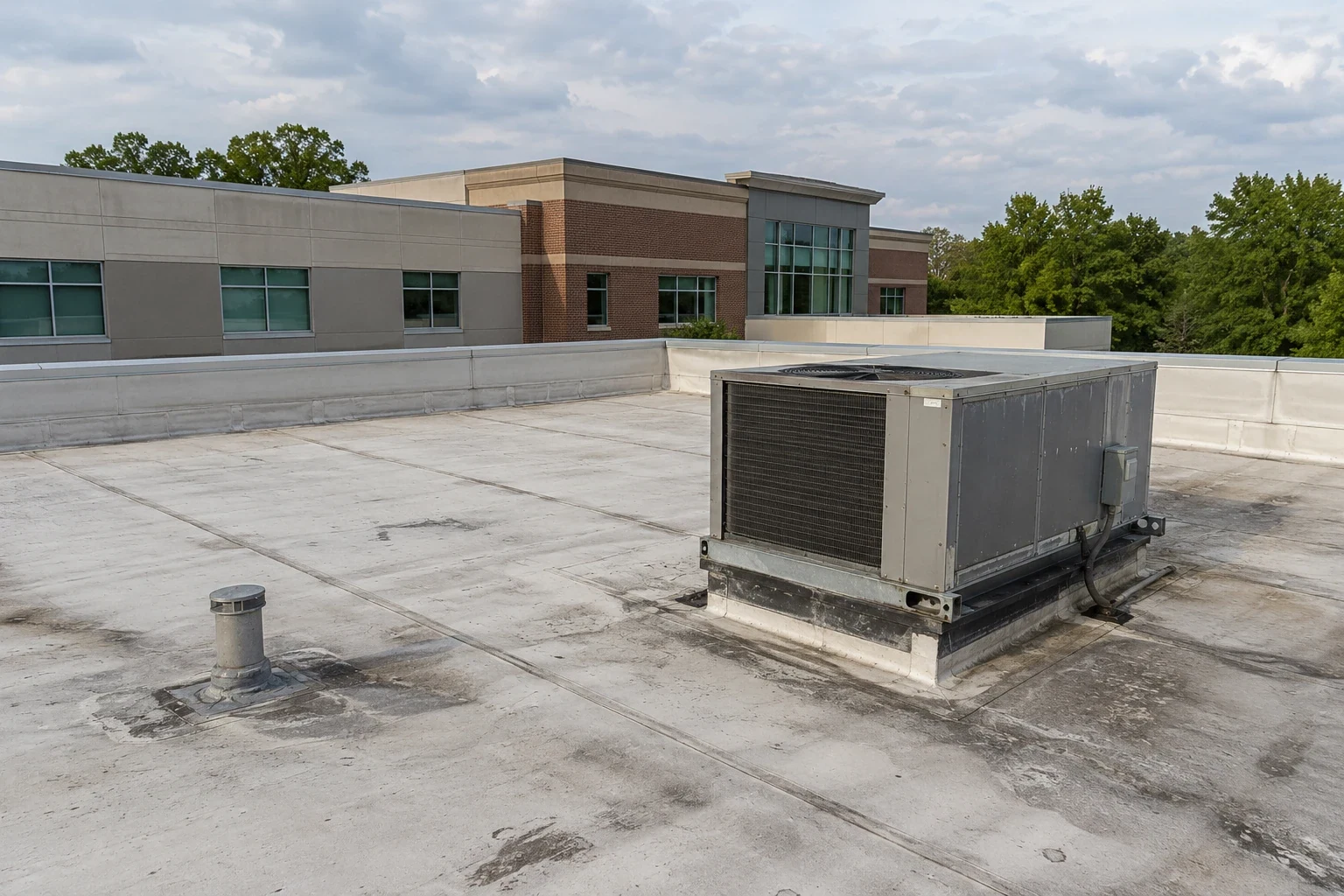
A tenant move-out can expose a roof curb or seam that was hidden behind equipment, while the next occupant is already asking for access. We inspect the affected bay, map shared systems and roof routes, and record any conditions that could change the turnover schedule. In Broken Arrow, OK, Creek 51 Business Park is an 85-acre industrial-zoned site at the Creek Turnpike and Highway 51 junction. Our flex industrial roof inspection documents the actual roof assembly and shared access conditions before a lease transition or repair window is set.
Map tenant boundaries and shared systems
Flex buildings can combine office frontage, production space, storage, and separate tenant bays under one roof. A leak in one suite may relate to a shared drain, parapet, or rooftop service path. We compare the tenant's report with the roof above, inspect nearby seams and penetrations, and note whether equipment or access is shared. The repair map identifies the affected bay and any common area needing protection. Before staging, property management confirms which tenants need notice, who can provide roof access, and whether a service corridor or loading door must stay open.
North Rose Business Park includes office-neighborhood, commercial-neighborhood, and light-industrial zoning. At each flex building, we confirm current use, roof details, and access with the property contact. We verify current occupancy, operations, equipment, and restrictions directly. If a tenant change affects roof penetrations or HVAC service, we document the condition before and after that work so the next lease handoff has a clear record.
Protect the schedule from storm windows
Spring is the Tulsa region's wettest season, with frequent showers and thunderstorms. Hail and damaging winds cluster in spring and early summer, but hail impact can be localized. We check the property itself after a report, photograph seams, edges, and penetrations, and identify any temporary protection needed before water reaches occupied space or stored materials. After a regional warning, we inspect the reported bay and document visible impact before recommending repair. Around-the-clock emergency response is available, holidays included, while permanent work is scheduled when the roof can be safely opened and secured.
Heat remains a scheduling constraint into August, with Tulsa climate records showing repeated afternoons that exceed 100 degrees before the first part of September passes. Flex tenants may run different shifts, so the facility lead has to coordinate work hours with each affected suite. We locate the staging area, set a perimeter, and sequence one roof section at a time where feasible. If a project crosses a tenant boundary, the notice says which spaces or equipment paths may be interrupted. A phased work plan ties weather, tenant hours, and daily closeout into one schedule.
Inspect penetrations, seams, and drainage
Roof transitions change when a space adds HVAC, exhaust, conduit, skylights, or production equipment. We inspect curbs, pipe flashings, support details, membrane laps, metal seams, perimeter edges, and the drainage path around the altered area. A leak that appears near one suite can travel along a deck or insulation before becoming visible, so we check adjacent bays where the roof system is continuous. When concealed moisture is possible, a survey or test opening can help refine the scope. A moisture survey is considered with access, roof conditions, and the question it needs to answer.
Creek 51 Business Park is an 85-acre light-industrial site at the Creek Turnpike and SH-51 junction. We inspect each flex building's roof and shared equipment before setting a repair boundary. Washington Street is a major east-west arterial in Broken Arrow. At each flex building, we inspect the actual equipment, roof penetrations, and operating restrictions. A Washington Street corridor visit begins with the property contact's access plan and the roof system in place.
Compare a tenant repair with renewal
A damaged flashing or isolated seam may need a limited repair when surrounding materials remain serviceable. Repeat leaks, wet insulation, deteriorated metal, or inconsistent drainage can call for broader review. We inspect roof layers, deck, attachment, drainage, and prior repairs, then compare patching, coating, recover, or replacement. A recover assessment checks whether the assembly and moisture condition permit an additional layer. The report separates a tenant-specific defect from a shared roof concern, which helps owners coordinate responsibility and timing without assigning costs or obligations that are not in the observed scope.
A warehouse roof plan often centers on dock schedules, while a manufacturing building can require process and equipment coordination. For mixed occupancy, a warehouse roof survey and a manufacturing roof inspection share technical review but differ in access and operational constraints. We set the flex property's boundaries based on actual users and systems. Cost and duration depend on roof condition, access, protection, test results, material selection, and how many phases are required; those drivers appear in the written scope.
Carry roof details across tenant changes
Closeout records the completed repair, nearby details checked, temporary protection removed, and any follow-up inspection or testing. Management can keep the roof map with tenant contacts and equipment changes so a new occupant does not inherit an unexplained leak history. A roof condition report can list open items by building and bay. If a suite is remodeled or new equipment is added later, the roof access plan can identify who needs to review penetrations and verify flashing after the work.
Flex buildings can combine office suites, light production, storage, and service functions under one roof. We confirm how each tenant uses its space and where mechanical equipment, exhaust, or later tenant improvements cross the assembly. A penetration added for a new use needs a compatible curb or flashing detail and a record of who owns future service. We inspect the roof around the change and adjacent areas where water could travel, then separate one suite's report from another's. If the roof is shared, the property manager confirms which owner or tenant approves access and interior protection. Work can be sequenced by bay or tenant schedule, with barriers and a clear turnover at each shift. The report records each observed condition and any inaccessible area. That helps the owner plan maintenance across flexible occupancy without assuming every suite or roof section has the same equipment, use, or repair need.
Send the current tenant map, suite hours, access rules, equipment changes, leak locations, shared drain information, and any upcoming turnover date. We will inspect the affected area, document what is confirmed, and return a sequence that fits occupied operations. When water is entering, emergency response can start at any hour. Permanent work follows the roof findings and a suitable weather window, with a handoff that tells management and tenants which bay is ready for normal use.
Commercial Roofing Questions
Who coordinates roof access when several tenants share a building?
Property management identifies the access contact and each affected tenant. We map shared routes and services, then issue a work boundary and schedule for the people who need to plan around it.
Can a new tenant equipment installation affect the roof warranty?
It can affect roof details or existing coverage, depending on the assembly and terms. We inspect the penetration and flashing, document the work, and identify any manufacturer or owner requirements to confirm.
How do you separate one tenant leak from a shared drainage issue?
We compare interior reports with the roof zone, drains, overflow paths, and neighboring seams. The condition map shows whether evidence points to one bay or a common system.
Can repair work happen during a tenant move?
Often, if the loading route, roof access, and suite below can be protected. We coordinate the move window and identify any area that must remain clear during staging.
Does a hail report mean all bays need replacement?
No. We inspect each roof area and record localized impacts, seam condition, and moisture. Any broader recommendation follows observed assembly condition, not the storm report alone.