Hospitality Groups
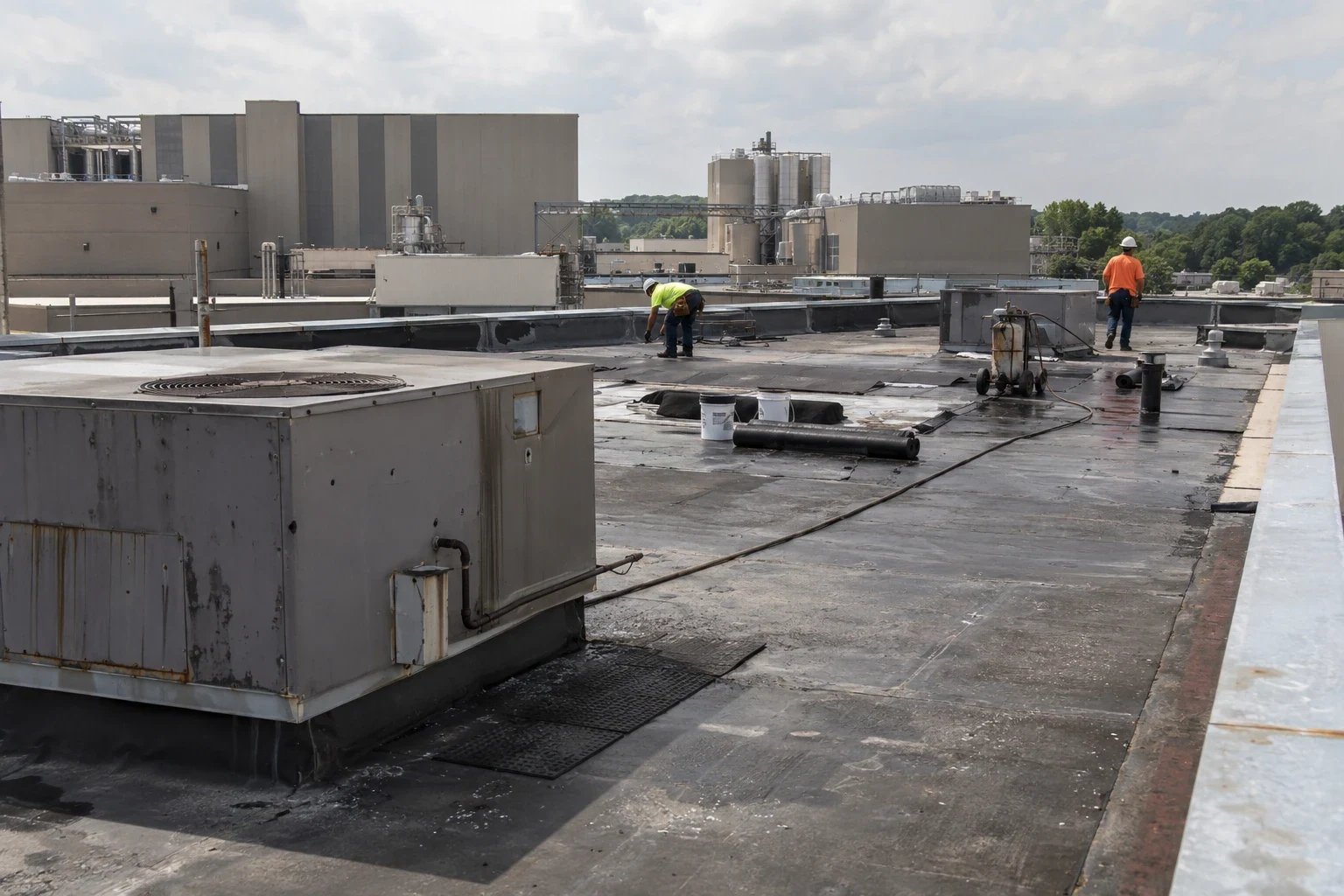
A leak over guest rooms or a public entrance changes the roof schedule as soon as water is reported. We coordinate interior protection, access, and a quiet route to the affected roof area before setting a repair boundary. In Broken Arrow, OK, The Shops at Aspen Creek combines retail, dining, multifamily, and entertainment at the Creek Turnpike and 161st East Avenue. Jenks Riverfront includes a hotel, restaurants, offices, and entertainment destinations. For the hotel in scope, we confirm guest access, service routes, and roof conditions with its facilities contact. A multi-location operating plan can carry contact and scheduling needs across a group while keeping each building's findings separate.
Protect guest and service routes
Before roof work, the facilities contact identifies occupied areas, guest entrances, housekeeping and delivery routes, kitchen operations, and times when noise must be limited. We confirm roof access, lift position, material staging, and any area below that needs protection. If work affects a guest route, the boundary and alternate path are agreed before crews mobilize. Staff receive a clear handoff at the end of each shift describing completed areas and what remains temporary. A phased hospitality schedule keeps roof zones and guest operations coordinated without assuming every hotel has the same layout.
Jenks Riverfront includes the Riverwalk, restaurants, a hotel, Flying Tee, the Oklahoma Aquarium, and office properties. Its Downtown Transition area has medical and financial offices and strip retail. We confirm guest routes, delivery hours, and the roof-entry point with the operator for the address in scope. In Broken Arrow, we also use New Orleans Street and Creek Turnpike as regional route references when planning arrival. A Jenks Riverfront service route requires the facilities contact to set loading, guest, and roof-access limits before staging.
Trace the water path through the building
A ceiling mark in a guest room may sit below a roof penetration or seam that is several feet away. We compare the room report and timing with roof drains, curbs, transitions, edge details, and prior repairs. Photos record what is visible and where further access is needed. If water is active, we arrange protection first, then inspect the assembly before permanent work. The scope distinguishes the stabilized area from any adjacent section that has not been checked. A leak investigation can identify whether the correction is a detail repair, a drainage issue, or a question requiring a targeted test.
Hospitality roofs may include membrane areas, metal sections, additions, exhaust equipment, and cooling units. We identify the installed assembly before selecting materials. A repair on one system may not bond to another; a coating does not correct wet insulation or failed attachment. We inspect seams, flashings, drains, scuppers, curbs, and penetrations as connected details. If rooftop equipment is scheduled for service, the roofing boundary is coordinated with the mechanical contractor before opening the roof. A curb and equipment review records those interfaces.
Protect the roof when the forecast shifts
Hotel work is scheduled by the condition of the surface and the rooms below. Tulsa's spring rain peak brings recurring showers; hail and damaging gusts are more common during spring and early summer. The late-summer heat profile also includes frequent days reaching 100 degrees or more between the end of July and early September. We plan roof access, guest notices, and daily closure with these conditions in view. If a weather hold becomes necessary, the facilities lead receives the location and status of each secured section.
Tulsa-area hail can be localized, so we inspect the hotel roof at the reported address before identifying storm-related work. We photograph the hotel roof itself and separate an observed strike from prior repairs or ordinary deterioration. If a guest room is taking water after the main office has closed, our overnight and holiday response can secure the opening. The facilities contact receives an update on the dry-in and remaining permanent work. A storm-related inspection records only conditions found at the requested property.
Choose work that fits occupancy and condition
A defined flashing failure may call for a small repair, while repeated leaks or broad moisture may lead to testing or renewal. We inspect the roof layers, substrate, attachment, drainage, and equipment interfaces before considering recover or coating. Each option has limits. Recover depends on the existing assembly and capacity; coating cannot restore a deteriorated deck. We provide a repair scope and, when evidence supports it, a separate replacement evaluation so ownership can compare work boundaries.
Timing depends on guest-room use, event calendars, kitchen activity, delivery timing, access, lift placement, debris handling, and weather. A replacement can be split by wing or roof section where the structure and schedule allow, with a daily closeout that identifies exposed and completed areas. Cost drivers include system type, removal, wet material, deck condition, flashing complexity, and mechanical coordination. A property manager's building record can preserve access and maintenance history across related assets while each hotel's occupancy and roof sequence are planned individually.
Give hotel operations a usable closeout
Closeout photos and notes identify repaired details, materials, temporary measures, and conditions outside the authorized work. We list follow-up inspection or testing if needed and tell the facilities contact which guest or service routes can return to normal. The record can be used by management, ownership, and the maintenance team without treating a temporary dry-in as a finished correction. If the hotel is part of a chain, each location receives its own scope and record.
A hospitality portfolio needs roofing work that protects guest access and service operations. We coordinate around check-in, kitchen and laundry deliveries, loading routes, event schedules, and any rooms that must remain available. Before setting a work zone, we confirm where guests move, which entrances remain open, and whether noise affects a meeting or overnight period. Roof findings are mapped to the building and interior report, then separated from issues handled by mechanical or façade trades. If a leak affects a guest room, temporary protection and room communication take priority while the roof source is checked. Multi-property ownership can compare urgency and capital timing, but each hotel keeps its own roof record and access plan. Closeout lists completed zones, temporary measures, and any detail needing another shift. This gives operators a clear handoff without promising that all guest operations can continue unchanged during active construction.
Share guest schedules or event constraints, access instructions, roof plans, mechanical work, leak locations, and contacts responsible for rooms or public spaces. We will confirm the work zone, protect occupied areas, and document a sequence that staff can relay between shifts. Those details let the facilities team hand the work sequence from one shift to the next.
Commercial Roofing Questions
Can hotel guests stay in rooms below roof repairs?
Often, if the work zone, interior protection, access route, and noise or odor limits are planned with the facilities contact. We identify any room or route needing special coordination before setting the work phase.
How is a leak handled during a sold-out or event period?
We prioritize interior protection and immediate stabilization, then coordinate roof access around guest and event operations. Permanent repair is scheduled after the assembly and suitable weather window are confirmed.
Does spring hail mean every hospitality roof should be replaced?
A Tulsa-area hail entry can cover a narrow track, so the report alone cannot identify a hotel's roof condition. We inspect the requested building and photograph visible impact separately from wear or earlier work.
What roof details need attention near hotel equipment?
We inspect curbs, penetrations, seams, drains, exhaust interfaces, and flashing, coordinating any planned mechanical work. The record states which details were accessible and where further testing is needed.
What should a hospitality operator provide before service?
Provide occupancy and event constraints, access instructions, roof records, leak reports, mechanical schedules, and contacts for facilities and guest operations. Those inputs help set staging and handoff.