Retail and Restaurant Chains
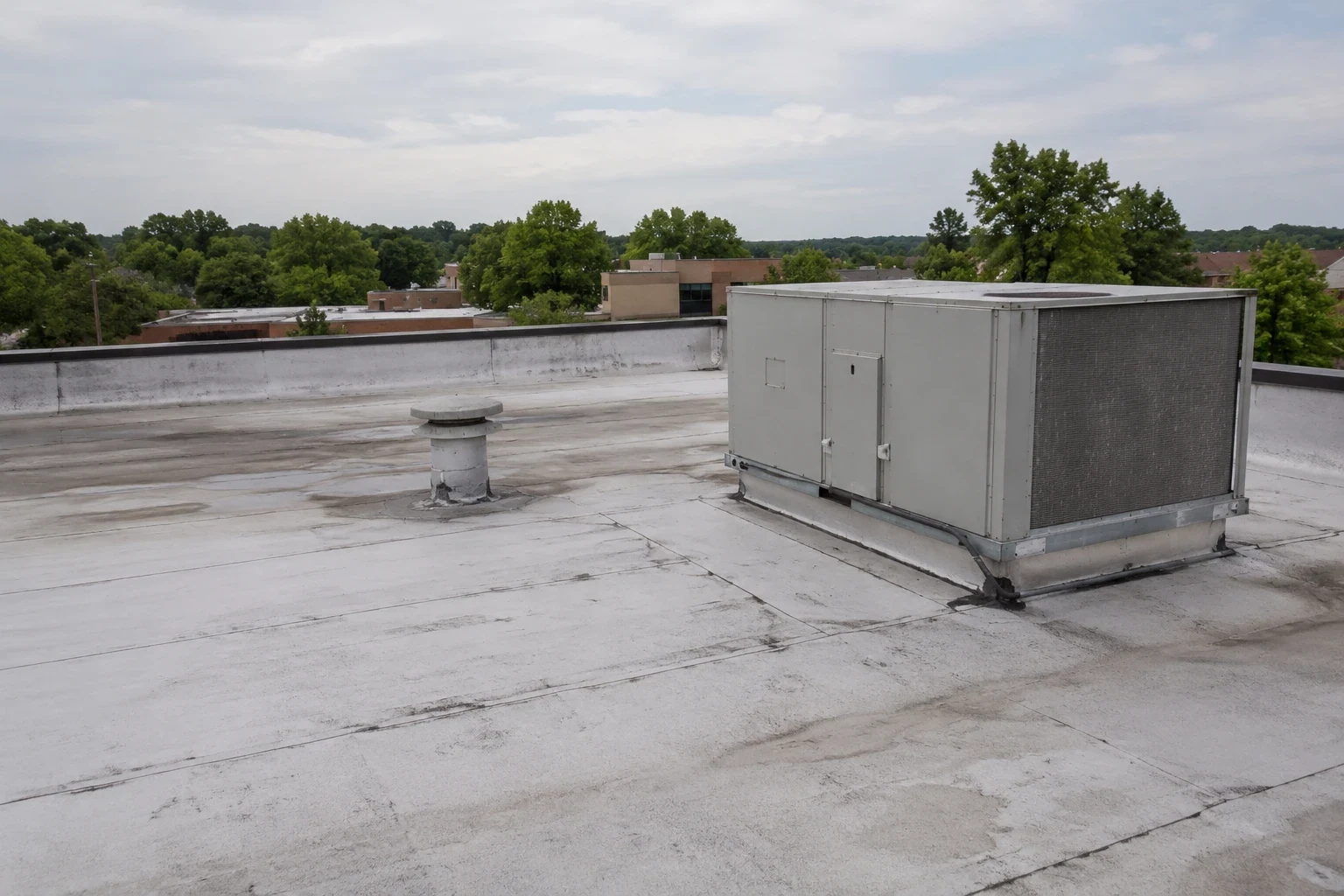
A leak above a dining room or sales floor has to be contained without sending customers through a work zone. We identify the affected space, protect the interior, and coordinate roof access with the location manager before inspection. Commercial sites range from The Shops at Aspen Creek in Broken Arrow to River West in Sand Springs, where grocery, healthcare, lodging, and retail uses bring different customer and delivery activity; each property needs its own inspection and access plan. A multi-location property record can keep contacts and follow-up dates organized while findings remain specific to each store.
Keep customer and staff routes clear
Before crews arrive, we confirm store hours, kitchen or delivery schedules, service entrances, roof access, and any customer route near staging. The manager identifies areas that cannot be blocked and spaces below the reported leak that need protection. We place barriers around the work zone, coordinate material movement, and set a clear handoff if the weather changes. If a roof task would affect a dining room, cooler, or entrance, that detail is discussed before the repair window is set. A phased occupied-store schedule can sequence work outside high-traffic periods where conditions allow.
At the Creek Turnpike and 161st East Avenue junction, The Shops at Aspen Creek spans 150 acres of retail, multifamily, dining, and entertainment. Its tenant mix includes a Walmart Supercenter and the 18-screen Warren Theatre. Sand Springs' River West has a broad mix of commercial services; those businesses offer a regional reference for dispatch, but the specific store's loading dock, membrane, and hours still come from its property contact. We ask the location contact for an access map and identify delivery conflicts at the property itself. A shopping-center visit still depends on the address-specific route and the retailer's operating plan.
Trace the leak through roof details
Water above a dining area may originate at a curb, penetration, drain, wall transition, or seam some distance away. We compare the interior report with those roof details, inspect prior patches, and photograph locations that support a repair. Kitchen exhaust and refrigeration lines can affect the roof route and flashing scope, but we inspect the installed assembly rather than assume a cause from the equipment. If a stain is dry or the water path is uncertain, the report identifies what remains unresolved and what access or test would help.
Store portfolios can combine low-slope membrane roofs, metal sections, and additions. We identify the system first, then choose compatible repair methods. A coating does not correct wet insulation, loose attachment, or a deck problem. Drains and scuppers are checked for restrictions, and roof edges are reviewed where wind or prior work may have affected details. A leak investigation can be coordinated with the store manager so interior protection and customer circulation remain clear. A photo report gives the brand and landlord a shared record.
Use a workable Tulsa weather window
A restaurant roof can be accessible at dawn and busy by lunch, so the weather plan has to fit the service clock. Spring carries Tulsa's heaviest rain and many thunderstorms; hail and damaging gusts are reported most in spring and early summer. Heat creates another constraint: 100-degree readings recur from the final days of July into early September. We identify a dry interval for repairs, protect food prep or merchandise below, and make the store manager part of any weather stop. A location can then reopen its customer route with the roof status documented.
Regional hail records note impacts in localized areas. We check the requested store and do not apply one address's condition to the rest of a chain. Photographs distinguish visible impact from worn sealant or past repair, and the scope lists areas needing additional review. Where water arrives overnight, a dispatcher can coordinate stabilization before the morning shift and leave operations staff a specific handoff. A rapid roof response protects the location while permanent work is rescheduled for a dry, safe interval.
Keep a chain repairable location by location
A chain can use common reporting while roofs remain different. We record the local assembly, repair limits, access requirements, photos, and unresolved findings for each store. A small seam repair may be suitable at one site, while another needs a drain correction or moisture investigation. We compare repair with recover or replacement only after checking layers, substrate, attachment, and drainage. A defined repair scope is separate from a recover assessment, and both state the work assumptions and limits.
Timing and cost depend on store hours, kitchen exhaust, equipment clearances, lift placement, material handling, wet insulation, deck conditions, and how much customer access must be preserved. We can sequence by roof area or store, with a daily handoff that records completed work and anything still temporary. The brand can compare findings across locations without assuming uniform roof condition. For hotels or restaurants with lodging functions, a hospitality roof schedule may add guest-room and service requirements to the occupancy plan.
Close the store visit with clear notes
Closeout photos show the repair location and nearby details; notes identify materials used, temporary measures, and conditions outside the approved boundary. We state whether more testing is recommended and when the site should be revisited. The manager can pass a concise status to employees while ownership retains the complete record. If the repair involves a tenant and landlord, the document names the roof area inspected and distinguishes building work from interior action requested of the store.
Chain operators benefit from a repeatable field record that still respects each location's layout. We document the building, access route, roof assembly, drains, equipment, and interior reports separately before comparing patterns across stores or restaurants. Kitchen exhaust and rooftop HVAC may require coordination with service vendors, while customer doors and delivery routes shape staging. A leak over food preparation or dining space needs immediate interior protection and a clear communication path with the manager. The repair record identifies what was completed and any condition left for a later project. Portfolio summaries can group common maintenance needs, but they do not establish a shared roof system or identical cause. We confirm local operating hours and who can authorize a shutdown at each address. This supports consistent ownership reporting while keeping the scope, schedule, and closeout matched to the actual property.
Send the location list, operating hours, kitchen and delivery schedules, roof drawings, leak reports, and landlord contacts when requesting service. We will coordinate the access route, protect customer and staff areas, and report each store's condition separately. Aspen Creek and Sand Springs' River West help orient local dispatch; the work sequence comes from the specific location's access and the weather window available.
Commercial Roofing Questions
Can roof work happen before a store opens?
We can plan an early or after-hours visit when access, crew safety, noise limits, and weather support it. The location manager confirms entry, alarm procedures, and any delivery or food-service activity.
How can we keep customers away from roof work?
We coordinate barriers, lift placement, material staging, and any affected entrance with the store contact. The work area stays defined, and the manager receives notice if a route must change.
Do hail reports justify inspecting every chain location?
Reports can prompt a review, but Tulsa-area hail is localized. We inspect the named properties and document conditions there rather than infer damage across the chain.
What if a leak is over food service or refrigeration?
For an active leak over food service or refrigeration, immediate interior protection is coordinated with store leadership, followed by an inspection of the roof details above the report. Temporary stabilization and permanent repair are recorded separately.
Can one roof specification be used at every location?
A brand can standardize its records, but the installed roof, substrate, drainage, and access must be checked at each store. We match the repair or renewal scope to those site conditions.