Commercial Roof Asset Management
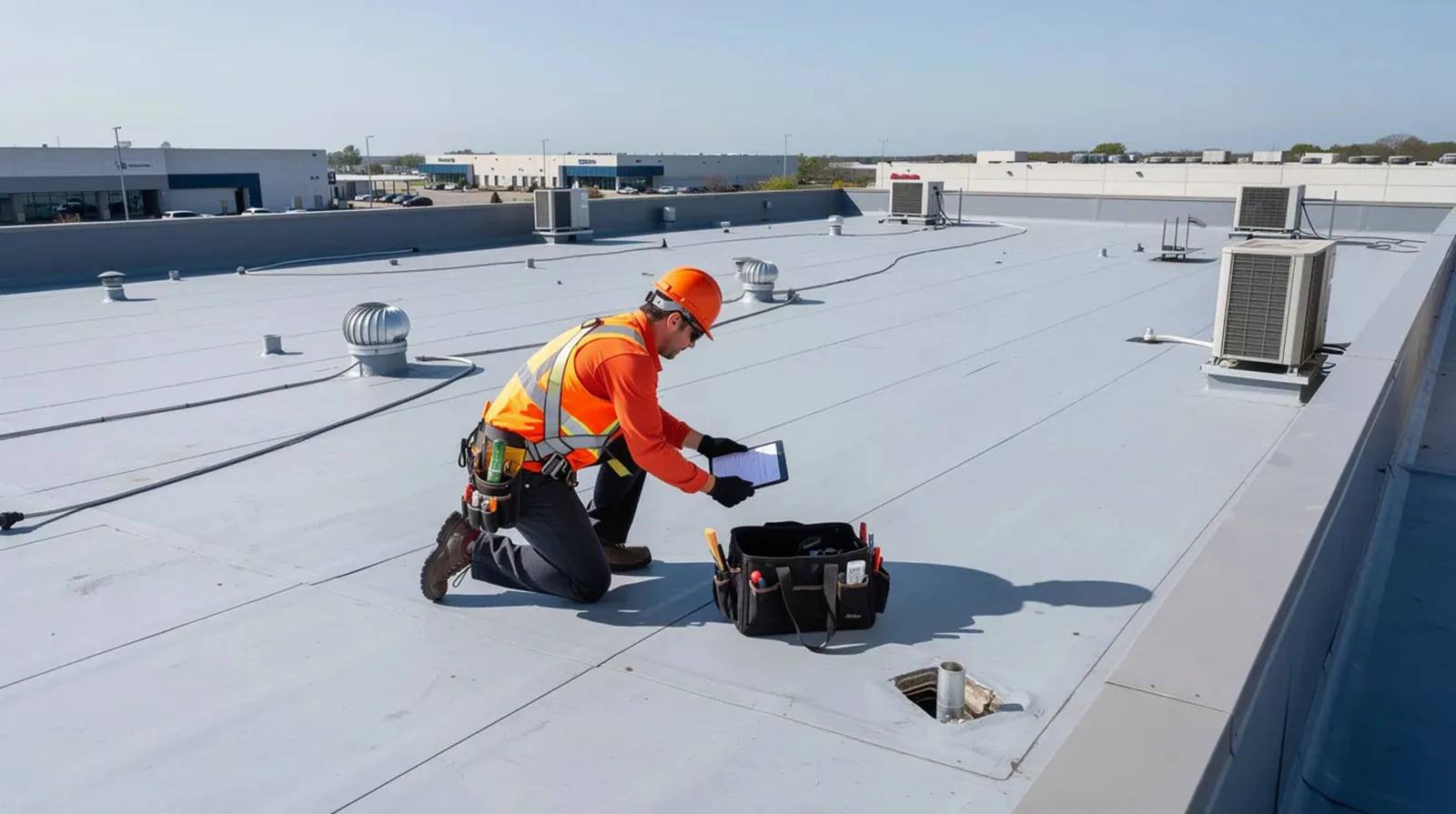
Spring storms can force a property team to choose which roof needs attention first, before the full portfolio is inspected. A current asset record gives that call a starting point: roof area, known system, last observed condition, open work, access restrictions, and the person who can release a crew. We build the record from site inspections and owner documents, keeping confirmed defects separate from items that need testing. In Broken Arrow, OK, that approach can help a manager coordinate a mixed portfolio that includes the industrial parcels at Creek 51 Business Park and multi-building institutions such as the Broken Arrow Public Schools portfolio. A photo-backed roof condition report establishes the baseline for each address.
Give each building its own roof record
A portfolio list is only useful when every entry points to a roof the owner can identify. We record the property address, building name if supplied, roof sections, known system, available installation or repair records, and access instructions. Large buildings may need separate entries for areas with different materials, ages, drainage paths, or maintenance history. We attach dated photographs and location notes so a team can return to the same curb, drain, edge, or seam without relying on memory. Where the roof system cannot be verified from records or field conditions, the entry says unknown instead of converting an estimate into a fact.
Broken Arrow Public Schools has 31 school sites and more than 2,600 employees. A roof inventory can track each school address, access contact, operating calendar, and condition history separately. A school-site roof visit begins with the district's current location and access information, then adds only observations made at that building. We can link those individual records to a multi-site roofing program while keeping each property's findings distinct.
Separate defects, risks, and open questions
A useful condition history distinguishes an active leak from a dry surface defect, a temporary cover from a completed repair, and an observed concern from a suspected cause. We record the date, location, photographs, interior impact if reported, and the next step assigned by the owner. If moisture below the membrane is unknown, that uncertainty stays visible until a test or opening resolves it. This lets the facilities team compare issues without treating every notation as the same level of urgency. A written condition report with photos can serve as the source for those entries and the follow-up record.
Rainfall across the Tulsa area tends to concentrate in spring, when showers and thunderstorms are frequent. An open penetration, an unresolved drain issue, and a broad aging area create different exposure and timing questions when rain is likely. We flag whether the building needs immediate protection, a defined repair, further testing, or monitoring after a weather event. An inspection appointment can update a record when conditions change, while storm damage documentation keeps event observations tied to the specific roof and inspection date.
Keep access and operating limits with the asset
Roof condition is only one part of getting work scheduled. The record should also show the approved hatch or ladder, escorts, fall-protection needs, roof traffic restrictions, equipment clearances, delivery route, staging area, and hours when noise or shutdowns are limited. We confirm these details with the current property contact because tenant changes and equipment work can make an old access note unreliable. A record that separates confirmed instructions from items awaiting confirmation helps the dispatcher plan the first visit without assuming the site is ready.
Creek 51 spans 85 industrial acres at the southwest corner formed by SH-51 and the Creek Turnpike; listed utilities include electric, gas, water, wastewater, and telecom. For a site visit, we confirm the gate procedure, roof entry, and equipment clearances with the building contact. For a portfolio that includes several sites, a Creek 51 area inspection can update local access notes while a property management roof program coordinates responsibilities across addresses.
Turn the inventory into a work queue
Once records are current, the owner can sort next actions by exposure, known condition, operating impact, and readiness. An active opening may need emergency dry-in, while a suspected wet layer may need testing before a permanent scope is priced. A planned maintenance item can wait for a scheduled visit if the roof remains serviceable and no water is entering. The queue records the owner decision, approval status, access dependencies, and target weather window. It does not assign urgency from a spreadsheet score alone; the roof observations and building constraints remain part of the decision.
For a large set of buildings, we can group work by compatible roof system, travel, access, or procurement window, then preserve a separate repair boundary for each address. Conditions on one property do not establish the condition of another, even when the roofs share a system or employer. A capital planning review can use the same baseline to compare near-term repairs with future renewal. Where the assembly and condition support it, scheduled maintenance can check drains and repaired details before the next decision is due.
Keep the next decision visible
Each completed visit updates the record with the work performed, photographs, materials or details addressed, and anything that remains unresolved. The closeout names who accepted the work, what temporary protection remains, and what condition should trigger an earlier return. If a test opening revealed a wet substrate or damaged deck, that finding stays attached to the location and the approved repair boundary. If no repair was authorized, the report preserves the reason and the next review point so an open recommendation does not disappear from the portfolio.
We can also help the facilities or ownership team assign a record owner, decide which documents belong with each property, and schedule a review when inspections, leases, or capital decisions are approaching. The first step is a current roof inventory, not a replacement assumption. Share available plans, invoices, prior reports, leak history, operating hours, and access rules. A warranty record review can be linked to the same asset history, while the next inspection keeps the condition, work status, and operating handoff in one place.
An asset record is useful when it connects condition to a decision date. We can organize a portfolio by building, roof section, known system, last inspection, active leak, warranty record, and planned capital action. The record should distinguish an observed defect from a budget assumption, and it should identify when a test opening or updated inspection is required. For a multi-building owner, the same fields make unlike assets easier to compare without pretending they have the same roof age or risk. Broken Arrow examples include industrial parcels in Creek 51 Business Park and public-school properties across a campus portfolio; each asset still receives its own observations and priority. After work, photos and completion notes update the record so the next review starts with current evidence rather than an old estimate.
Commercial Roofing Questions
What goes into a commercial roof asset record?
We list the building and roof areas, known system, observed conditions, dated photos, repair history supplied by the owner, access details, and next actions. Unconfirmed layers or causes remain marked for follow-up.
Can one portfolio record cover several Broken Arrow buildings?
Yes, with a separate condition history and access record for each address. A shared program can coordinate timing, but one building's findings do not stand in for another site's roof inspection.
How does this help when a storm affects the area?
Current photos, roof locations, and repair notes make it easier to compare a reported event with the condition found at each property. We still inspect each roof before assigning damage or setting work limits.
What if the roof system or installation date is missing?
We record the gap and look for plans, invoices, product markings, or field evidence that can identify the assembly. A date is not guessed; the asset stays useful with that item marked unknown.
Who updates the record after a repair?
The closeout should add repair locations, photos, materials, and any remaining observation or test. We can provide that handoff to the owner or manager responsible for maintaining the portfolio file.