Commercial Wind Damage Roof Repair
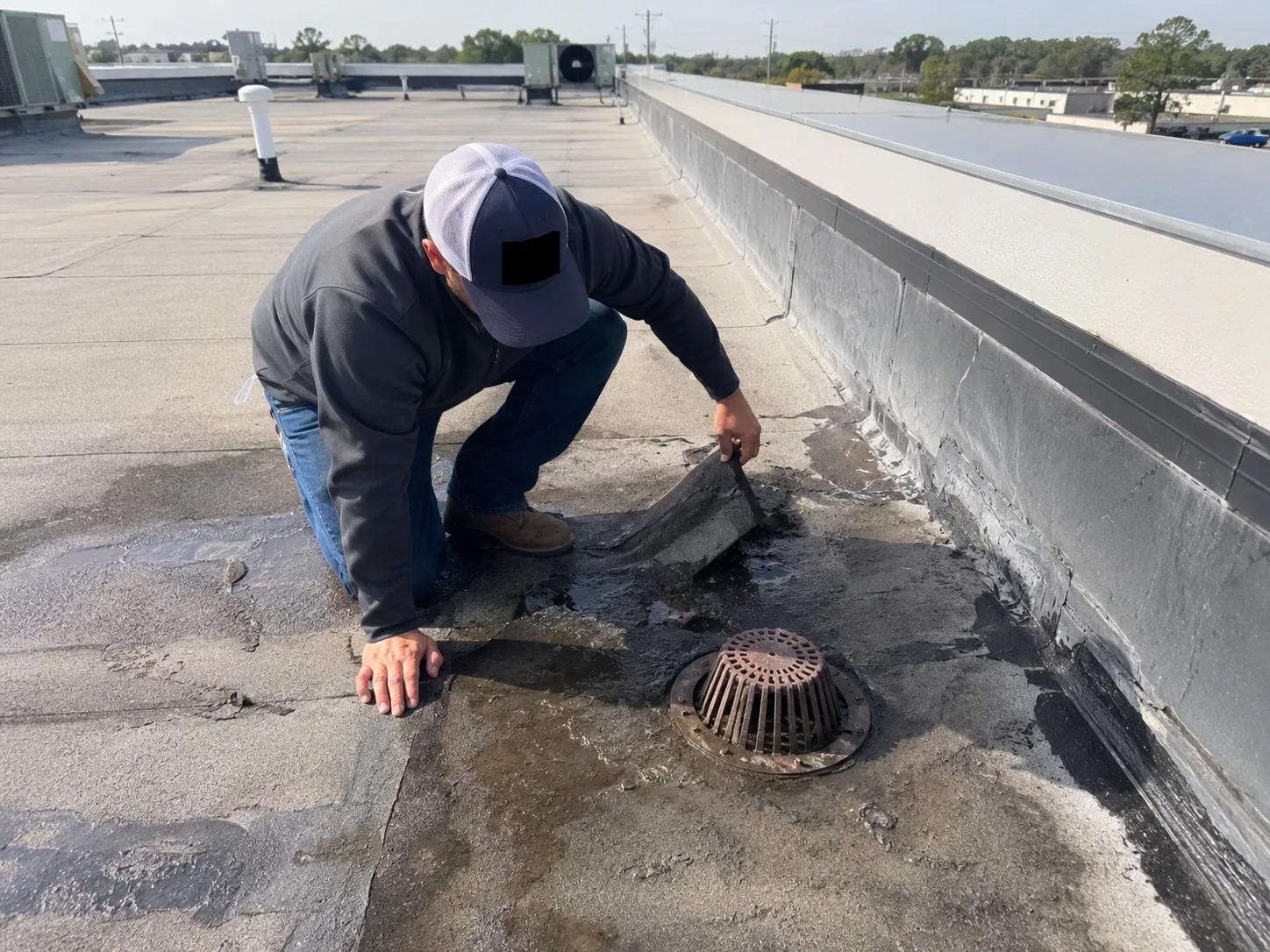
A gust can loosen edge metal or lift a membrane corner before wind-driven rain reaches an occupied room. We first protect the interior, check the reported area, and mark any opening that needs temporary cover. In Broken Arrow, OK, spring thunderstorms bring damaging winds across the Tulsa region, while tornado damage is documented at or near the city in the county record. Those conditions call for a timely inspection, not an assumption that every building was struck. Our wind-event roof inspection records what changed on this roof and identifies the next safe step.
Find where pressure changed the roof
Wind can work at corners, parapets, perimeter metal, wall flashings, and roof openings where materials change plane. We inspect termination bars, coping, fasteners, seams, curb flashings, and any loose material that could move farther in another gust. Inside, we record wet ceilings, insulation or inventory exposure, and rooms that need protection. The roof plan and interior report are compared rather than treated as separate calls. Photos identify each condition and distinguish a lifted edge from an older repair that was already present.
North Rose Business Park is a mixed office, commercial, and light-industrial tract north of Kenosha Street and east of Elm Place. A site in that setting may have several access and occupancy patterns, but the property record does not determine its roof assembly. We confirm the actual hatch, lift position, nearby traffic, and safe route before reaching the perimeter. A North Rose roof visit is planned around the property contact's access rules, with barriers below any loose component and a defined work boundary above.
Separate wind impact from prior wear
A regional alert can make an inspection urgent without proving that a specific roof has new damage. We document displaced edge pieces, open seams, punctures, damaged flashing, and interior water where visible. We also note existing patches, corrosion, cracked sealant, or areas that remain uninspected. That comparison helps an owner decide whether the condition is event-related, routine maintenance, or a question requiring further testing. A photographic roof report places each observation on a plan and keeps the repair proposal tied to the evidence gathered at the building.
Water may enter near a lifted detail and travel beneath a membrane before it appears indoors. We compare the ceiling location with drains, penetrations, curb edges, wall transitions, and the direction of visible movement. If the source is not clear, we describe the test or opening that could resolve it rather than assign a cause from one stain. For low-slope membrane assemblies, seams and flashing must be prepared for a compatible repair. A seam evaluation can be useful when the wind event exposed a split or open lap.
Secure loose material before the next gust
Where material is loose or an opening is active, the first scope may be temporary stabilization. We secure the perimeter, protect the interior, and identify which roof area remains exposed if rain or wind returns. Around-the-clock response is available, including nights, weekends, and holidays, when the opening cannot wait for ordinary business hours. The site contact receives a handoff describing the location, temporary materials, access limitations, and what must happen before permanent repair. An emergency roof call addresses immediate exposure; it does not replace the later inspection of surrounding details.
Spring is the Tulsa area's wettest season, and severe thunderstorms can follow one another before a roof surface is ready for permanent work. We set a stop point that leaves the exposed area secured and schedule the lasting repair when the substrate and forecast allow it. If roofing materials cannot be installed dry, the owner gets the reason for the hold and the remaining protection status. Any hidden moisture or deck damage discovered after opening is photographed and reviewed before the repair boundary expands.
Choose a repair that matches the assembly
Wind repair depends on the installed roof system. A membrane may need seam work, flashing replacement, or attachment review; a metal roof may require inspection of panels, clips, fasteners, laps, and closures. We identify the assembly before selecting materials. A surface patch cannot correct a loose substrate or a failed deck, and coating is not a substitute for securing a displaced edge. The repair scope names the confirmed work and any follow-up test separately.
When wind affects a broad perimeter or exposes repeated attachment concerns, the owner may need a larger condition survey or renewal comparison. We review the affected zone, existing layers, drainage, substrate, and transitions before discussing recover or replacement. Cost and timing depend on roof access, material availability, lift placement, interior protection, concealed wet areas, and the next safe weather window. If only one section is confirmed, the document keeps that work separate from adjacent areas that have not been inspected. A tornado-condition review can account for a wider event while keeping each building's findings property-specific.
Leave the owner a clear next decision
After permanent work, we provide photos of the completed repair and note its location, materials, and any condition outside the approved scope. The closeout states whether temporary measures were removed, if more testing is needed, and which adjacent details deserve a future check. A roof map helps maintenance staff connect another interior report to the inspected area. Creek 51 spans 85 acres at the southwest corner where SH-51 meets the Creek Turnpike. For a Creek 51 service visit, the building contact confirms the gate, lift position, and delivery route before a crew arrives.
Wind review starts at the perimeter and follows the load path inward. We inspect edge metal, coping, termination bars, fasteners, flashing, membrane laps, rooftop equipment, and any loose debris. A lifted corner or displaced panel is photographed with nearby attachment details before temporary material is applied. We compare the observed condition with maintenance history when the owner provides it, while avoiding a cause statement that the roof evidence cannot support. If uplift has exposed the deck or insulation, we protect the opening and identify what must be tested before permanent closure. The repair plan records the safe work boundary and any location that needs a closer structural review. After a storm, regional reports can help set timing, but the recommendation follows the actual building. Closeout shows which details were secured and which remain under temporary protection, so ownership can authorize the next step with a current roof map.
Send the address, roof plans, event timing, leak locations, prior repair notes, occupancy limits, and gate or hatch instructions when requesting an inspection. We will document the damage that is visible, protect occupied areas, and return a work sequence with a defined repair boundary. If the roof is exposed now, contact us for immediate stabilization. The final handoff identifies what was secured, what was repaired, and what decision remains before the roof program moves on.
Commercial Roofing Questions
What roof details are most vulnerable during high winds?
Corners, edges, parapet transitions, wall flashings, seams, and roof openings receive close attention. We document loose or displaced components and check the interior report against those observations.
Does a tornado or wind report prove that my roof is damaged?
No. A report sets a reason to inspect, but conditions vary by property. We record visible changes at the building and keep prior wear separate from event findings where the evidence permits.
Can you cover an opening before permanent repair is possible?
Yes. We can stabilize an active opening and protect the interior, then record the temporary boundary and return when the roof and weather support permanent work.
How do you decide between a patch and a larger repair?
We inspect attachment, seams, flashing, substrate, and nearby transitions. A localized defect may support a defined patch; repeated movement or concealed moisture may call for more testing or a broader scope.
What helps you schedule a wind-damage inspection?
Provide the event time, roof access instructions, leak locations, occupancy or loading restrictions, and photos from inside if available. Those details help us protect the affected area and plan the route.