Holcim Elevate Roofing Systems
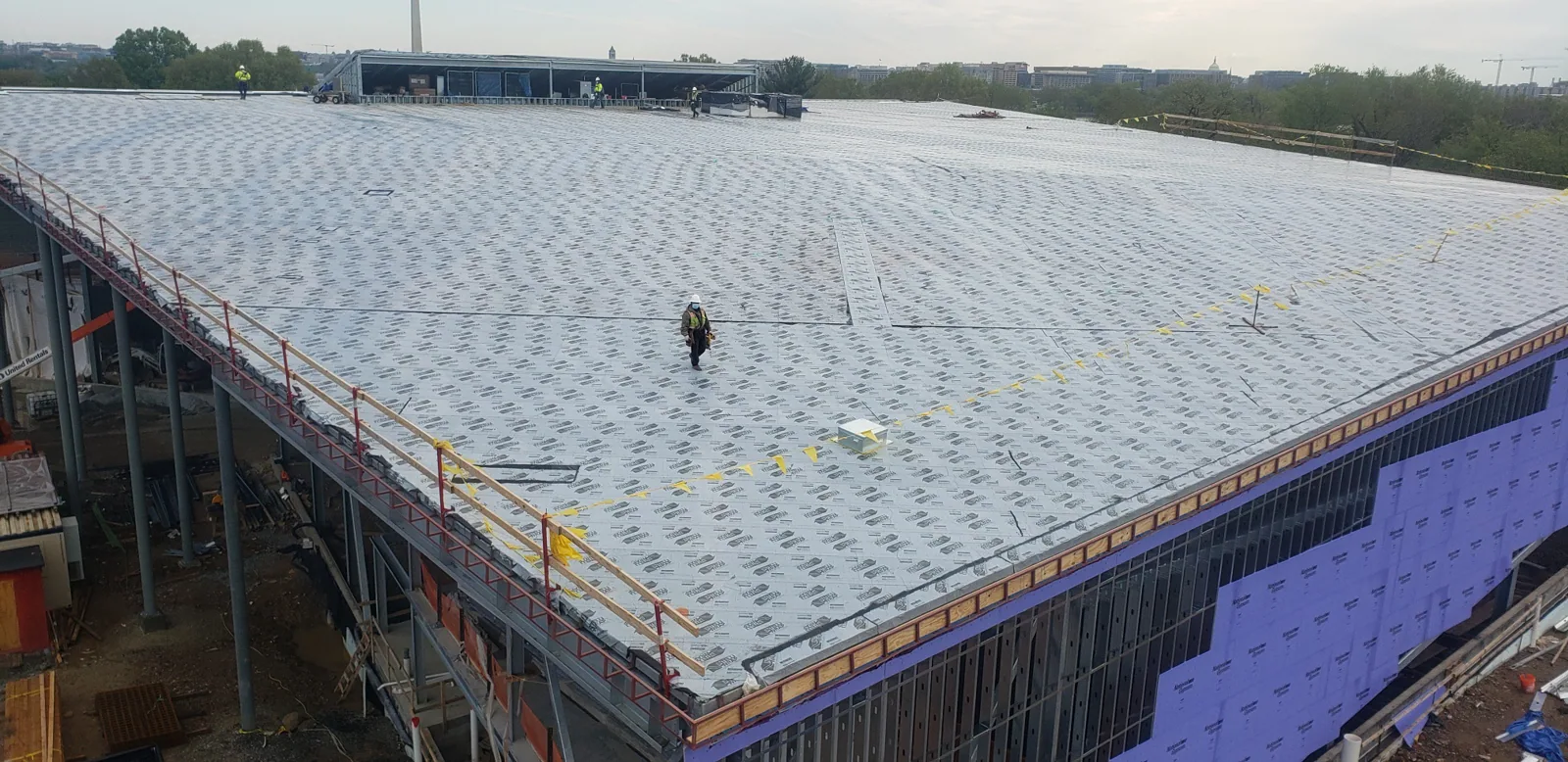
Late-summer heat can change when crews inspect and install a roof, but it does not identify which membrane an owner has. We first record the assembly, interior reports, drainage, seams, penetrations, and edge conditions before discussing a Holcim Elevate system. Broken Arrow, OK, often reaches 100 degrees or more in the Tulsa climate period from late July into early September. The inspection plan accounts for roof access and safe work hours, then ties every proposed action to what is visible or tested. A Tulsa Tech Broken Arrow Campus combines manufacturing, vehicle-service, and health-science programs, illustrating why the facility's use and movement patterns need to be confirmed at the property level.
Match the product family to the roof
Holcim Elevate's commercial system range includes RubberGard EPDM, UltraPly TPO, and PVC options. They use different seam methods and details, so the first step is identifying the existing sheet and any prior repairs. We check the membrane surface, field seams, perimeter, wall transitions, rooftop units, drains, and penetrations. If markings or records disagree with what the roof shows, we record that discrepancy and verify before writing a material-specific repair. The inspection is about the assembly on the building, not a name on an old invoice. When project requirements permit alternatives, compare the GAF commercial membrane system with the existing assembly before selecting compatible repair or replacement details.
EPDM details and thermoplastic welds need different preparation. For EPDM, compatibility of the primer, tape, adhesive, and patch is part of the repair; TPO or PVC seams need clean material and controlled heat welding. EPDM seam details require compatible primer, tape, and adhesive, while TPO roof construction uses clean surfaces and controlled heat welding; the repair method follows the installed membrane. Holcim Elevate system components also have to fit the deck, insulation, edge condition, and design criteria. We identify missing information before the scope reaches procurement.
Find the source before setting the boundary
A report of water inside a building points the inspection in a direction, but the roof opening may be several feet away. Water can track along a deck or insulation before it reaches a ceiling, so we compare the reported room with drains, curbs, seams, and wall terminations above it. Photographs show the surrounding roof area as well as the defect. If the assembly hides moisture or the surface is too wet to assess, we identify the test or return visit needed to establish the boundary.
The Tulsa area sees hail reports throughout the year with a spring peak, while localized storms can affect one property and miss another. After a storm notice, we inspect for actual punctures, displaced edge details, or other observed damage instead of assuming a claim exists. A hail-damage review records what the inspection finds and separates emergency protection from permanent work. If a facility is active during the visit, we also map roof entry, ground-level clearance, loading activity, and any zone that should remain undisturbed.
Make attachment and drainage explicit
A new membrane can be adhered or mechanically attached when the specified assembly supports that choice. The deck, insulation, cover board, perimeter design, and project requirements determine the configuration. We show those components in the scope and mark any hidden condition that needs confirmation after tear-off. Drainage also has to work with the existing roof geometry. We inspect drains and scuppers, note ponding observations, and avoid promising that a new sheet alone will correct a slope or blocked outlet.
For buildings near the Creek Turnpike, scheduled material delivery and safe access routes should be confirmed with the site contact. Creek 51 Business Park sits at the SH-51 and Creek Turnpike junction. For a nearby property, the facility contact confirms its own delivery entrance and staging limits. The owner confirms gate instructions and staging limits. A drainage inspection and insulation and cover-board review can be coordinated with membrane evaluation so that attachment, water flow, and substrate work are considered together.
Compare the real work paths
A localized defect may be repaired when adjacent membrane and substrate are serviceable and the repair line can be defined. Widespread deterioration, repeated seam trouble, wet insulation, or failed details may call for replacement. A recover is evaluated against the existing layers, deck capacity, drainage, and applicable requirements. Coating is only considered when the roof surface and assembly support it. We state what evidence favors each path and what remains uncertain. Brand choice follows that assembly review, not the other way around.
Duration and cost are affected by access equipment, tear-off depth, deck repairs, wet insulation, edge work, rooftop penetrations, and how the building remains occupied. The replacement sequence sets manageable zones and dry-in points. A roof condition report gives the owner photographs and observed boundaries; the Sika Sarnafil system comparison can be considered where project specifications allow competing membrane assemblies. Every alternative should carry its own detail, staging, and closeout steps.
Protect the decision after installation
Closeout notes identify completed roof zones, any deferred detail, and the maintenance item that needs attention at the next visit. We photograph the finished work and leave the site contact with an accessible record of the repair boundary. During high heat, inspections and material handling still follow safe work practices and product requirements. For a tenant-occupied property, barriers and delivery routes are cleared as agreed before the building returns to its normal schedule.
For a system identified in the owner records, we first verify the membrane type, thickness where documented, seam method, insulation, and attachment. Product records should match the building and roof section under review; older additions may use different materials. We inspect termination bars, penetrations, drains, edge metal, and past patches before selecting a repair approach. If the owner is comparing a new system with a repair, we identify the conditions that affect that choice, including moisture, deck, drainage, and access. The installation scope follows the current manufacturer details and project documents provided by the owner, while field conditions determine the preparation and tie-in. At closeout, we record materials installed and any surface or substrate issue that changed the sequence. The owner can then retain the report with product records for future maintenance. Product, warranty, and maintenance terms should be checked against documentation for the specific roof section.
Ascension St. John Broken Arrow is identified by local economic-development materials as the city's primary hospital. At a healthcare facility, roof work needs an access and occupancy conversation before a crew enters the roof zone. We confirm the rules for the actual site, coordinate protected areas below the work, and set a handoff with the facilities contact. An occupied-building work plan can keep operations visible while the roof scope is sequenced. Any remaining observation stays on the closeout list until it is resolved.
Commercial Roofing Questions
Does Holcim Elevate make both EPDM and TPO systems?
Yes. The commercial range includes EPDM and TPO as well as PVC options. The existing membrane and project assembly determine which system details apply to a repair or replacement.
Can a roof inspection happen during hot weather?
We plan the visit around safe roof access and the conditions needed to evaluate the surface. Installation tasks may need a different work window, and the schedule accounts for heat and material handling requirements.
How is water entry separated from a drain problem?
We compare the interior report with the roof above it, including drains, seams, curbs, and transitions. If visual review cannot distinguish the source, the report identifies a test or opening that can answer it.
What details belong in a Holcim Elevate replacement scope?
The scope should identify membrane, attachment, insulation, cover board, edge details, penetrations, drainage, tear-off, and temporary dry-in. We document any substrate item that needs confirmation once work begins.