Versico Commercial Roofing Systems
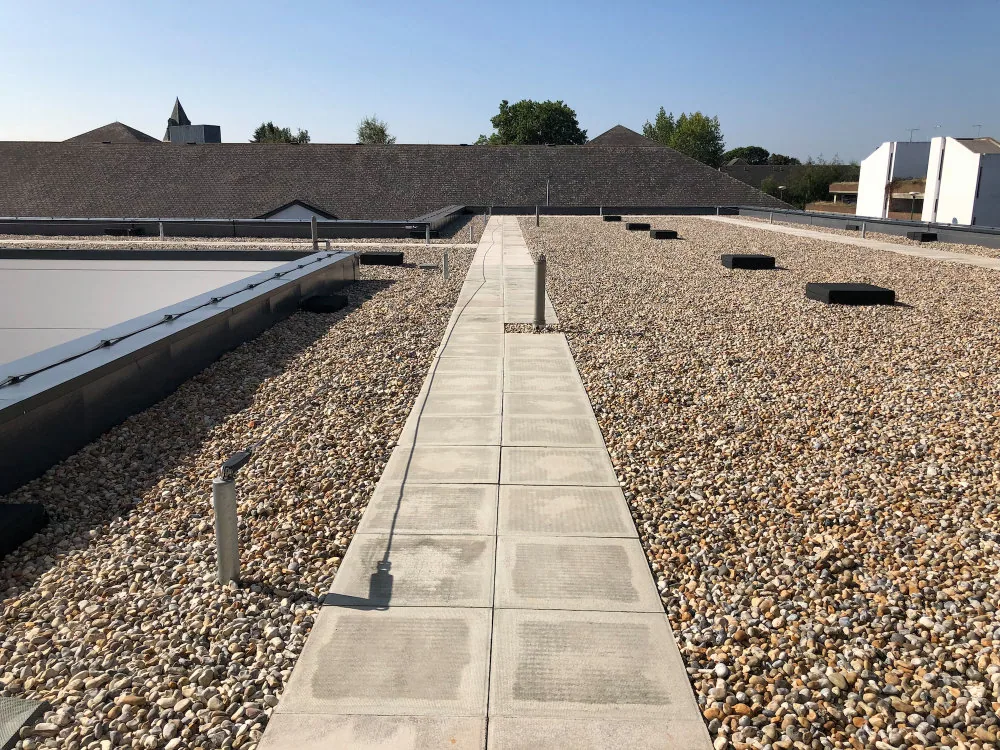
Wind and hail can leave different marks on the same roof, so our first Versico visit documents what the building shows before selecting a repair. We inspect the membrane, seams, perimeter, penetrations, drains, and any reported leak area, then compare those observations with interior conditions. The Tulsa-area hail record shows reports through the year with a spring peak, but localized storms can miss nearby properties. FlightSafety International operates a Broken Arrow manufacturing center for flight-simulator engineering and training systems. Production access and roof entry still have to be planned for the property in scope. We confirm active work areas, roof access, and the actual assembly with the site contact.
Name the system after inspection
Versico's commercial product families include TPO, PVC, and EPDM. A field membrane may be original, partially replaced, or patched with a different compatible material, so we record the visible assembly before applying a product name. We check how seams are made, how flashing turns at curbs and walls, where the membrane terminates at edges, and whether drains are clear. Records from prior work help explain the roof but are verified against what is installed. That prevents a maintenance patch from being specified for the wrong membrane family.
TPO and PVC use heat-welded seams, while EPDM relies on compatible primers and seam materials. Each repair starts with surface preparation and a check that the surrounding sheet remains suitable. Owners can compare TPO field seams with EPDM repair details to understand why a universal patch specification is a poor fit. The installation guide and project assembly should also be reviewed for required detail methods. We list the procedure in the scope so the facility manager knows what the crew will prepare, test, and close out.
Check edges along with the field
A membrane field can appear intact while its corners, laps, or penetrations need attention. We walk the roof by zones and follow seams through changes in plane, across patches, and toward walls or curbs. At each transition we look for separation, exposed edges, movement, and conditions that might hold water. The interior report is compared to the roof observations but does not set the precise leak point by itself. We label photos so an owner can find each detail again during maintenance or after a later storm.
Broken Arrow's spring storms bring frequent showers and thunderstorms, making drainage part of the same inspection sequence. We note water that remains after precipitation, debris at outlets, and signs that a scupper or drain needs service. The edge and coping review also checks the transition that keeps water from moving behind the roof membrane. If an opening is active, we secure temporary protection before the next rain and record where permanent repair must resume. That handoff separates immediate control from the lasting work scope.
Confirm how the roof is held in place
A replacement may use an adhered or mechanically attached assembly, depending on the deck, insulation, perimeter, design requirements, and system specification. Fastener layout, substrate condition, cover board, and edge details are part of the chosen assembly, not details to leave until installation day. We record visible layers and identify what can only be confirmed when material is removed. If the deck or insulation condition changes during tear-off, the owner receives a documented change before the scope moves beyond the agreed boundary.
Near the Creek Turnpike, regional traffic can help a crew reach an industrial property, while gates and delivery points vary from site to site. We ask where materials may be staged, which routes must remain open, and who can release roof access. The Creek 51 area sits near the junction of SH-51 and the Creek Turnpike, but that landmark does not replace the building's delivery instructions. An insulation and cover-board scope can be coordinated with membrane attachment so that substrate and edge decisions stay in the same sequence.
Compare repair and replacement boundaries
A repair can make sense when one seam, patch, or penetration has failed and adjacent material remains stable. If defects recur across the roof, moisture is widespread, or attachment and flashing problems extend through multiple zones, replacement may be a better scope to evaluate. A recover depends on existing layers, drainage, deck condition, and assembly requirements. A coating is not a shortcut around trapped moisture or failed attachment. We mark each option's repair boundary and note what must be opened or tested before a final price and duration can be stated.
Schedule and cost change with tear-off depth, disposal, access equipment, insulation, deck work, equipment curbs, metal edges, and the need to protect an occupied interior. A repair estimate can address a limited area while a broader plan is reviewed. If replacement is under consideration, the roof replacement sequence sets work zones and temporary dry-in. Comparing Versico with Johns Manville membrane systems works best when both alternatives use the same deck assumptions, edge details, and schedule limits.
Keep maintenance connected to the scope
At closeout, we record repaired seams, replaced sections, remaining observations, and areas that could not be completed during the selected weather window. The record should let the maintenance team locate the work and check it after subsequent storms. On a roof with drains, curbs, and rooftop equipment, routine observation can find loose debris or a new puncture before it reaches an interior space. We explain which item calls for monitoring and which one requires a follow-up visit.
A Versico system review begins by identifying the actual membrane and how it is attached. We inspect seams, cover strip, flashings, perimeter attachment, and substrate condition before naming a repair method. If the field has been coated, patched, or altered, we verify whether those materials are compatible with the proposed tie-in. Available warranty or project documents can help identify the original assembly, but the field condition controls the repair scope. We also check whether rooftop traffic, mechanical work, or prior repairs have affected a seam. When a localized repair is possible, the scope shows how far preparation extends into sound material. If moisture or attachment concerns span multiple zones, we recommend testing or a broader evaluation before assuming another patch will hold. The closeout records materials installed and locations reached. It gives the next service crew a clear baseline without claiming authorization, certification, or warranty coverage beyond the documents the owner provides.
The local climate also affects planned visits: hot conditions in late summer require attention to safe roof access and material handling, while wet spring weeks can interrupt surface preparation. A roof condition report carries photographs and decisions across the facility team's handoff. For a broader portfolio, Soprema membrane choices can be evaluated against the same recorded conditions if specifications allow another manufacturer. We keep that comparison tied to the roof rather than treating manufacturer labels as substitutes for a site-specific maintenance record.
Commercial Roofing Questions
Which Versico system is on the roof now?
We identify the visible membrane and seam method, check prior patches, and compare available records. If the material remains uncertain, we verify it before selecting a compatible repair detail.
Can a Versico TPO seam be patched with EPDM material?
A repair needs materials compatible with the installed system and detail. We check the membrane family and surrounding sheet first, then describe the specified surface preparation and patch method.
What if water is still standing after the repair?
We inspect the drain path and roof geometry and record whether water remains after rainfall. A membrane repair does not by itself correct a blocked outlet or slope condition, so those items are assessed separately.
Does the owner need to close the building during roof work?
We plan roof access, deliveries, protected ground areas, and work hours with the facility contact. Any space that must stay open is included in the work sequence before materials arrive.