Restaurant Roofing
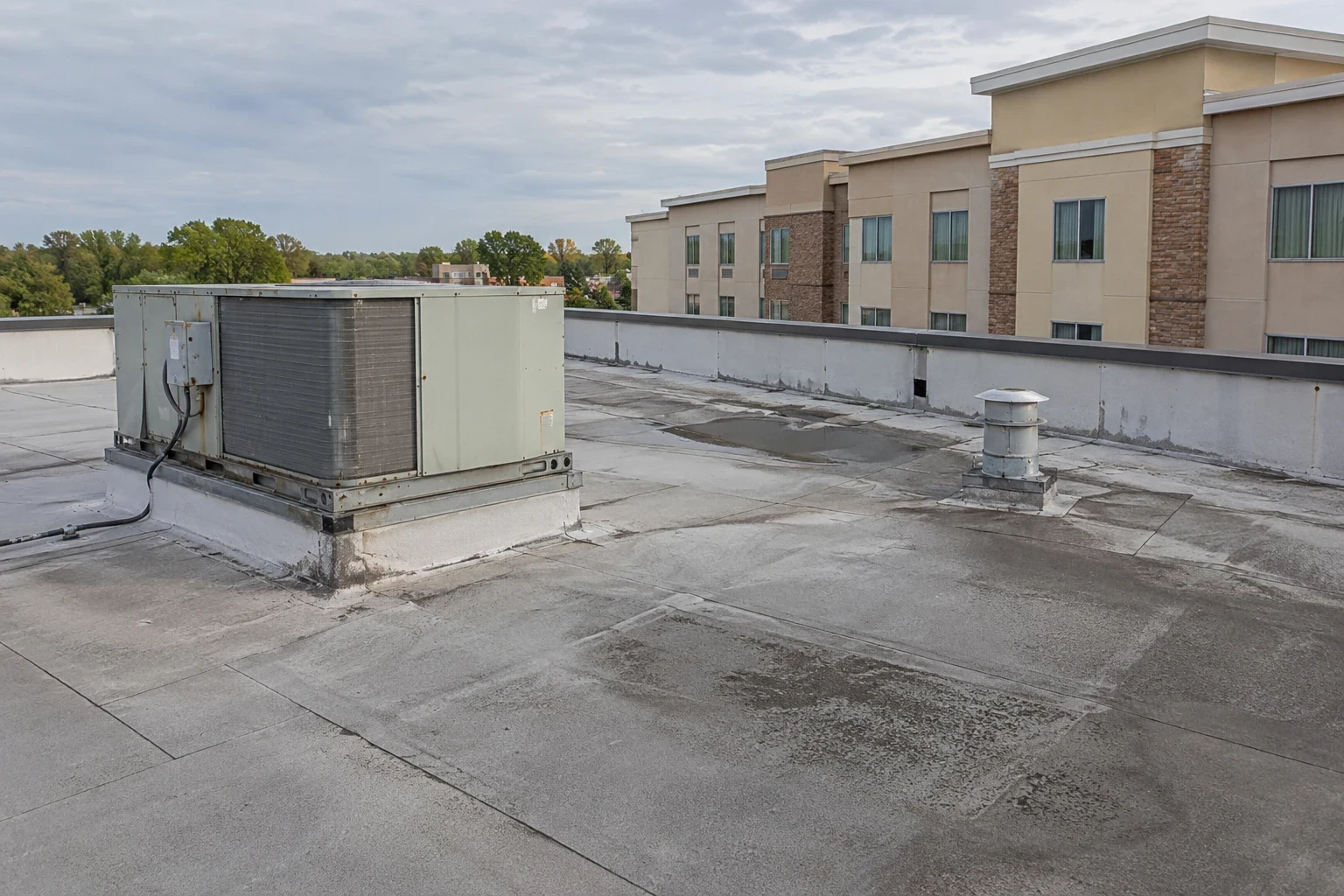
A kitchen exhaust fan can keep dinner service on schedule while a roof leak threatens the prep line below. We first protect the occupied space, locate the roof condition above it, and agree on a work window with the operator. In Broken Arrow, OK, The Shops at Aspen Creek includes retail, multifamily, dining, and entertainment uses across 150 acres south of the city. At a restaurant roof, we check the actual exhaust curbs, drains, and membrane details. Our restaurant roof inspection traces the reported leak, checks exhaust and plumbing penetrations, and sets a repair boundary before staging begins.
Work around exhaust and kitchen systems
Kitchen exhaust curbs, make-up air equipment, plumbing vents, and condensate lines create roof transitions that may be affected by vibration, service work, grease, or repeated foot traffic. We check flashing at each penetration and look for separated seams or moisture paths nearby. A stain above a dining room may have traveled from another roof area, so the interior location is a starting point rather than a repair boundary. We document the surface, test where needed, and identify whether the next step is a patch or a broader opening. A curb and support inspection includes the detail around serviceable equipment.
A Broken Arrow roof project has to account for Tulsa's rainy spring and the spring-to-early-summer peak in severe hail and wind; we set each task around a secure dry-in window. Hail can affect one area and miss another, so we inspect the restaurant roof and map any observed changes before setting repairs. We inspect the actual membrane, edge details, and exhaust curbs and record visible findings. When water is entering over a kitchen, we protect the interior and identify any area that should not remain in use. Around-the-clock emergency response is available for active leaks, with permanent repair set for a safe weather window and a coordinated kitchen schedule.
Protect dining and service routes
Guest entrances, patios, food deliveries, staff doors, and grease-service routes may all share the ground around a restaurant. We confirm which paths need to remain clear and where a lift or material stack can be placed. If roof work produces noise, odor, or debris, management needs a sequence that identifies the affected hours and the area below. A phased occupied-building plan can separate active repair from dining circulation and assign cleanup before guests return. No staging location is assumed until the property rules and access are confirmed.
At The Shops at Aspen Creek, retail, multifamily, dining, and entertainment uses call for a property-specific staging plan. We confirm the tenant contact, delivery hours, patio use, and loading route before placing lifts or materials. New Orleans Street connects with the Creek Turnpike near the NSU campus, providing a local route reference. We confirm the restaurant's entrance and delivery window with its contact. Sand Springs has commercial activity that includes grocery, healthcare, lodging, and retail uses; access and tenant hours still need confirmation at the specific property.
Control water at walls and roof edges
Grease service and kitchen exhaust do not replace routine roof drainage checks. We inspect internal drains, scuppers, overflow paths, perimeter metal, and transitions where wind-driven rain can enter. A blocked outlet can leave water across a larger section, while a failed penetration may be localized. The repair plan separates these conditions so the operator can address a maintenance issue without overlooking a membrane opening. A drain and scupper review records outlet performance and nearby details, with access coordinated so roof work does not conflict with kitchen service or equipment maintenance.
On many Tulsa summer days from late July into early September, temperatures reach at least 100 degrees, which can change exposed material handling. Heat can narrow safe handling windows for exposed materials, and restaurant service may have quiet periods that differ from cooler warehouse schedules. We align the roof work with both conditions, reduce the time an opening remains exposed, and state when the kitchen or patio below needs protection. If a roof section must remain open during a shift change, the handoff identifies who is responsible for barriers, interior checks, and temporary protection before service resumes.
Match the scope to the evidence
One damaged flashing or seam may support a bounded repair when surrounding materials remain serviceable. Repeated leaks, wet insulation, deteriorated membrane, or multiple failing penetrations can justify a larger review. We inspect layers, deck, attachment, drainage, and previous repairs before comparing patching with a recover, coating, or replacement. A recover feasibility review checks whether the assembly can accept an additional layer and whether concealed moisture must be addressed first. For a restaurant, the proposed sequence also accounts for exhaust service, indoor protection, and any hours when cooking cannot pause.
Where a property also includes grocery refrigeration and receiving areas, we coordinate those work windows alongside kitchen service. A multi-tenant shopping center may need a suite-by-suite boundary, while a restaurant schedule follows its kitchen, guest, and delivery constraints. The scope states which roof area will be opened, what condition is confirmed, which details remain outside the boundary, and what would trigger a revised recommendation. That record helps ownership decide whether to authorize immediate repair or a capital project.
Return the space with a clear handoff
Closeout photographs show repaired flashing or membrane, adjacent seams, drains, and the completed work zone. We note whether the dining, kitchen, patio, and service paths can return to normal and whether any follow-up inspection remains. A maintenance visit can revisit exhaust curbs, seams, and drains after equipment service or before a storm season. The record gives the operator a practical history of what was repaired without implying that unrelated areas have been tested. Any remaining condition is named so facilities staff can plan the next step.
Share the leak location, kitchen hours, hood-service schedule, delivery windows, guest entrances, patio restrictions, and roof access details. We will inspect the roof and coordinate protection for employees, customers, and equipment below. For urgent water entry, emergency response runs around the clock, including holidays. The permanent scope follows inspection findings and a suitable weather window, with the repair boundary and reopening handoff documented for the operator.
Restaurant operators need a repair plan that respects food preparation and customer service. We coordinate the reported area with the person responsible for the kitchen, dining room, and building access, then protect surfaces below before work begins. Roof inspection focuses on the actual condition around exhaust equipment, plumbing penetrations, seams, walls, and drains. If an odor, moisture, or ceiling stain suggests a problem, we document it without treating the symptom as a confirmed roof cause. Work hours and staging are agreed with the operator, and any temporary interruption is identified before the crew starts. A useful closeout says which detail was repaired, what was checked nearby, and whether any follow-up testing is needed. The operator can then make a clear reopening decision with the property owner.
Commercial Roofing Questions
Can repairs be scheduled between meal periods?
Often, if the roof area, kitchen access, and space below can be isolated safely. We confirm service hours with the operator and set a sequence that includes protection and cleanup.
Could a roof leak affect the hood or exhaust system?
It can affect flashing around a curb or nearby equipment. We inspect the roof transition and coordinate with the equipment service schedule before recommending a repair.
What should staff do during an active kitchen leak?
Protect food and equipment, isolate wet electrical or slip hazards, and report where water is appearing. We can respond around the clock and document temporary protection separately from permanent work.
Does restaurant odor mean roof membrane failure?
Not by itself. We inspect exhaust curbs, nearby seams, and interior conditions to locate the source before setting a repair boundary.
Can a repair be completed without closing dining?
That depends on roof access, noise, staging, and the space below. We map guest routes and work hours with management, then state any area or interval that needs to be isolated.