Shopping Center Roofing
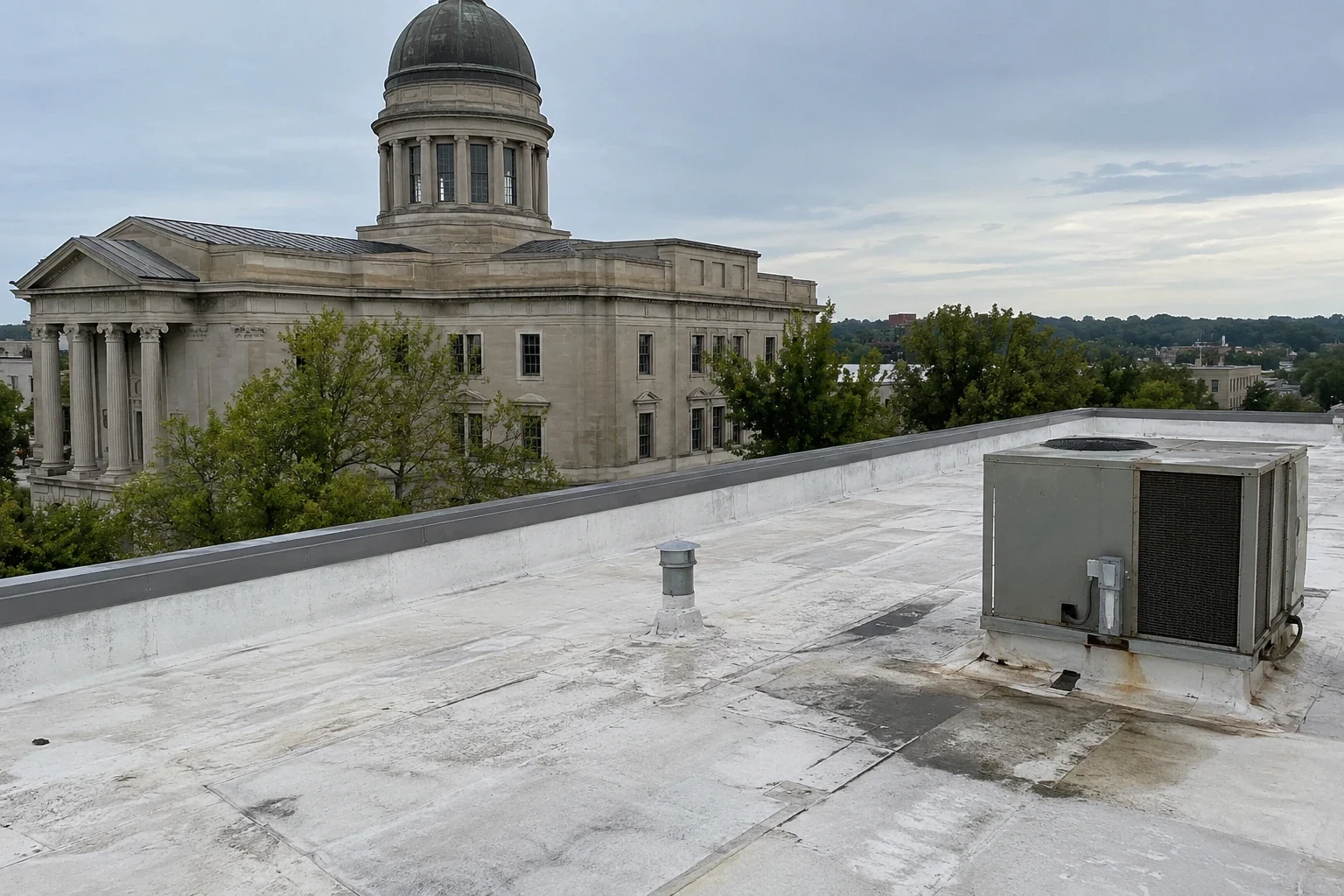
A Saturday promotion can fill a shopping center's parking rows while a roof leak is still moving toward a tenant space. We first protect the occupied area, inspect the roof above it, and confirm how customers, deliveries, and a lift can move safely. In Broken Arrow, OK, The Shops at Aspen Creek is a 150-acre mixed-use development with retail, dining, multifamily, and entertainment uses, so property operations can span more than one schedule. The roof plan must stay tied to the individual building and tenant mix. Our shopping center inspection records conditions and sets a work sequence that keeps entrances and loading routes in view.
Coordinate entrances and tenant hours
Retail roofs often sit above stores with different opening times, signage, patios, and delivery arrangements. We identify the tenant area below the work, confirm which customer routes remain open, and agree on the staging location with property management. If a repair needs noise control, odor limits, or a temporary entrance change, the tenant notice is part of the schedule. A phased retail work plan sets barriers and daily cleanup while separating an active roof area from shoppers and staff below.
The Shops at Aspen Creek stands at the Creek Turnpike and 161st East Avenue intersection and includes a Walmart Supercenter and Warren Theatre. Walmart and Warren Theatre add distinct delivery and pedestrian activity to the Aspen Creek setting. We confirm each building's tenant access, loading times, and staging limits with management. A big-box roof plan may focus on one large storefront and its receiving area; a shopping center project must coordinate adjacent suites and shared circulation.
Trace leaks through adjoining suites
A water mark in one tenant space may originate at a roof seam, curb, drain, parapet, or storefront transition. We compare reports from each suite with the roof above and map water paths before setting the repair boundary. Adjacent units may share walls or drainage areas, so a tenant report should be tied to observed roof conditions rather than assumed to be the same failure. Photographs identify the affected roof zone and any test or opening needed to confirm concealed moisture. This gives property management a clear record before authorizing work over multiple units.
Tulsa-area spring carries frequent storm interruptions; the bigger hail and damaging wind reports cluster from spring into early summer. Hail records also show localized impacts, so one storefront may be affected while another is not. We inspect the actual roof after a report, document visible damage, and keep regional weather information separate from site findings. If a leak threatens merchandise or electrical systems, temporary protection may be set first. A storm-related repair visit records the condition and confirms which tenants need notice before permanent work proceeds.
Keep shared drainage working
Shopping centers can have long roof runs, internal drains, scuppers, gutters, and parapets that collect debris near tenant bays. We check outlets, overflows, low points, and transitions between connected sections. Slow drainage can affect several suites, while a failed flashing may be limited to one location; the inspection distinguishes the two. A drainage review can identify whether an outlet needs correction apart from membrane repair. If water is still present after rain, we document where it remains and determine what testing or cleanup is needed before opening a repair area.
Tulsa records repeated 100-degree readings between the latter days of July and the opening of September. Exposed roof work and material handling may need to start earlier, while delivery hours should avoid customer peaks. We schedule a weather check before permanent repair, protect walkways below, and coordinate any lift footprint with parking operations. If a project is divided by tenant bay, the daily plan states which entrances or stalls are affected and when they return to service. That turns roof access into a property-wide notice instead of an unexpected obstacle for shoppers.
Compare a suite repair with a center plan
When one flashing or seam has failed and the surrounding roof remains sound, a bounded repair may solve the immediate problem. Multiple leaks, widespread wet materials, recurring drain issues, or failing attachment can justify a broader evaluation. We record each area and compare repairs with a recover assessment or replacement only after reviewing layers, deck, drainage, and access. For a center with a grocery tenant, refrigeration units and delivery hours may shape the work plan, but the roof assembly remains specific to that suite and building.
Management can use one condition map to identify urgent leaks, upcoming repairs, and areas that need testing. We list which tenant is affected, what temporary protection remains, and the work window proposed. That information helps set notices and contractor access while keeping common areas open. A capital decision is based on observed condition, not a general assumption about a retail roof. If a new roof layer or full replacement is considered, we check applicable requirements and resolve design questions before materials are ordered.
Give tenants a clear closeout
Closeout photographs show the repair, nearby transitions, drains, and any area that remains outside the approved scope. We identify when the work zone can reopen and whether another inspection is needed. A maintenance visit can revisit shared drains, seams, and tenant-side penetrations before a seasonal storm period. Sand Springs' River West commercial area includes retail, lodging, grocery, healthcare, and service uses; we confirm access at each center with its property manager. Share tenant hours, loading rules, leak reports, and customer-safety requirements before scheduling. We will return a documented repair boundary and handoff that property management can distribute to affected tenants.
A shopping center roof can cross separate tenants, additions, and ownership responsibilities. We identify the building and roof area included in the request, then confirm who can approve access over each suite. Shared walls, canopies, signs, and rooftop equipment may create transitions that do not follow the visible storefront line. We map drains and overflow paths and note where a roof zone discharges near pedestrian routes. If a leak is reported by one tenant, the inspection checks the roof above and nearby details without applying that finding to the full center. A phased repair plan states which entrances remain open, where material arrives, and when barriers move. The property manager receives photos and work limits organized by building. This helps coordinate tenant notices and future maintenance while keeping the condition record specific to what was actually inspected.
Commercial Roofing Questions
Can you repair one tenant bay while the rest of the center stays open?
Often, if the roof zone, entrance, staging area, and pedestrian routes can be isolated safely. We coordinate notices and daily cleanup with management and affected tenants before beginning.
How do you tell which tenant suite is under a roof leak?
We compare tenant reports with roof seams, penetrations, drains, and transitions above the space. Photos and a roof map tie the observed condition to a specific area before the repair boundary is set.
Should every tenant report after hail lead to separate roof work?
Not automatically. Hail impacts can be localized, so we inspect the roof areas tied to each report and document what is visible before combining or separating repair scopes.
What happens if a leak starts during business hours?
We protect the affected merchandise or equipment, establish a safe area below, and inspect the roof opening. Temporary protection is recorded separately from permanent repair and tenant closeout.
What does management need to coordinate a roof visit?
Provide store hours, delivery windows, roof access instructions, parking restrictions, and tenant contacts. Those details help place lifts and materials without blocking customer routes.