Duro-Last Commercial Roofing
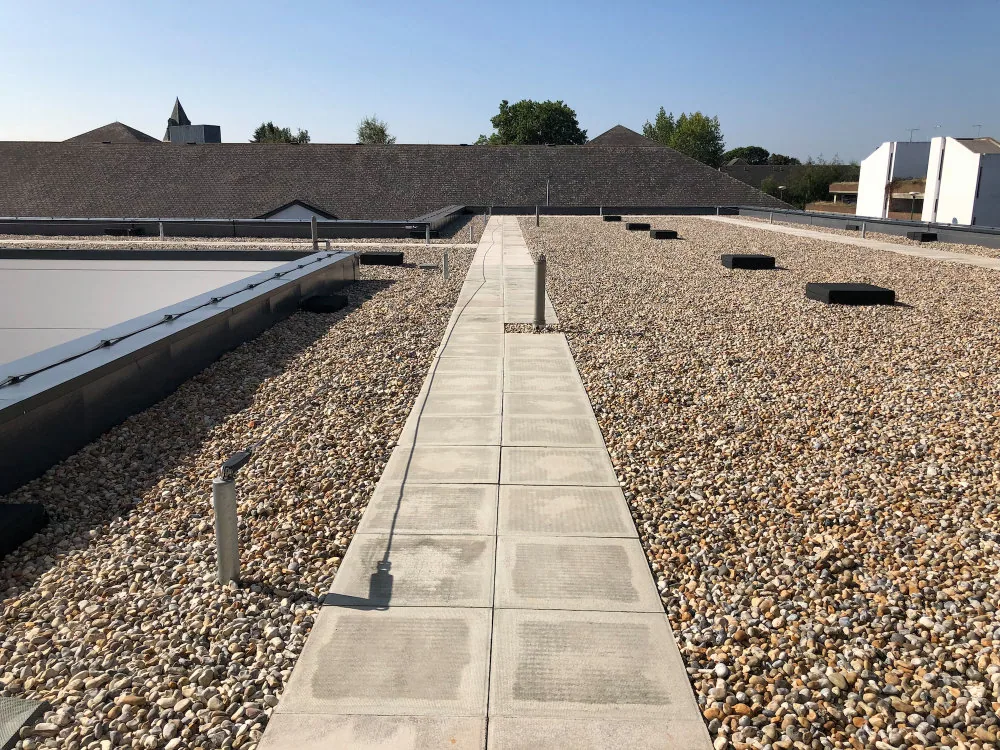
A hail report can change the inspection plan, but the first step remains a close look at the roof and the rooms below it. We document the existing membrane, seams, flashings, drains, rooftop equipment, and any interior report before discussing Duro-Last. In Broken Arrow, OK, hail reports occur throughout the year with a spring peak, and impacts can be localized. The Tulsa commercial service area is a local dispatch reference; the property contact still sets roof access and delivery rules. We coordinate the visit with the property contact and follow the observed assembly.
Fit the sheet to the roof details
Duro-Last offers PVC membrane systems and other low-slope options, including TPO and KEE-plus-PVC products. Its custom-fabrication approach can prepare membrane sheets and accessories to building dimensions, with factory-welded seams on prepared sections. That can change field work, but it does not eliminate inspection of the deck, attachment, transitions, penetrations, and perimeter. We document the measured roof zones and the details that remain field-installed so the owner can see where fitting and welding still happen on site.
A custom sheet depends on reliable dimensions and a clear roof plan. We mark drains, curbs, walls, and equipment locations, compare them with field conditions, and note any area that could not be reached or measured. When a replacement follows an existing membrane, the scope should still confirm deck type, insulation, cover board, and edge construction. Owners can compare PVC seam details and KEE membrane considerations with the specified Duro-Last assembly. Custom fabrication changes how some details are prepared, not the need to verify the roof itself.
Check the field joints and transitions
Factory-fabricated pieces can reduce some field seams, while penetrations, perimeter edges, and transitions still require site detailing. We inspect both the main roof field and the places where the membrane meets walls, curbs, drains, and equipment supports. At a repair, we identify whether the surrounding sheet can accept a compatible patch and whether the condition extends beyond the visible opening. Photos show the roof zone and the adjacent detail so maintenance staff can find the same location later.
Spring showers across the Tulsa area can keep roof surfaces wet between weather events. That affects whether a surface can be prepared and a seam can be closed during the current shift. We define the section size, temporary dry-in, and stop point before tear-off. If the leak needs immediate protection, the team secures that area and records the temporary measure before permanent work is scheduled. A seam-failure repair scope follows the actual opening and surrounding material rather than adding a patch with an unverified boundary.
Confirm the assembly beneath the membrane
Replacing a roof involves more than selecting a PVC sheet. The deck, insulation, cover board, fasteners or adhesive, edge metal, drainage, and wind design shape the full assembly. We note which layers are visible and what needs confirmation after removal. If wet insulation or a damaged deck appears, the owner receives the finding and its scope effect before installation moves beyond the agreed area. That keeps hidden-condition work tied to a documented decision.
Tulsa Tech's Broken Arrow campus includes a manufacturing hub and vehicle-service programs, and local industrial operations add varied access and staging needs. We confirm those details with each facility contact. At an active plant, we confirm roof access, staging space, equipment clearances, delivery paths, and hours when ground protection can be placed. The occupied-building sequence assigns work zones and temporary protection, and insulation and cover-board work is coordinated with the membrane installation instead of left as an unplanned add-on.
Compare the scope, not just the sheet
A localized repair can remain the right choice where the membrane and attachment around the defect are sound. Replacement may be more suitable where seams, flashings, wet insulation, or prior repairs show a repeated pattern. Recover depends on the existing layer count, drainage, deck condition, and the proposed assembly. A coating is considered only when the substrate and system support it. We set out the observations behind each option and identify the opening or test that could change the recommendation.
Project cost and schedule include access equipment, tear-off, disposal, insulation, deck repairs, metal edges, curbs, staging, occupied areas, and weather protection. A replacement plan shows how the work moves from one dry-in zone to the next. If system documents permit more than one product family, compare the specified assembly with Sika Sarnafil PVC options and Holcim Elevate systems using the same deck and edge assumptions. The lowest membrane line item is not a full project comparison when preparation and closeout differ.
Close the project with a roof map
The handoff records which areas received new membrane or repair, what details were completed in the field, and which observation remains open. A roof map and photographs connect those items to drains, edges, equipment, and roof zones. The property contact should also know whether routine maintenance needs to check a specific penetration or seam after the next storm. When portions of the building were inaccessible, the record states that limit and the next step required to close it.
A Duro-Last repair begins with confirming the installed sheet, seam method, flashing details, and any prior repair material. A product name on an old invoice is useful evidence, but it does not confirm that every roof area still has the same assembly. We compare the membrane in the field with available submittals, then document any change at additions, curbs, drains, or transitions. If the surface is contaminated or has lost bond near a seam, the repair boundary must reach material that can accept a compatible tie-in. A moisture concern below the sheet is handled separately from a visible surface defect; a patch cannot dry insulation that remains wet. Work timing depends on access, surface preparation, temperature, and a dry weather window. We plan a secure stop point before opening material and record any section that remains under temporary protection. The closeout identifies the repair location and the material used, then lists unresolved assembly questions for the owner. That record supports later maintenance by identifying the membrane, repaired zones, and details that need follow-up.
Late July through early September brings frequent Tulsa-area readings at or above 100 degrees Fahrenheit, so inspection and maintenance schedules should account for safe roof access and material handling. The Creek Turnpike and SH-51 junction near Creek 51 Business Park is a useful route reference for reaching local industrial properties, but each facility controls its own delivery and entry process. A Creek 51 visit starts with confirmation from the site contact. A roof condition report then gives the maintenance team a record for the next decision.
Commercial Roofing Questions
How does custom Duro-Last fabrication affect installation?
It can prepare sheets and accessories to measured building details and move some seam work away from the roof. Field dimensions, deck and insulation conditions, and on-site transitions still need confirmation before installation.
Can factory-welded seams rule out field leaks?
No. The completed roof still has field details at edges, penetrations, curbs, and equipment. We inspect those transitions and document any condition that needs a repair or further test.
Will a PVC sheet work over the current assembly?
That depends on the existing layers, deck, attachment, drainage, and project requirements. We inspect visible conditions and identify any tear-off check needed before confirming recover or replacement.
What information helps plan a Duro-Last project?
Roof plans, prior repair records, access instructions, leak locations, occupancy limits, and delivery rules help establish the inspection and staging sequence. We verify dimensions on site before the scope is finalized.