Government Building Roofing
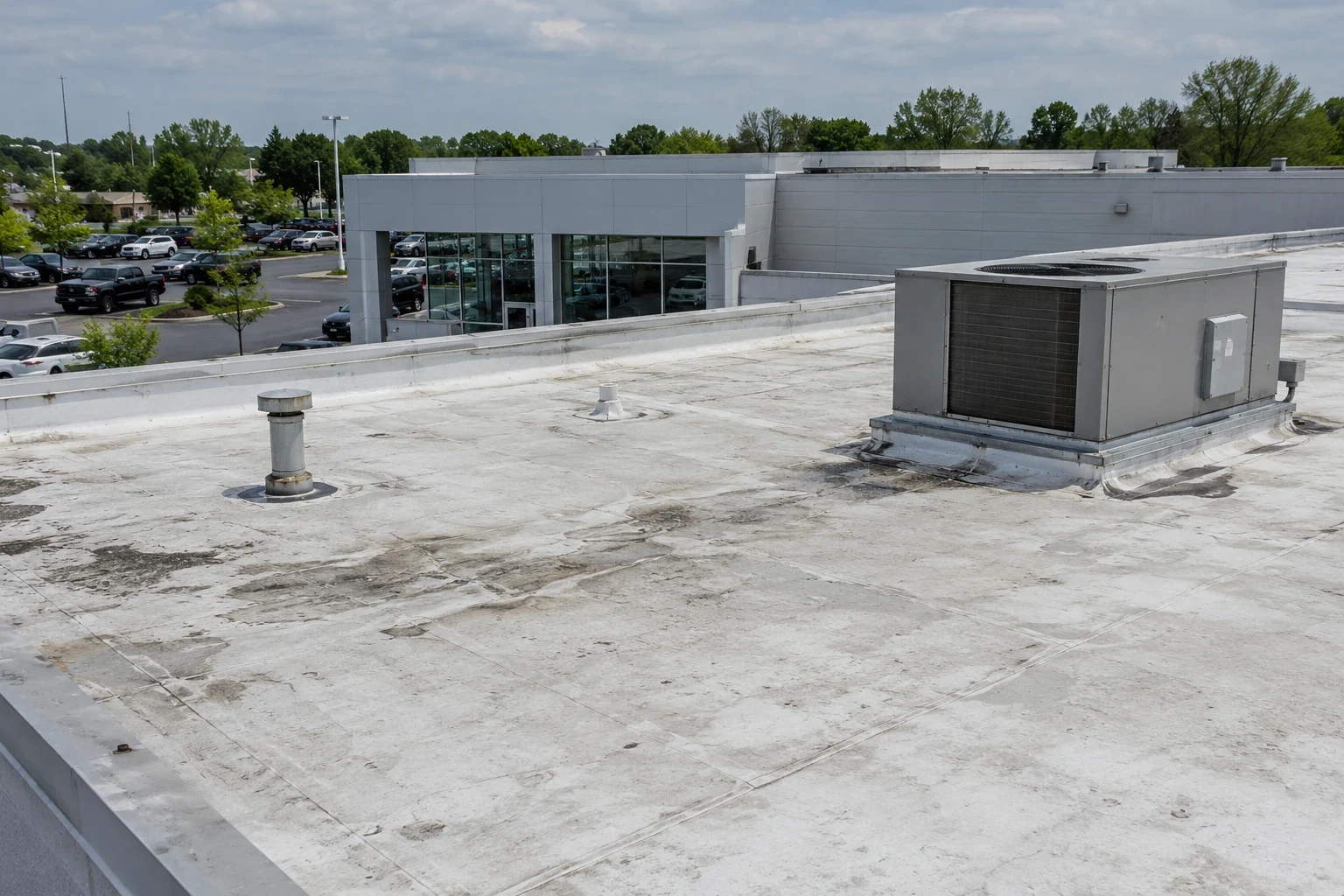
A public counter cannot close just because a roof repair needs a lift at the front entrance. We first locate the leak, protect records and occupied areas, and map a route that keeps public access and emergency paths clear. In Broken Arrow, OK, Broken Arrow Public Schools reports 31 school sites and operates an Education Service Center. Our government roof inspection records the actual assembly, access limits, and affected interior spaces so the facilities lead can set a repair boundary and notice plan.
Keep public services available
Municipal and institutional properties may have public counters, meeting rooms, records storage, fleet bays, or staff-only areas under the same roof. We identify what operates below the work zone and which doorways, accessible routes, or service windows must remain usable. A roof access plan can include lift placement, material delivery, barriers, noise windows, and daily cleanup. If a meeting room or public entrance needs a short restriction, the facility contact receives the timing before the crew stages. A phased occupied-building schedule can separate one work area from public circulation.
A public-service building may need its customer counter, records area, and staff entrance available while roof work proceeds. We confirm the building contact, service hours, and any rooms that cannot be exposed to noise, dust, or water before setting the work boundary. A school roof survey can account for classroom access and academic hours, while an office or civic facility needs its own public calendar and security rules. Findings stay tied to the structure and roof zones actually inspected.
Confirm the applicable code path
Oklahoma's 2024 International Building Code adoption and amendments took effect statewide on September 14, 2026, including in Broken Arrow. A roof replacement or structural change should be reviewed against the applicable requirements for the specific scope. The city council docket in September listed an ordinance to amend the local building-code chapter, but that record does not show final action. We avoid assuming a city amendment status from a proposal. Before materials are ordered, the owner and design team can confirm the requirements with the authority having jurisdiction and document any permit conditions.
A public project often needs a clear record of inspection, photos, scope, access, and changes made during construction. We note observed conditions and separate them from items that require opening or testing. A condition report can support facilities planning, while a claim documentation visit records storm-related evidence when applicable. Neither replaces the owner's procurement, approval, or code review process; the project file should make each decision and handoff traceable.
Sequence around storms and heat
Tulsa-area spring delivers the highest seasonal rainfall, and it is also the period when hail and damaging gusts are most frequently reported. Since those impacts are localized, we inspect each public building rather than infer its condition from a regional report. We check the roof after a report, photograph the condition, and identify any opening requiring temporary protection. The work sequence separates urgent water control from permanent repair that needs dry conditions. Around-the-clock emergency response is available, including holidays, so a public facility can address active water entry without waiting for its normal office calendar.
Late summer brings recurring Tulsa readings at or above 100 degrees. Heat affects safe roof access and material handling, while public hours and staff shifts affect when barriers or noise can be tolerated. We agree on the access window and stage materials away from public entrances. For sites near the Broken Arrow Expressway (SH-51) or New Orleans Street, the route and delivery point are confirmed with the facility manager rather than inferred from a map. A district facility access plan identifies the actual school or office contact before work is scheduled.
Compare the repair with the capital plan
A localized seam or penetration failure may call for a repair, while repeated leaks, wet insulation, or deteriorated edges can justify a wider evaluation. We inspect deck, attachment, roof layers, drainage, and prior repairs before comparing patching, coating, recover, or replacement. A recover feasibility review checks whether the existing assembly and moisture condition support another layer. If multiple facilities are involved, each roof receives its own findings and urgency so a portfolio decision does not flatten differences between buildings.
Church facilities have event calendars and congregant routes; government properties may add public counter hours, security, and records continuity. A worship building inspection coordinates scheduled gatherings, while a municipal or school building gets its own route and notice plan. We return the confirmed condition, proposed work area, cost and timing drivers, and any testing needed before the next approval. That record supports a capital discussion without treating one leak as evidence about an entire portfolio.
Close each project with a usable record
At completion, we photograph the repair and nearby details, note any remaining conditions, and identify when public routes or rooms can reopen. The closeout should identify the work date, location, materials used, and any follow-up inspection without implying areas outside scope were tested. A maintenance review can revisit drains, seams, edge details, and equipment supports as part of the facilities calendar. For a project with multiple buildings, the record links each finding to its facility address and approval reference.
Public buildings may house records, counters, meeting rooms, courts, or utility functions that need to remain accessible during roof work. We identify entrances used by staff and visitors, emergency routes, and any room that cannot be exposed to dust or water. A lift or material drop can change access to a public doorway, so the site representative approves the perimeter and notice period before mobilization. On the roof, each curb, drain, parapet, and penetration is tied to the building area below. If an interior report involves files or equipment, we protect it before opening the assembly. The work log records the daily limit, any temporary cover, and which sections remain outside the approved scope. A public owner can then coordinate facility operations and funding around verified roof conditions. This keeps an inspection from becoming a blanket statement about an entire civic portfolio when only one structure or work zone was reached.
Send the property address, public and staff hours, procurement requirements, security instructions, affected room, roof access route, and any records or services that need protection. We will inspect the roof and return a written scope that identifies access, staging, weather constraints, and the next decision. If active water is entering, emergency response runs through nights and holidays as well. Permanent work begins after the work area and public protection plan are agreed.
Commercial Roofing Questions
Can the public use an office while roof work is underway?
Often, if entrances, accessible paths, and rooms below the work can be separated safely. We review public hours and define barriers and temporary restrictions with the facility lead.
Which building code applies to a Broken Arrow roof project?
Oklahoma adopted the 2024 International Building Code statewide effective September 14, 2026. The exact requirements depend on the work, and city amendment or permit questions should be confirmed with the authority having jurisdiction.
What should go in a public facility roof report?
The record should identify inspected areas, photos, observed defects, access constraints, and any testing still needed. We separate confirmed conditions from recommendations so approvals can be traced.
Does a storm report justify replacing a public building roof?
Not by itself. We inspect the property, document visible damage and moisture, and compare immediate repair with broader work only when the roof findings support it.
Can several government roofs be reviewed under one program?
Yes. We can schedule multiple sites, but each building receives its own condition record and work boundary. The owner can then sequence approvals against access and service needs.