National Guard Armory Roofing
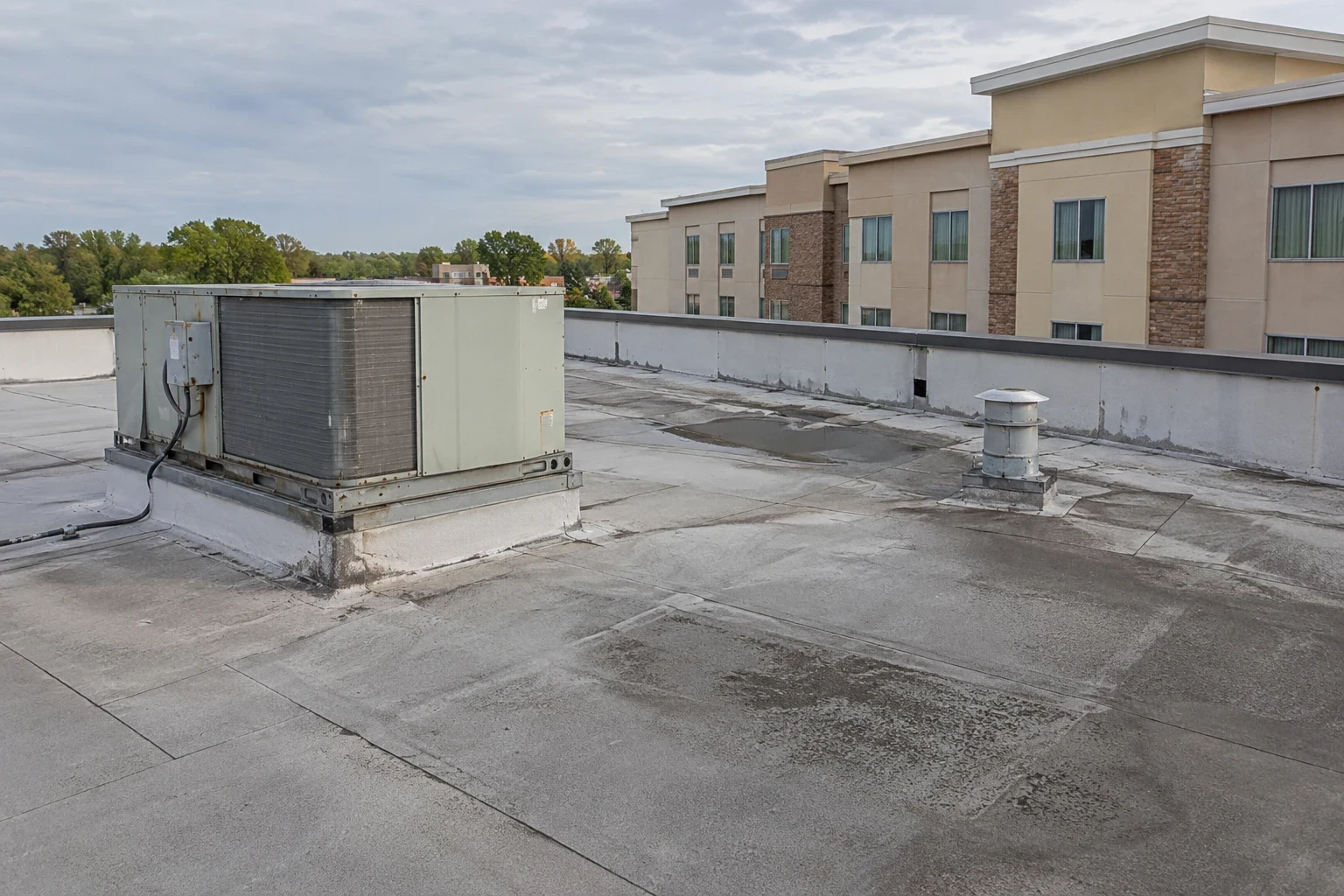
A drill schedule can leave only a narrow window to inspect roof leaks without interrupting readiness activity. We begin by confirming the building, protecting the space below, and mapping the approved entry and staging route with the facility contact. The regional Guard footprint includes the Broken Arrow and Sand Springs Armed Forces Reserve Centers, as well as an Army aviation support facility at Tulsa International Airport. Facility access differs by mission and owner, so we confirm the approved route and roof assembly before scheduling. Our Guard facility roof inspection documents the actual assembly and access restrictions before work is assigned.
Keep the readiness calendar visible
An armory or readiness center may support equipment storage, training, administration, or assembly, but the facility owner confirms which functions occupy the building under review. We schedule around drill periods, vehicle movement, deliveries, and any room that must stay ready for use. Before materials arrive, the representative identifies escorts, tool rules, approved routes, and any area that cannot be blocked. Our work zone lists the roof section, protected space below, and end-of-shift condition so the next unit or facility staff knows what is open.
The Broken Arrow Armed Forces Reserve Center is east of Midway Road near East 101st Street. Army Reserve units there include quartermaster units responsible for distributing bulk fuel to other Army units. We coordinate roof entry and staging with the facility contact before assigning a work boundary. A reserve facility roof plan records the building-specific sequence and unit calendar.
Before roof entry, we align check-in and escort timing with the person who controls the building, then confirm the area below the work and the route for tools. The daily sequence identifies when materials arrive, which section can be opened, how the exposed edge will be secured, and where crews stop if weather or unit activity changes. A handoff at the end of each shift records the protected condition and the next approved access window. That gives facility staff a clear status without treating an incomplete repair as closed.
Read the facilities in their own context
Camp Gruber Training Center near Braggs is an active Oklahoma Army National Guard training center. Recent exercises there include aviation, convoys, medical evacuation, and unmanned systems, and planned construction adds operations centers, a fabrication lab, and launch pads. At an armory, we review the facility drawings and access map to identify roof penetrations and operating limits before estimating repair or replacement.
Broken Arrow’s Armed Forces Reserve Center is east of Midway Road near East 101st Street. The owner confirms entry approval, material routes, and staging directly with the installation representative. A regional access plan can help coordinate the drive before the facility’s own security procedures are followed.
Respond to storms without presuming damage
The Tulsa area is wettest in spring and sees frequent thunderstorms; its strongest hail and damaging-wind reports cluster in spring and early summer. Hail can be localized, so a regional storm alert does not tell us whether an armory or readiness building was affected. We inspect roof surfaces, seams, edge metal, curbs, and drainage and photograph any observed impact. If water is entering a training room or equipment area, emergency protection is available at any hour, holidays included. Permanent repair follows inspection findings and a safe weather window.
Late summer brings repeated Tulsa readings above 100 degrees. Work hours need to account for heat exposure as well as the unit and escort schedule. We reduce open-roof time, secure materials before each shift ends, and notify the contact if weather changes the sequence. A storm inspection separates actual roof conditions from weather records and identifies which space needs immediate protection. If testing is required, we explain the planned opening and confirm access before disturbing the assembly.
Inspect the assembly and interior together
A roof leak can begin at a seam, fastener, pipe flashing, drain, parapet, or transition to an adjacent office or storage area. We compare interior reports with the roof above and check nearby drainage and edge conditions. Water can move along deck joints before it appears inside, so the first ceiling mark does not define the full repair area. We document the evidence, note any concealed moisture question, and state whether further testing could narrow scope. A moisture survey may help map wet insulation when the assembly and conditions make that method suitable.
Some Guard facilities include office and training areas alongside equipment spaces. Reserve facilities can combine drill, classroom, kitchen, and administrative space. We verify the building plan and current use with facility staff before setting protection below a repair. A phased occupied-site plan can reserve access for readiness activities while isolating one roof section at a time.
Separate temporary protection from renewal
A damaged edge or isolated seam may need a limited repair if adjacent materials are serviceable. Multiple leaks, corrosion, wet insulation, or failed attachment can justify a larger evaluation. We inspect deck, layers, drainage, and previous repairs before comparing patching, recover, coating, or replacement. Cost and timing reflect access, roof height, escorts, material delivery, interior protection, and testing. The written scope records which building and section were inspected and lists any issue that remains outside the approved work.
Readiness centers and aircraft maintenance facilities share controlled access, but aircraft movement and hangar doors add separate constraints. A military hangar roof review maps those clearances, while an Air Force facility inspection may need coordination with flight operations. Each owner provides the requirements that govern its site. Where UFC roofing criteria are specified, we review the applicable documents with the contracting or facility representative before finalizing the roof scope.
Return a roof status to unit leadership
Closeout photos identify the work area, repaired detail, adjacent conditions checked, and any follow-up. We confirm barriers are removed only when the agreed work zone is clear and the building can return to its scheduled use. A maintenance inspection can revisit drains, seams, penetrations, and metal edges under owner-approved access. The record ties the repair to its structure so a later inspection does not confuse one readiness center with another.
Share drill periods, building use, security and escort instructions, approved delivery route, access hours, and any leak report. We will coordinate the inspection with facility staff and return a documented condition and repair boundary. Emergency response is available around the clock if water is entering after hours. Permanent work follows owner approval, security coordination, and a suitable weather window, with the last shift's protection and next decision recorded for unit leadership.
Commercial Roofing Questions
Can roofing work take place during a drill weekend?
The facility representative sets that limit. We coordinate the unit schedule and access requirements, then select an approved window and work area.
Does the Sand Springs passenger-lift record tell us the roof design?
No. It documents a passenger lift, not roofing materials or condition. We inspect the assigned building and review available facility plans before setting scope.
How do you protect equipment inside an armory?
We identify the space below the work, confirm any sensitive or restricted items with facility staff, and establish covers and barriers before a roof opening is made.
Can you respond if a leak starts after the unit leaves?
Yes. Emergency response is available at any hour, including holidays. We coordinate entry with the installation, protect the interior, and document permanent work separately.
When does UFC apply to an armory roof?
The project owner or design documents establish the governing criteria. We review the requirements provided for that installation and confirm questions with its representative.